
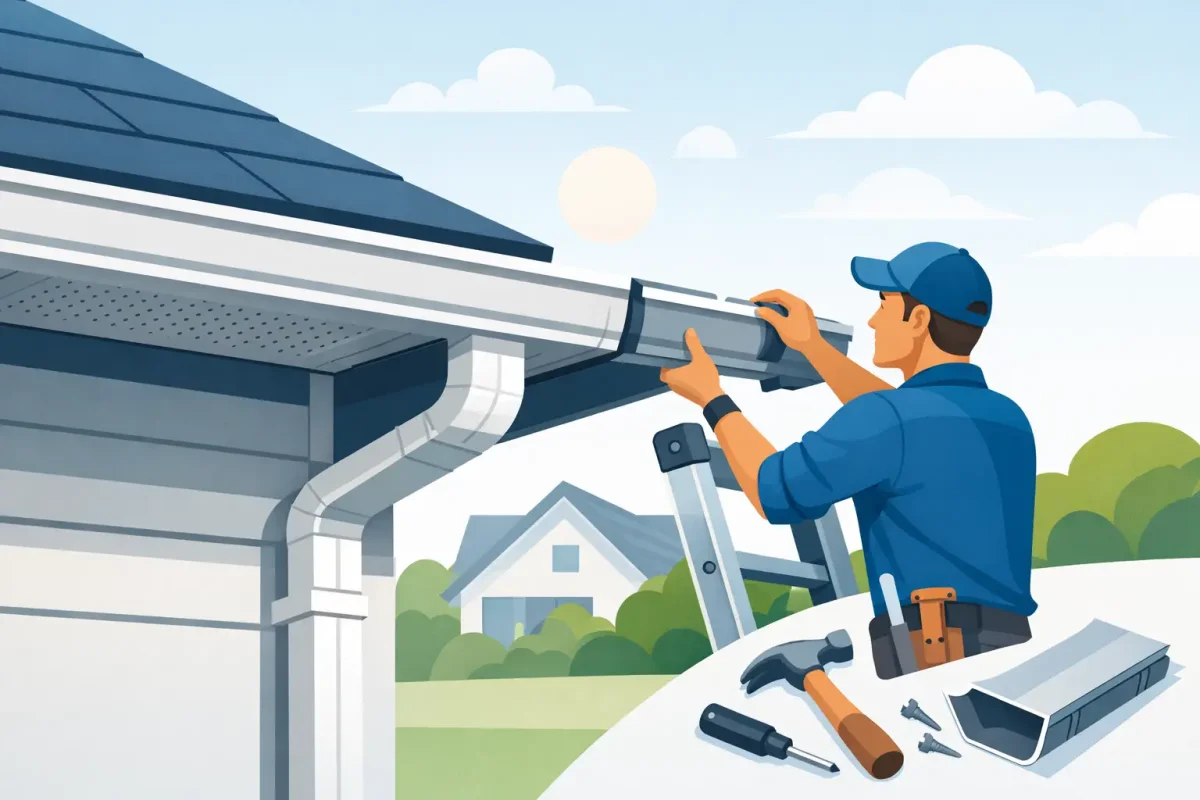
A gutter pulling away from the roofline rarely means the problem starts at the gutter. In many homes, soffit fascia and gutter repair becomes necessary because water has been getting behind the system for longer than anyone realized. By the time you see peeling paint, sagging sections, or overflow during a storm, the damage may already involve the wood behind the gutters, the soffit panels under the eaves, and the ventilation that helps protect your attic.
That is why these repairs should never be treated as isolated cosmetic fixes. Your soffit, fascia, and gutters work together as one protective edge around the house. When one section fails, the others usually take on stress, moisture, or both. Fixing the right components at the right time helps prevent roof edge rot, siding stains, basement water issues, and avoidable energy loss.
Why soffit fascia and gutter repair matters
The fascia is the vertical board or finished surface along the roof edge where gutters are attached. The soffit is the underside of the overhang, and it plays a major role in attic ventilation. The gutter system collects rainwater and directs it away from your foundation. If the gutter leaks or pulls loose, water can soak the fascia. If the fascia softens or rots, the gutter loses support. If water backs up under the roof edge, the soffit can stain, swell, or allow moisture and pests into vulnerable areas.
For homeowners, the practical issue is simple. Small failures at the roofline tend to spread. A loose corner, a clogged downspout, or a cracked seam can turn into wood rot, insulation problems, mold risk, and visible exterior damage. Fast repair is usually far less expensive than waiting for a full section to fail.
Signs you may need soffit fascia and gutter repair
Some warning signs are obvious, while others are easy to miss from the ground. Overflow during rain is one of the clearest indicators, but it does not always mean the gutter itself is the only problem. Water may be spilling because of a slope issue, a blockage, hidden fascia deterioration, or undersized drainage for the roof area.
Watch for gutters that sag, separate at joints, or pull away from the house. Peeling paint, dark streaks, soft spots near the roofline, and visible animal activity around the eaves can also point to trouble. Inside the home, stains near exterior walls or attic moisture may be tied to failing soffit ventilation or roof edge leakage.
In older homes, one issue often exposes another. A damaged soffit panel may reveal poor airflow in the attic. A gutter replacement may uncover rotted fascia behind the brackets. This is one reason a full inspection matters more than a quick patch.
When repair is usually enough
Repair makes sense when damage is limited and the surrounding materials are still sound. A short section of fascia with localized rot, a few loose gutter fasteners, a disconnected downspout, or isolated soffit panel damage can often be corrected without replacing the entire system. In these cases, the goal is to restore drainage, strengthen attachment points, and seal vulnerable areas before water gets deeper into the structure.
Good repair work should also address the cause, not just the symptom. If a section failed because of overflow, the slope and capacity of the system should be checked. If animals got into the soffit, openings need to be secured and ventilation preserved. If fascia rot developed, the gutter attachment method may need to change once sound backing is restored.
When replacement makes more sense
There are times when repair becomes a short-term fix for a larger problem. If multiple sections are rotted, if gutters are badly warped or repeatedly leaking at seams, or if the soffit and fascia materials are nearing the end of their service life, replacement often delivers better value. The same is true when homeowners are already planning siding, roofing, or trim upgrades. Coordinating these exterior elements usually leads to a cleaner result and fewer future call-backs.
Replacement can also be the smarter option when appearance matters. Patchwork repairs on heavily weathered trim may stand out, and older systems may not match newer finishes. For many homeowners, it makes more sense to complete a coordinated exterior update once rather than pay for repeated spot repairs over several seasons.
What a professional repair process should include
The best exterior contractors start with a close inspection of the full roof edge, not just the piece you called about. That includes checking gutter pitch, fasteners, downspout performance, fascia condition, soffit integrity, and signs of water movement on nearby siding, roofing, and trim. This step matters because the visible problem is not always the root cause.
After inspection, the repair scope should be clear. Homeowners should know what can be saved, what needs to be replaced, and whether related components should be addressed at the same time. Straight answers matter here. Some jobs truly are small repairs. Others look small from the ground but involve hidden deterioration once the system is opened up.
The work itself should focus on function first. That means solid fastening, proper drainage slope, secure seams, intact ventilation, and clean finishing details. Cleanup matters too. Exterior repairs should leave the property tidy, with old debris removed and no sharp metal or material scraps left behind.
Materials and performance trade-offs
Not every repair uses the same materials, and there are trade-offs worth understanding. Aluminum is a common choice for gutters, fascia wrap, and vented soffit because it resists rust, performs well in changing weather, and gives a clean finished look. It is a strong fit for many homes, especially when homeowners want a durable, low-maintenance solution.
Wood fascia can still be found on older houses, and in some situations it may be repaired in place before being capped or finished. The downside is ongoing vulnerability to moisture if drainage problems return. Vinyl soffit can be cost-effective, but material choice depends on the home, ventilation needs, and the condition of surrounding components.
This is where experience matters. The right recommendation depends on how much damage exists, how long you plan to stay in the home, and whether this is a standalone repair or part of a broader exterior upgrade.
Why coordinated exterior work often saves money
Homeowners often call for gutter repair and discover the roof edge, soffit, fascia, or siding also needs attention. That can feel frustrating at first, but it is also an opportunity to fix the problem properly. When related exterior components are handled together, crews can work more efficiently, materials can be matched, and water management is improved across the whole home.
For example, replacing damaged fascia without correcting the gutter slope may lead to repeat issues. Installing new gutters without addressing vented soffit problems may leave attic airflow unresolved. Handling these elements as a coordinated project usually reduces labor overlap and gives homeowners a more durable result.
That is one reason many homeowners prefer working with a contractor who understands complete exterior systems instead of treating each issue as a separate trade call. Petra Eavestrough & Siding is built around that approach, helping homeowners protect the house, improve curb appeal, and avoid piecemeal repairs that do not last.
How fast should you act?
Sooner than most people think. Once moisture gets into fascia or soffit areas, damage tends to spread quietly. Warm weather can hide the issue for a while, but freeze-thaw cycles, heavy rain, and ice buildup make weak spots worse. A repair delayed from one season to the next can easily shift from a simple exterior fix to a more expensive carpentry or roofing problem.
If you have visible sagging, overflow, rot, or staining, scheduling an inspection is the smart next step. Even if the fix turns out to be minor, you will know the condition of the surrounding roofline and whether any preventive work is worth doing now.
A solid soffit, fascia, and gutter system does not call attention to itself. It simply keeps water moving where it should, protects the roof edge, and helps the whole exterior perform better. When something looks off, getting it checked early is one of the easiest ways to protect your home without turning a manageable repair into a much bigger job.

23 June 2026
Soffit Fascia and Gutter Replacement Cost
23 June 2026