
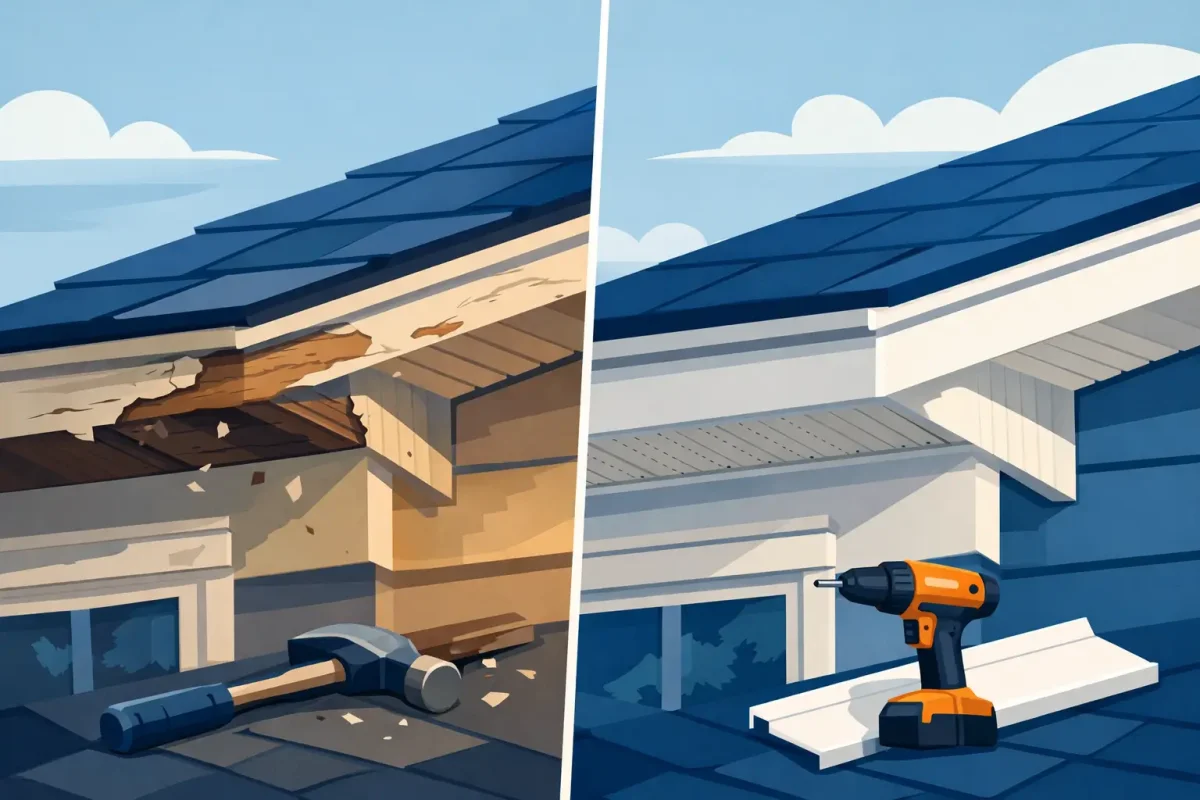
You usually do not notice your soffit and fascia until something starts going wrong. Paint peels. Gutters pull away. Birds get into the roofline. Then the question becomes very practical: should I replace soffit and fascia, or can I get away with a smaller repair?
The honest answer is that it depends on the condition of the materials, how widespread the damage is, and whether other exterior components are failing at the same time. In many homes, soffit and fascia problems are tied to gutter issues, roof edge wear, moisture intrusion, or aging siding. That is why a proper inspection matters more than a quick guess from the ground.
What soffit and fascia actually do
Soffit is the finished material under the roof overhang. Fascia is the board or metal trim running along the roof edge where gutters are attached. Together, they do more than make your home look finished.
They help ventilate the attic, protect the roof structure from moisture, block pests from entering exposed gaps, and support the gutter system. When either one starts to fail, the damage can spread beyond appearance. Water can work into the roof edge, wood can rot, insulation performance can suffer, and the entire exterior can start to look tired.
Should I replace soffit and fascia or repair them?
If the damage is isolated, repair may be enough. A small section with minor cosmetic wear, a loose panel, or limited animal damage can sometimes be fixed without replacing the full run. That makes sense when the rest of the system is still solid and the materials match well enough to keep the finish consistent.
Replacement becomes the better option when the problem is no longer local. If multiple sections are rotted, warped, sagging, cracked, or pulling away, patching often turns into repeat spending. The same goes for older wood components that have been repainted several times and still show moisture damage. At that point, replacement is usually the cleaner and more cost-effective decision.
There is also a practical issue homeowners run into all the time: once gutters come off and the roof edge is exposed, hidden damage is often worse than expected. What looked like a small fascia repair can reveal soft wood, poor ventilation, or long-term water staining behind the trim.
Signs it is time to replace soffit and fascia
Some warning signs are obvious, and some are easy to miss until a contractor gets close to the roofline.
Peeling paint, discoloration, and visible rot are common red flags. So are sagging sections, cracks, holes, and soft spots in wood fascia. If your gutters are constantly loosening or pulling away from the house, the fascia behind them may no longer be strong enough to hold fasteners properly.
Pest activity is another clue. Bees, wasps, squirrels, and birds tend to find weak points around damaged soffit. If you hear movement near the eaves or notice nesting around the roof edge, there may be openings that need more than a simple patch.
Ventilation issues matter too. Older or damaged soffit can restrict airflow into the attic. That can contribute to excess heat in summer, moisture buildup in colder months, and premature wear on roofing materials. In that case, replacement is not just cosmetic. It helps the home perform better.
When replacement makes the most sense
The best time to replace soffit and fascia is often when you are already doing related exterior work. If you are replacing gutters, upgrading siding, repairing roof edges, or addressing water damage, it usually makes sense to inspect the full roofline and handle connected issues together.
That approach saves labor, reduces disruption, and gives you a more consistent result. It also prevents the common problem of installing new gutters on weak fascia or updating siding while leaving worn trim in place. From both a protection and curb appeal standpoint, coordinated exterior work tends to deliver better value.
For homeowners planning to stay in the home long term, replacement can also reduce maintenance. Modern aluminum and vented soffit systems hold up well, resist rot, and give the exterior a cleaner finished look with less upkeep than older painted wood.
Repair vs. replacement costs
Most homeowners first ask about cost, and that is fair. Repairs cost less upfront, but only when they solve the problem completely. If the issue is limited to one area and the surrounding materials are still in good shape, repair can be the smart move.
But if the damage is widespread, repeated repairs can add up quickly. You pay for labor multiple times, patch different sections over the years, and may still end up replacing everything later. That is why a lower first invoice does not always mean lower total cost.
Replacement usually costs more initially because it involves removing damaged materials, checking the substrate, installing new soffit and fascia, and in many cases resetting the gutter system. Still, it often provides better long-term value by protecting the roofline properly and avoiding recurring moisture problems.
The real number depends on your home size, accessibility, material choice, and whether hidden wood repair is needed underneath. A small section is one thing. A full two-story perimeter with older damage is another.
Material choice matters
If your current soffit and fascia are wood, replacement with low-maintenance materials is often worth considering. Wood can look good, but it requires more upkeep and is more vulnerable to rot over time, especially in areas with heavy freeze-thaw cycles, wind-driven rain, and ice buildup.
Aluminum is a common upgrade because it is durable, clean-looking, and well suited to homes that already use aluminum trim and eavestrough systems. It also pairs well with modern gutter replacement and siding updates, giving the exterior a more unified finish.
The right material is not just about appearance. It should also fit your roofline, ventilation needs, and long-term maintenance expectations. A contractor should walk you through those trade-offs rather than giving a one-size-fits-all answer.
Why soffit and fascia problems rarely stay isolated
One reason homeowners delay this work is that soffit and fascia seem minor compared to roofing or siding. The problem is that they sit right at a critical connection point on the house.
When the roof sheds water, the fascia and gutter system have to manage it properly. When the attic needs intake airflow, the soffit has to provide it. When the exterior is sealed against pests and moisture, the roofline has to stay intact. If one part starts failing, the others are affected.
That is why a contractor who handles full exterior systems can usually spot the bigger picture faster. Sometimes the right answer is simply new soffit and fascia. Sometimes the better answer is combining that work with gutter replacement or roof edge repair so the problem does not come back next season.
What to expect during an inspection
A good inspection should go beyond the visible trim. The contractor should check for soft spots, loose fasteners, water staining, animal entry points, gutter attachment problems, and signs of poor attic ventilation. They should also tell you whether the issue is cosmetic, structural, or moisture-related.
From there, the recommendation should be straightforward. Repair what is sound. Replace what is failing. If adjacent components are contributing to the damage, those should be flagged clearly so you can make a decision based on the full scope, not just the first thing you noticed from the driveway.
For homeowners who want the job handled quickly and cleanly, this is where working with an exterior contractor matters. Petra Eavestrough & Siding approaches soffit and fascia as part of the full roofline system, which helps homeowners avoid piecemeal fixes and get a result that lasts.
So, should you replace soffit and fascia?
If your soffit and fascia are still structurally sound and the issue is minor, repair may be enough. If you are dealing with rot, repeated gutter problems, pest entry, poor ventilation, or visible wear across multiple sections, replacement is usually the smarter investment.
The key is not waiting until small roofline damage turns into larger water damage. A quick inspection now can tell you whether you need a simple fix or a full upgrade, and that makes the next step much easier. If your home is showing signs of wear around the eaves, this is one of those projects that pays off in protection, appearance, and peace of mind.

24 June 2026
Soffit Fascia and Gutter Repair Basics
24 June 2026