
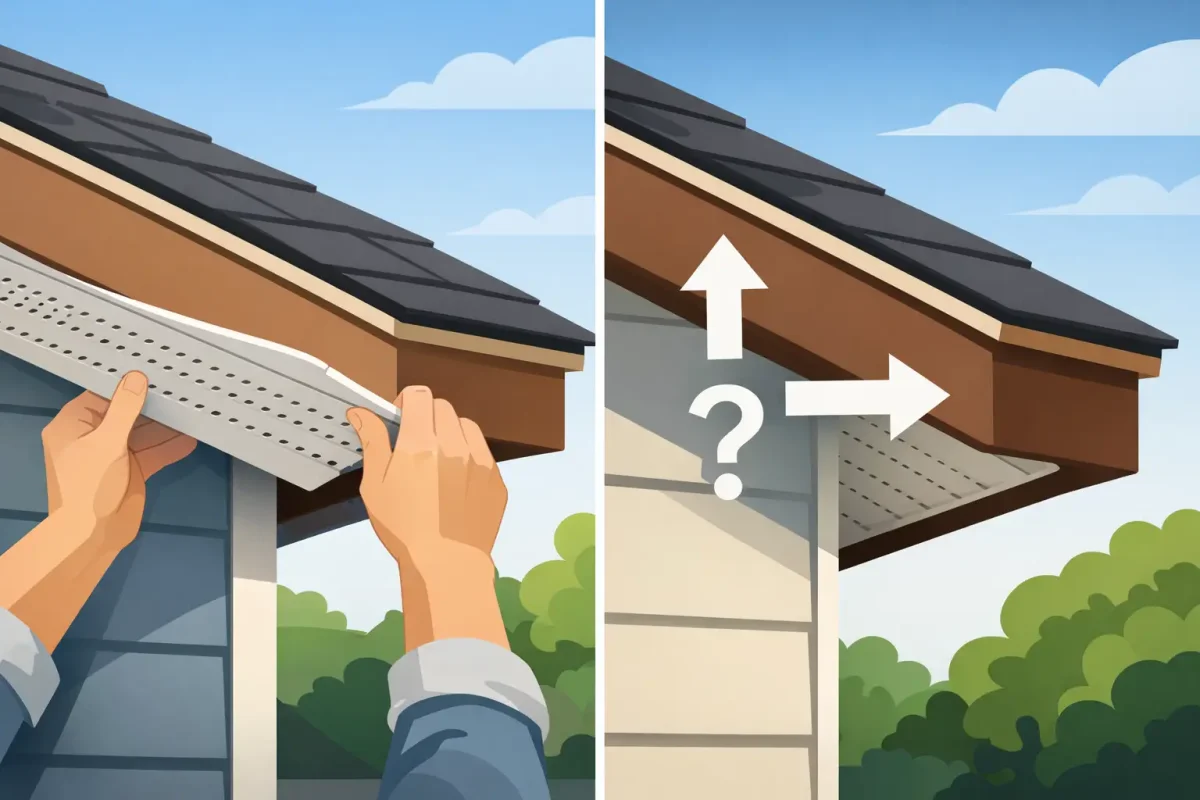
If you are looking up can you replace soffit without removing fascia, there is a good chance you have visible damage under the roof edge and want the cleanest, least disruptive fix possible. That is a fair question. In some homes, yes, soffit can be replaced without removing the fascia. In many others, the honest answer is not completely – or at least not if you want the repair to last.
That is where homeowners get stuck. A quick patch can look fine from the driveway, but soffit and fascia work as a system. The soffit helps ventilate the attic and close off the eaves. The fascia supports the gutter line and protects the roof edge. If one part is damaged, the other often has wear behind it, even when it is not obvious yet.
Can you replace soffit without removing fascia in every case?
No. Whether you can replace soffit without removing fascia depends on how the existing materials were installed, what caused the damage, and how much access there is at the eaves.
On some homes, individual soffit panels can be slid out and replaced while the fascia stays in place. This is more likely when the damage is limited, the panel system is still straight, and the channels holding the soffit are not bent or trapped behind the fascia cap. If the fascia is solid and the panel can be removed cleanly, a targeted repair may be possible.
But there are plenty of cases where the soffit cannot be removed properly without loosening or removing the fascia first. Older installations are especially unpredictable. Wood movement, fastener placement, layered aluminum capping, and gutter attachment can all block access. If the soffit is water-damaged, the wood framing underneath may also need repair, and that usually means opening up more than just the visible panel.
Why soffit and fascia are often tied together
From the ground, soffit and fascia look like separate trim pieces. In practice, they overlap in how they are built and how they fail.
The fascia is the vertical board or metal face along the roof edge. Gutters are typically fastened through it or into framing behind it. The soffit runs horizontally underneath the eaves and is often tucked into receiving channels at both the wall side and fascia side. That means the fascia may be part of what locks the soffit in place.
Water also does not respect visible boundaries. A gutter leak, roof edge problem, ice backup, or failed drip edge can send moisture behind the fascia and into the soffit cavity. By the time the soffit starts sagging, staining, or peeling, the issue may already involve multiple components.
This is why experienced exterior contractors do not treat soffit damage as a cosmetic-only problem. The goal is not just to swap a panel. The goal is to make sure the eaves are dry, venting properly, and protected for the long term.
When replacing soffit without removing fascia can work
There are situations where this approach makes sense and saves time.
If the damage is isolated to a small section of aluminum or vinyl soffit, and the surrounding fascia is in good condition, a repair may be straightforward. The installer may be able to remove the affected panel, inspect the immediate area, and fit a matching replacement without disturbing the fascia wrap.
This works best when there is no sign of rot, the channels are still secure, and the gutter system is not interfering with access. It is also more realistic on newer homes or homes with well-maintained exterior trim, where the original installation was done cleanly and the materials have not warped over time.
For homeowners, the advantage is simple: less labor, less disruption, and potentially lower repair cost. If the issue is truly minor, there is no reason to oversell a full tear-apart.
When fascia should come off too
This is the part that matters most. If there is any reason to suspect hidden damage, removing or loosening the fascia is usually the right move.
A few red flags make partial repair less advisable. One is soft wood behind the metal fascia cover. Another is sagging gutters, because that often points to failed fasteners or deteriorated backing. Peeling paint, staining, mold, wasp activity, and poor attic ventilation can also signal a larger eaves problem. If animals have entered the soffit area, the cavity may need to be opened and reinforced properly.
Matching is another practical issue. New soffit installed beside old, faded fascia can make the repair stand out more, not less. Homeowners often start with a small soffit concern and realize the better value is refreshing both pieces together so the roofline looks consistent and performs the way it should.
The real question is not just access
Homeowners often ask whether soffit can be replaced without removing fascia because they want to avoid extra cost. That makes sense. But the more useful question is whether leaving the fascia in place will prevent a proper inspection or shorten the life of the repair.
If the answer is yes, keeping the fascia untouched is not really saving money. It is just postponing the rest of the job.
A professional inspection should look at more than the visible panel. The contractor should check the sub-fascia, the edge of the roof deck, the vent path into the attic, the gutter attachment points, and the general condition of the eaves. If those areas are sound, a limited repair may be enough. If they are not, opening the assembly is the responsible recommendation.
What causes soffit damage in the first place?
In Southern Ontario and similar climates, soffit damage is often tied to weather, moisture, and ventilation issues. Ice damming can force water back under the roof edge. Overflowing gutters can soak the fascia line. Wind-driven rain can get into weak points. Poor attic ventilation can trap heat and moisture, which gradually affects the soffit area from the inside out.
Pests are another common cause. Birds, squirrels, and insects look for easy entry points, especially where panels have loosened or wood has softened. Once that happens, the damage tends to spread.
That is why a simple panel replacement is not always the full answer. If the root problem is still there, the new soffit may not stay in good shape for long.
How a contractor should approach this repair
A dependable contractor should not promise a one-size-fits-all answer over the phone. The right process starts with an on-site inspection.
First, they assess whether the damage is limited to the soffit skin or extends into the framing and fascia area. Then they determine how the existing system was installed and whether the soffit can be removed cleanly. They should also check ventilation, because a soffit repair that blocks airflow can create attic problems later.
From there, the quote should be clear. If a targeted soffit repair is viable, that should be offered. If fascia removal is recommended, the reason should be explained in plain language, not buried in technical terms. Homeowners deserve to know whether the added scope is about access, hidden damage, appearance, or long-term durability.
At Petra Eavestrough & Siding, that practical approach matters because the best exterior repairs protect the whole system, not just the most visible spot.
Can you replace soffit without removing fascia and still get a good result?
Sometimes, yes. But only when the repair is truly isolated and the surrounding components are still solid.
A good result means more than getting new material into place. It means the soffit fits properly, vents properly, and does not hide moisture or structural issues behind a clean-looking finish. If leaving the fascia untouched gets in the way of that, then it is the wrong shortcut.
For many homeowners, the best value comes from dealing with soffit and fascia together, especially if the gutters are aging too. Coordinating those repairs can improve appearance, drainage, and roof-edge protection at the same time. It is often faster and cleaner than doing one piece now and another piece later.
If your soffit is sagging, stained, noisy in the wind, or pulling away from the house, do not focus only on whether one component can stay in place. Focus on getting a proper inspection and a repair plan that fits the actual condition of your home. A small opening at the eaves can tell you a lot, and catching the issue early is usually what saves the most money.
25 June 2026
Should I Replace Soffit and Fascia?
25 June 2026