
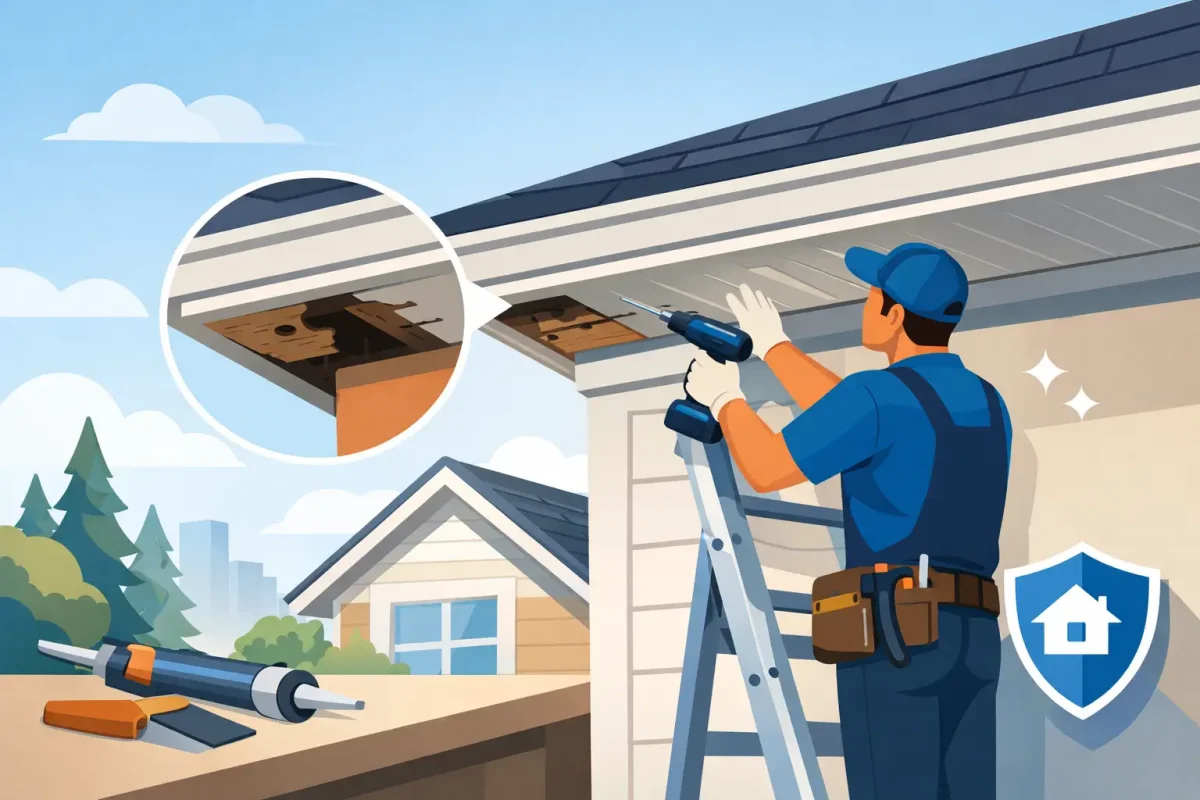
A brown stain on the ceiling near an exterior wall, peeling paint under the roofline, or birds nesting above the porch can all point to the same overlooked problem: damaged soffit. Searching for soffit repair near me is often the right next step when you want to protect your roof edge before a small opening turns into water damage, pest activity, or a costly repair.
Soffit is the finished material on the underside of your roof overhang. It gives your home a clean, completed look, but it also has a working job. Vented soffit supports airflow through the attic, while solid sections close gaps that could otherwise invite moisture and animals inside. When it fails, the damage may be out of sight at first, but it rarely stays that way.
When a Soffit Repair Near Me Search Is Urgent
Not every cracked or faded soffit panel requires an emergency call. A single loose panel after a windstorm may be a straightforward repair. But visible deterioration around the roof edge should not be ignored, especially when it appears alongside gutter problems, roof leaks, or damaged fascia.
Water is usually the biggest concern. Clogged or leaking gutters can overflow behind the eavestrough and soak the fascia board and soffit below it. Once water enters that area repeatedly, wood can rot, aluminum can stain or loosen, and vinyl can warp. The same moisture may eventually reach attic insulation, roof decking, or exterior walls.
A damaged soffit can also create an easy entry point for squirrels, birds, bats, insects, and other pests. You may hear scratching or movement overhead, see nesting material near vents, or notice a panel that has been pushed down from inside. Closing the opening matters, but a lasting repair also requires finding the reason the opening developed in the first place.
Poor attic ventilation is another concern. If vented soffit has been painted over, blocked by insulation, crushed, or replaced with non-vented material where ventilation is needed, heat and humidity can build up in the attic. That can contribute to excess moisture, premature roof wear, and uncomfortable rooms below. The right repair depends on how your roof and attic ventilation system are designed.
Signs Your Soffit Needs Professional Attention
Walk around your home from the ground and look along the underside of every roof overhang. You do not need to climb a ladder to spot many warning signs. Sagging panels, open seams, missing vent covers, peeling paint, dark staining, and visible rot are all reasons to schedule an inspection.
Pay close attention after heavy rain or snowmelt. Drips behind the gutter, water marks on siding, or a gutter that pulls away from the roof edge can signal that the soffit and fascia are being exposed to more water than they should be. In Southern Ontario, freeze-thaw cycles can make small gaps and drainage problems worse from one season to the next.
Changes inside the house can matter too. A musty attic smell, mold on roof sheathing, unusually high humidity, or uneven temperatures on the upper floor may be connected to ventilation problems at the eaves. These symptoms do not always mean the soffit is the only issue, which is why an on-site inspection is more useful than replacing panels based on appearance alone.
Repair or Replacement: What Is the Better Choice?
The best option depends on the scope of damage and the condition of the surrounding exterior. A localized repair can make sense when a branch has damaged one area, a few panels have come loose, or a small section has been affected by a one-time leak. Matching the existing material and color is important so the repair does not stand out from the street.
Replacement is often the smarter long-term choice when damage is widespread, the material is brittle or aging, or the wood behind the soffit has rotted. If multiple sections are failing, patching each one can cost more over time and leave the underlying cause unresolved. Replacing soffit together with fascia and eavestroughs can also create a cleaner fit and a better water-management system at the roofline.
Material choice matters. Aluminum soffit is durable, low-maintenance, and well suited to homes that need reliable ventilation panels. Vinyl can be a practical option in the right application, while wood may suit certain architectural styles but requires more upkeep. A contractor should explain the trade-offs clearly, including ventilation needs, maintenance expectations, and how the new materials will work with your siding, roof, and gutters.
What a Professional Soffit Repair Should Include
A quality repair begins with more than replacing what is visible. The contractor should inspect the soffit, fascia, gutter line, roof edge, siding transitions, and accessible attic ventilation. This helps identify whether the damage came from a blocked eavestrough, roof leak, ice buildup, pest entry, or aging materials.
Next comes removal of damaged sections and repair of any compromised backing or fascia. Covering rotten wood with a new panel may improve the appearance temporarily, but it does not stop the rot. The repaired area should be secure, properly ventilated where required, and fitted tightly enough to keep out water and pests.
The final details make a difference. New soffit should align cleanly with adjoining panels, vented areas should remain unobstructed, and eavestroughs should be fastened and pitched to direct water away from the home. A professional crew should also protect landscaping, keep the work area tidy, remove debris, and complete a final walkthrough so you know what was repaired and why.
Why Roofline Repairs Work Better as a Coordinated Project
Soffit does not work alone. It sits beside fascia, eavestroughs, roofing, and siding, and a failure in one area can affect the others. For example, replacing a sagging soffit without correcting a leaking gutter can lead to the same water damage again. Likewise, fixing fascia without checking the roof edge may leave a hidden leak in place.
That does not mean every soffit repair needs a full exterior renovation. It means the contractor should look at the complete system and recommend only the work your home needs. Sometimes a limited repair is enough. Other times, coordinating soffit, fascia, eavestrough replacement, and siding repairs saves labor, improves curb appeal, and gives you a more durable result.
Petra Eavestrough & Siding provides on-site exterior inspections for homeowners who want a clear answer before work begins. A detailed quote should outline the affected areas, recommended materials, project timing, and warranty coverage so there are no surprises once the job is underway.
Questions Homeowners Commonly Ask
Can damaged soffit cause a roof leak?
Damaged soffit does not usually create a roof leak by itself, because it is beneath the roof edge. However, it can be a sign that water is entering from a failing gutter, damaged flashing, or worn roofing materials. The water source should be identified before the soffit is repaired.
Can I replace only one section of soffit?
Yes, if the damage is limited and the surrounding materials are sound. The challenge is matching older panels, especially if the original color has faded. A contractor can advise whether a focused repair will blend in well or whether replacing a larger section will provide a better finished appearance.
How quickly should soffit damage be fixed?
Visible holes, loose panels, active water exposure, or signs of pests should be addressed promptly. Cosmetic fading can wait, but moisture and animal entry can cause hidden damage that becomes more expensive with time. An inspection gives you a practical timeline based on the condition of your home.
Your roofline is one of the first places water and weather test your home. If something looks loose, stained, or out of place, arrange an inspection while the repair can still be simple, clean, and focused on protecting what matters most.
27 July 2026
Best Low Maintenance Siding Options for Homes

27 July 2026