
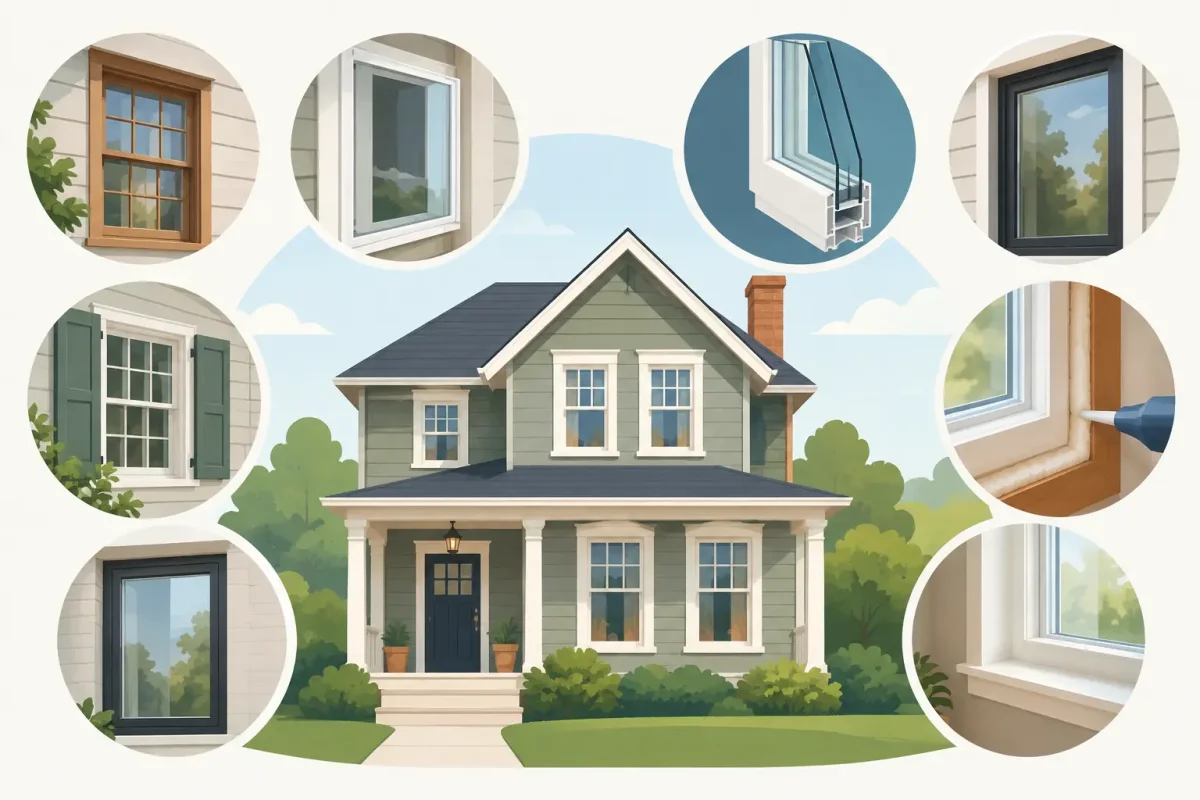
A window that sticks, fogs between the panes, or lets cold air reach the couch is not just a comfort problem. It can raise energy costs, invite moisture damage around the opening, and make an otherwise well-kept home look tired. These window retrofit examples show how homeowners can improve performance and curb appeal without always rebuilding an entire wall.
A retrofit can mean different things depending on the condition of the existing window frame. In some cases, a new replacement window is installed within a sound existing frame. In others, the old unit, trim, and damaged materials around the opening need to come out so the problem can be repaired properly. The right choice depends on what is behind the trim, not only what the glass looks like from inside.
What a Window Retrofit Can Solve
Most homeowners start looking at windows because of a visible issue: condensation, peeling paint, a broken crank, or a room that never feels comfortable. A professional inspection often finds a larger concern, such as failed seals, poor insulation around the frame, rotten wood, or water getting in from aging siding and exterior caulking.
A well-planned retrofit can improve several issues at once. New energy-efficient glass reduces heat transfer. Tighter seals cut drafts. Updated frame colors and grille styles refresh the front of the home. When the work includes proper flashing, trim, and exterior sealing, it also helps protect the wall assembly from water.
The key is not choosing the fastest-looking fix. It is choosing a window installation method that matches the home’s condition and gives the new unit a long service life.
8 Window Retrofit Examples Homeowners Can Use
1. Replacing drafty double-hung windows with vinyl units
Older double-hung windows are common in many established neighborhoods. They may have loose sash tracks, worn weatherstripping, single-pane glass, or old storm windows that no longer seal well. If the original frame is square, dry, and structurally sound, an insert replacement can often fit inside the existing opening.
A modern vinyl double-hung window provides low-maintenance performance, insulated glass, and easier cleaning. Tilt-in sashes are especially practical for second-story windows. The trade-off is that an insert window slightly reduces the visible glass area because it sits within the old frame. For most homeowners, that small change is worth the improvement in comfort and efficiency.
2. Updating a picture window with low-E glass
Large fixed picture windows bring in daylight, but older models can make a room feel cold in winter and uncomfortably warm in direct afternoon sun. If the frame is in good shape, replacing the unit with a fixed window that uses low-E glass can reduce heat gain and heat loss while keeping the open view.
This retrofit works well in living rooms, stairwells, and front-facing spaces where appearance matters. A contractor should inspect the perimeter carefully before installation. A picture window has no moving parts, so homeowners sometimes assume it cannot leak. In reality, failed exterior caulking or poor flashing around a fixed window can send water behind siding and trim.
3. Converting a hard-to-reach window into a casement
A window above a kitchen sink or tucked into a narrow side wall can be difficult to operate. Replacing an old slider or double-hung with a casement window is a practical upgrade when the opening allows for it. Casement windows crank outward and generally create a very tight seal when closed.
This is a strong choice for rooms where fresh air matters but the homeowner does not want to struggle with a sash. The limitation is clearance outside. A casement window may not be suitable beside a walkway, deck, or other area where an outward-opening sash would be in the way.
4. Replacing fogged insulated glass units
When moisture forms between two panes of glass, the insulating seal has failed. The window may still close and lock, but the cloudy appearance will not go away on its own. In certain newer windows, replacing only the sealed glass unit can be a cost-effective repair.
That approach makes sense when the frame, sash, hardware, and weatherstripping are all in good condition. If the window also has warped frames, failed locks, drafts, or water staining, glass-only replacement may simply delay a full replacement. An inspection can help separate a focused repair from a window that has reached the end of its useful life.
5. Reworking a bay or bow window with damaged exterior trim
Bay and bow windows are a major curb appeal feature, but they also have more exterior joints than a standard flat window. The roof cap, side panels, support system, and trim all need to keep water out. If the exterior trim is soft, stained, or pulling away, replacing only the glass will not solve the underlying risk.
A more complete retrofit may include a new window assembly, updated support hardware, insulated seat board, new flashing, and low-maintenance exterior trim. This type of project costs more than a standard replacement window, but it protects a larger and more exposed opening. It can also correct sagging, drafts, and water intrusion before those issues spread into the wall.
6. Upgrading basement windows for light and safety
Basement windows are often small, old, and overlooked until they leak. Replacing a steel-framed basement window with an energy-efficient vinyl unit can improve comfort in finished lower levels and reduce moisture concerns around the opening.
Where a basement room is used as a bedroom, the opening may need to meet local emergency escape requirements. That can involve enlarging the window opening or improving the window well, not just installing a new unit in the same space. This is a good example of why measurements and code considerations should come before ordering materials.
7. Matching replacement windows during a siding upgrade
Window replacement is often more efficient when it is coordinated with siding, soffit, fascia, or exterior trim work. Once old siding comes off, the contractor has better access to inspect window flashing, insulation, sheathing, and water-damaged materials around the openings.
For a homeowner planning an exterior refresh, this can prevent duplicate labor later. New windows can be properly integrated with the water-resistive barrier and finished with clean trim details that match the siding color. The upfront scope is larger, but the finished result looks intentional rather than pieced together over several years.
8. Changing a front window style to improve curb appeal
Not every retrofit starts with a draft. A front elevation can look dated because the windows are undersized, mismatched, or framed with worn shutters and trim. Replacing a plain front window with a wider mulled combination, adding a transom, or choosing a darker exterior frame can change the look of the home without a full structural renovation.
This option needs careful planning. Enlarging an opening may require structural work, permits, and changes to siding or brickwork. For homeowners who want a visible exterior transformation, it is often worth discussing window style alongside the entry door, stone veneer, and siding design so the finished facade has a consistent look.
Insert Replacement or Full-Frame Replacement?
An insert replacement is usually the less invasive option. It is a good fit when the existing frame is solid, the opening is square, and there is no sign of water damage. Installation can be quicker, and interior trim may remain untouched.
A full-frame replacement removes the old window down to the rough opening. It gives the installer access to hidden problems and allows new flashing and insulation to be installed correctly. This is the better choice when there is rot, recurring leaks, damaged frames, or a planned change in window size or style.
Neither method is automatically better. A low-cost insert installed over damaged wood is not a value. On the other hand, removing sound frames solely because full-frame replacement sounds more thorough may add cost without enough benefit. The inspection should drive the recommendation.
What to Check Before Approving the Work
Before a window project begins, ask how the contractor will handle water management around the opening, not just which glass package they recommend. Confirm what happens if hidden rot is found, whether exterior trim is included, and how the inside and outside will be protected during installation.
You should also understand the warranty on both the product and the labor. A quality window is only as dependable as its installation. Proper shimming, insulation, flashing, sealing, and cleanup are what turn a new unit into a lasting upgrade.
If your windows are drafty, fogged, difficult to operate, or surrounded by worn exterior trim, start with an on-site assessment. The right retrofit can make the home quieter, more comfortable, and better protected without creating more work than the problem requires.
23 September 2026
How Siding Repairs Prevent Rot in Your Home

23 September 2026