A buyer may love your kitchen, but they will form an opinion about the house before they reach the front door. Peeling siding, sagging gutters, a stained roof, or a dated entry can suggest expensive problems ahead. The best exterior upgrades for resale do more than make a home look sharper. They show buyers that the property has been protected, maintained, and is ready for its next owner.
For homeowners preparing to sell, the goal is not to renovate every exterior surface. It is to address visible wear, water-management concerns, and high-impact details that can affect showings, inspections, and buyer confidence. The right project depends on your home’s age, condition, neighborhood, and timeline.
Start With Problems Buyers Can See
Exterior upgrades deliver the strongest resale value when they solve an obvious issue. Buyers are quick to notice cracked or missing siding panels, overflowing eavestroughs, rotted fascia, damaged shingles, and fogged window glass. Even if a problem is limited to one section of the home, it can make buyers wonder what else has been neglected.
Before selecting finishes or colors, arrange a professional exterior inspection. A contractor can identify where water is getting behind siding, whether gutters are draining correctly, if roof edges need attention, and which repairs should be completed before listing. This gives you a clear scope instead of spending money on cosmetic work that does not address the real concern.
A clean, well-maintained exterior also reduces friction during negotiations. No upgrade can guarantee a return, but fewer visible defects can help prevent buyers from assuming the worst or requesting a large credit after an inspection.
Best Exterior Upgrades for Resale Value
Replace worn or dated siding
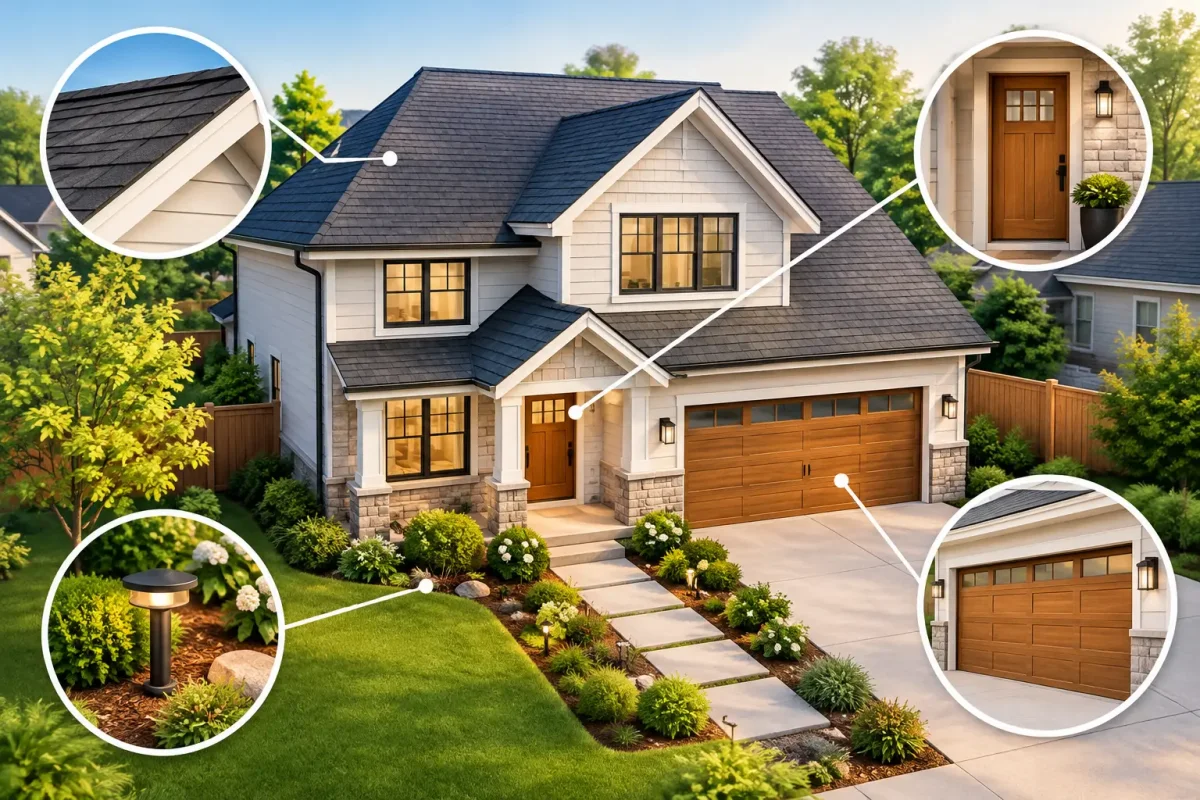
New siding is one of the most visible ways to change a home’s appearance. It can make an older property look current, cleaner, and better cared for without changing its footprint. For resale, neutral colors with enough contrast around trim and the front door tend to appeal to the widest range of buyers.
Siding replacement is especially worthwhile when existing panels are faded, warped, cracked, loose, or showing signs of moisture damage. It also makes sense when multiple small repairs would leave mismatched colors and patchwork lines across the façade.
Material selection matters. Vinyl siding is a practical choice for many homeowners because it is durable, low-maintenance, and available in many profiles. Fiber cement and engineered options can create a more substantial look, but the added cost should fit the price range of your neighborhood. A premium material may not pay off if surrounding homes are more modestly finished.
Repair or replace eavestroughs, soffit, and fascia
Eavestroughs are not usually a buyer’s first compliment, but they can quickly become a buyer’s concern. Gutters that overflow, pull away from the roofline, or drain too close to the foundation signal a risk of water damage. Bent fascia and stained soffit can point to roof or ventilation issues.
A properly sized, securely installed eavestrough system improves the roofline immediately and helps direct water away from the home. If your gutters are functioning but look worn, a targeted replacement may be enough. If water has damaged the surrounding trim, it is smarter to coordinate the eavestrough, soffit, and fascia work at the same time so the finished result looks consistent.
This is a practical resale upgrade because it combines curb appeal with protection. Buyers may not ask what brand of gutter you installed, but they will notice clean roof edges and a system that appears ready for the next heavy rain.
Address roof issues before they become negotiating points
A roof near the end of its service life can dominate a buyer’s inspection report. Missing shingles, algae staining, visible sagging, worn flashing, and damaged roof edges can make buyers cautious even when the interior is in good condition.
If the roof has a few isolated issues and still has useful life remaining, professional repairs may be the right move. If it is broadly worn or has recurring leaks, replacement can remove a major obstacle to a sale. Keep the choice realistic for your market. A durable, attractive roofing system in a conventional color often makes more sense than a costly specialty product that does not match nearby homes.
Do not cover up roof problems with a quick cleanup alone. A clean roof helps presentation, but buyers and inspectors will still look for the condition of the shingles, ventilation components, flashing, and drainage details.
Upgrade the front door and entry details
The front entry is where curb appeal becomes personal. Buyers stand there while waiting for showings, opening lockboxes, and looking back at the house from the walkway. A faded door, outdated hardware, or damaged trim can weaken an otherwise strong first impression.
Replacing an inefficient or damaged front door can be a focused, high-impact project. Choose a style that suits the architecture of the house and avoid colors that are overly personal unless they fit the local market. New hardware, clean house numbers, working exterior lighting, and repaired trim can complete the change without turning the entry into an oversized renovation.
If the doorway feels dark or drafty, a door with appropriate glass panels or sidelights may improve both appearance and function. The best option depends on privacy, layout, and how much natural light the entry can handle.
Replace failing windows where it counts
Windows affect comfort, energy efficiency, noise control, and the appearance of the façade. Buyers often notice windows with condensation between panes, damaged frames, difficult operation, or obvious drafts. These issues can make a house feel less cared for and raise concerns about utility costs.
A full window replacement can be valuable when units are consistently failing across the home. But it is not always necessary before resale. If only a few windows have broken seals or damaged frames, replacing those units may be the more cost-effective approach. Prioritize highly visible front-facing windows and any openings with operational or moisture problems.
Avoid choosing windows based on a sales claim alone. Proper measurements, flashing, insulation, and installation quality are just as important as the window itself. A poorly installed replacement can create water and air-leak problems that are far more expensive than the original issue.
Add stone veneer with restraint
Stone veneer can give a front elevation more depth and character, especially on homes with large, flat siding areas. Used around an entry, lower façade, porch columns, or garage, it can create a more finished look that photographs well for listings.
The key is proportion. Too much stone, or a color that fights with the siding and roof, can look dated quickly. A smaller accent area with a natural color blend is usually a safer choice for resale than covering every available surface.
Coordinate Upgrades for a Finished Look
The most convincing exterior projects work together. New siding beside old gutters, a fresh front door under deteriorated soffit, or stone veneer paired with damaged trim can make the home look partially completed. Buyers may not know the technical names for every exterior component, but they notice when lines, colors, and materials do not feel connected.
If several elements are aging, a coordinated exterior project can save time and reduce the need for separate crews. It also lets you choose a cohesive color plan for siding, trim, eavestroughs, roof accents, and the entry. For homeowners in Hamilton, Burlington, and Oakville, this approach can be particularly helpful when a sale timeline is tight and weather windows matter.
A good contractor should explain what needs immediate attention, what can be repaired, and what is unlikely to influence resale enough to justify replacement. That kind of advice protects your budget and keeps the project focused.
Spend Where Buyers Will Feel the Difference
Avoid making resale decisions based only on a broad return-on-investment percentage. Local buyer expectations, the home’s current condition, and comparable listings matter more. A modest house with visibly failing gutters and siding needs protection and repair before it needs luxury cladding. A well-maintained home in a competitive neighborhood may benefit most from a stronger entry, updated siding color, and polished roofline details.
Keep records of completed work, warranty information, and any before-and-after photos. These details support buyer confidence, particularly for roofing, windows, siding, and drainage work. They give your real estate agent useful proof that the property has been cared for instead of simply refreshed for photos.
The right exterior work should leave your home looking like it has been maintained for years, not rushed for a weekend listing. Start with an honest inspection, fix what can threaten the property, and invest in the upgrades buyers will see and trust the moment they pull up.

27 October 2026
Before and After Siding Makeover Results

27 October 2026