
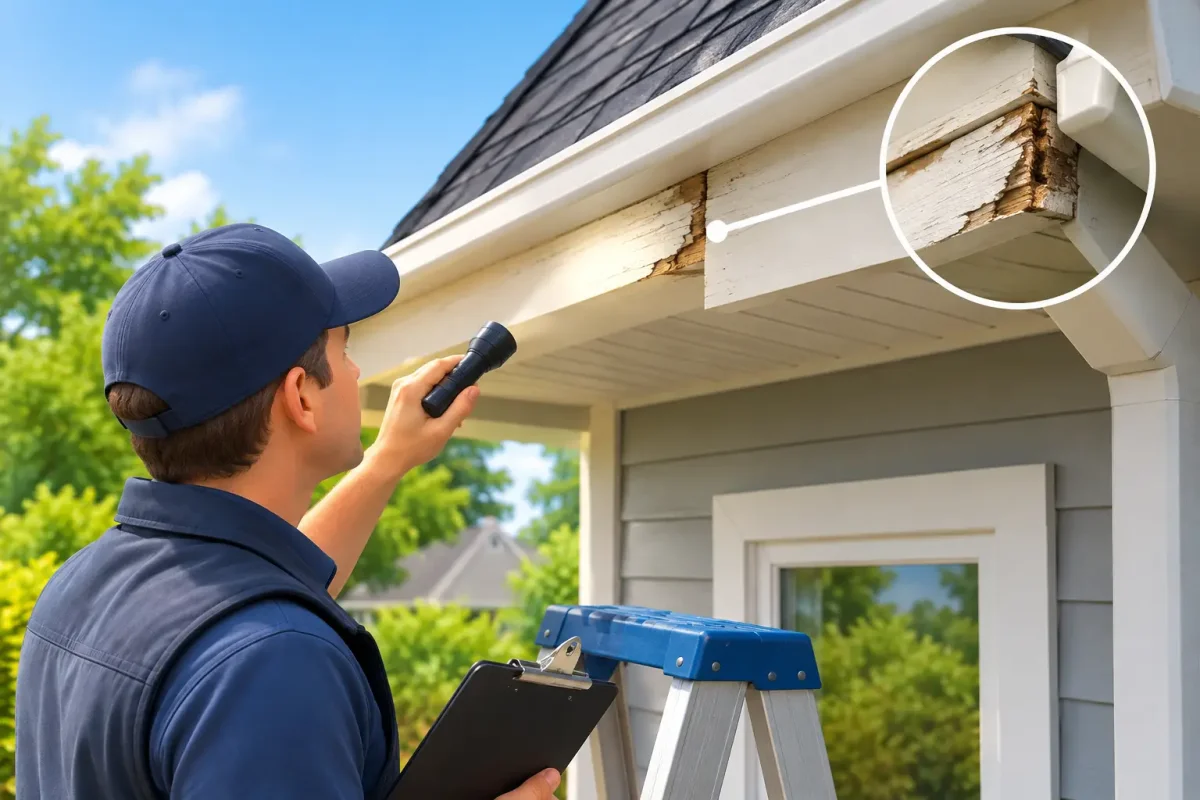
A loose gutter, a dark streak below the roofline, or peeling paint near the eaves can point to a bigger issue than it first appears. When you inspect fascia boards, you are checking one of the key pieces that protects the edge of your roof from water damage. Catching a problem early can help prevent damaged soffits, failing eavestroughs, roof-edge rot, and stains on your siding.
Fascia is easy to overlook because it sits high on the home, behind the gutters. But it works hard. The board runs along the lower edge of the roof, providing a straight, secure mounting surface for eavestroughs while closing off the roof structure. When water repeatedly reaches it, a small soft spot can become a repair that involves several connected exterior components.
Why Fascia Board Condition Matters
Your fascia boards are part of the system that manages rainwater at the roofline. Water should flow from the roof into the eavestrough, through properly pitched runs, and away from the foundation. If gutters are clogged, pulling away, overflowing, or incorrectly sloped, water can run behind them and soak the fascia.
Wood fascia is especially vulnerable to rot. Once it begins to deteriorate, it may no longer hold gutter fasteners securely. That puts extra stress on the gutter system and can lead to sagging sections, leaks at seams, or water dumping against the siding and landscaping.
Aluminum-wrapped fascia and other low-maintenance finishes offer better protection, but they are not immune to underlying issues. A dented cover, open joint, failed caulking, or hidden leak can allow moisture to reach the wood behind it. The visible finish may look fine while the structure underneath is weakening.
When to Inspect Fascia Boards
A roofline inspection is worthwhile at least once a year and after any major windstorm, ice event, or period of heavy rainfall. Spring is a practical time to look for winter-related damage, while fall gives you a chance to address drainage problems before freezing temperatures arrive.
You should also arrange an inspection when you notice overflowing gutters, water marks below the eaves, gutter spikes or brackets that have come loose, or sections of the roofline that look uneven. These are not cosmetic details. They can be early signs that water is getting where it should not.
For most homeowners, this is a ground-level check rather than a ladder project. Binoculars and a careful walk around the property can reveal a lot. If the roof is steep, the home is two stories or more, or you see signs of deterioration, a professional inspection is the safer choice.
What to Look for Around the Roofline
Start by standing back far enough to see the full gutter line. Look for a straight, consistent edge. A gutter that dips, bows, or separates from the home may be carrying standing water or pulling against damaged fascia.
Then look closer at the area where the gutter meets the board. Dark staining, peeling paint, bubbling finishes, rusting fasteners, and visible gaps all deserve attention. On wood fascia, soft or swollen areas are a concern. On wrapped fascia, watch for seams that have opened, bent metal, or discoloration near corners and end caps.
Pay attention to these four warning signs:
- Water overflowing behind the gutter: This often happens when debris blocks the trough or when the gutter is pitched poorly. Over time, the overflow can saturate the fascia and soffit.
- Gutters pulling away from the house: Loose fasteners can be caused by heavy ice or debris, but they can also mean the wood behind the gutter has lost its strength.
- Stains on soffit or siding: Brown marks, mildew, or peeling paint below the eaves suggest ongoing moisture exposure, not a one-time splash.
- Visible rot or pest activity: Crumbling wood, small holes, or birds and insects entering near the roofline may indicate an opening caused by decay.
The location of damage matters. A problem near a downspout may be related to a blockage or a joint leak. Damage that runs along an entire gutter section can point to poor slope, undersized drainage, ice buildup, or a roof edge that is directing water incorrectly.
Check the Soffit at the Same Time
Fascia and soffit meet at the roof edge, so damage in one area can affect the other. Soffit panels help ventilate the attic and close off the underside of the eaves. If they are stained, sagging, cracked, or loose, moisture may have traveled beyond the fascia.
Do not assume a soffit stain is only a gutter problem. It can also be related to a roof leak, damaged flashing, or condensation from inadequate attic ventilation. A proper assessment should identify the source of the moisture before replacement materials are installed.
Look for Clues After Rain
A dry-day inspection tells part of the story. After a steady rain, walk around the exterior and watch how water behaves. You may see water spilling over the front of a gutter, running behind it, leaking at a corner, or shooting past a downspout connection.
This is also the time to check where downspouts discharge. Water should be directed away from the foundation, not released beside the house where it can cause erosion or splash back onto lower siding. Correcting drainage can protect new fascia from repeating the same damage cycle.
What a Professional Fascia Inspection Should Include
A contractor should do more than point out peeling paint. The goal is to determine whether the fascia itself needs repair, or whether it is being damaged by another component.
A thorough inspection usually includes checking the gutter slope, fasteners, seams, downspouts, roof edge, soffit condition, and visible siding around the eaves. Where practical, the contractor may inspect behind loose or damaged sections to see whether the substrate is solid. This helps separate a surface-level finish issue from concealed rot.
The repair recommendation should match the condition of the home. If a small section of fascia is damaged but the rest is sound, a targeted replacement may be the right value. If the gutters are aging, the soffits are stained, and the fascia has widespread rot, addressing the roofline as one coordinated project is often more reliable than replacing one piece at a time.
That does not mean every inspection leads to a full exterior renovation. It means the work should solve the cause, not just cover the symptom. Installing fresh aluminum fascia over wet or rotted wood may improve appearance temporarily, but it will not restore structural strength or stop a drainage problem.
Repair, Wrap, or Replace: Choosing the Right Fix
The best solution depends on how far the damage has progressed and what is causing it. Sound wood with worn paint may only need preparation and a protective finish, though homeowners often choose aluminum wrapping to reduce ongoing maintenance. A small rotted area may require removal and replacement of the affected board before it is capped.
When gutters are old or no longer draining correctly, replacing them at the same time as fascia work can make sense. The new system can be sized, pitched, and secured to a sound surface. It also avoids the cost and risk of removing and reinstalling failing gutters later.
For homes with aging siding, damaged soffit, or roof-edge concerns, a coordinated exterior plan can produce a cleaner result and reduce repeat labor. The trade-off is a larger upfront project. The benefit is that the connected components are designed and installed to work together, with fewer opportunities for water to find a weak point.
Avoid Common Roofline Mistakes
Painting over peeling fascia without investigating the moisture source is one of the most common mistakes. The new paint may look good for a season, then fail again as trapped moisture works its way out.
Another mistake is treating gutter cleaning as the only maintenance needed. Cleaning matters, especially around mature trees, but it will not correct improper pitch, loose hangers, undersized downspouts, or damaged seams. Likewise, gutter guards can reduce debris buildup, but they need to be selected and installed properly so they do not interfere with water flow.
Avoid putting weight on gutters or using them as a handhold when working near the roof. Even a solid system is not designed to support a person. If you suspect a loose connection or rotten fascia, keep clear of the area and schedule an inspection.
Protect the Roofline Before the Next Storm
A healthy roofline is easy to take for granted, which is exactly why small water problems can grow unnoticed. If you see gutter movement, staining, peeling finishes, or suspected rot, a prompt inspection can clarify what needs attention and what can wait.
For homeowners who want one contractor to assess gutters, fascia, soffit, siding, and roof-edge details together, Petra Eavestrough & Siding provides practical recommendations based on the condition of the home. The right repair starts with finding where the water is going, then giving it a better path before the next storm tests the roofline.

29 October 2026
Homeowner’s Guide to Exterior Insulation Upgrades
29 October 2026