
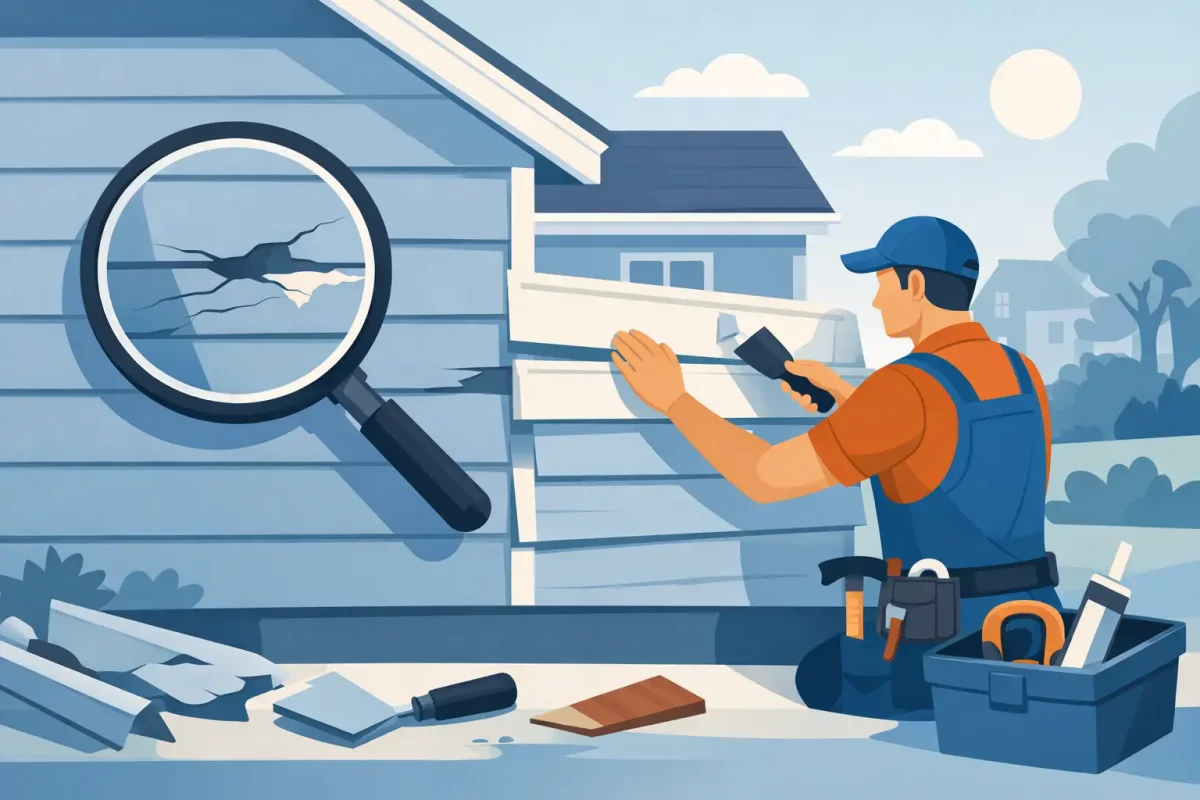
A cracked panel after a windstorm, warped boards near the hose bib, faded sections on the sunniest side of the house – these are the moments when homeowners start asking, can siding be repaired? In many cases, yes. But the right answer depends on what caused the damage, how far it has spread, and whether a repair will actually protect the home long term.
Siding is not just there to make a house look finished. It helps block water, reduce drafts, protect the wall system underneath, and support curb appeal. When it starts to fail, the issue is rarely cosmetic for long. What looks like one loose piece can sometimes point to hidden moisture, improper installation, or aging materials that are nearing the end of their service life.
Can siding be repaired, or does it need replacement?
Some siding problems are very repairable. A single cracked vinyl panel, a loose section after high winds, minor impact damage, or a few boards affected by localized moisture can often be fixed without replacing the entire exterior. If the damage is limited and the surrounding materials are still solid, repair is usually the most cost-effective option.
That said, repair is not always the smart long-term move. If the siding is brittle from age, repeatedly coming loose, visibly warped across multiple elevations, or allowing water behind the walls, patching one section may only delay a larger problem. In those cases, partial or full replacement often gives better value and better protection.
A professional inspection matters here because the visible damage is only part of the story. The condition of the underlayment, trim, house wrap, soffit, fascia, and nearby eavestroughs can all affect whether a repair will hold up.
The most common siding issues that can be repaired
Vinyl siding is one of the most repair-friendly materials when the problem is isolated. Individual panels can often be removed and replaced if they are cracked, punctured, or pulled loose. Hail, lawn equipment, and wind damage are common causes.
Engineered wood and some composite siding products can also be repaired if the affected area is small and the moisture has not spread. In some cases, one or two boards can be replaced and repainted to blend with the rest of the wall.
Aluminum siding can sometimes be repaired as well, especially when the issue is loose sections or minor panel damage. Deep dents are trickier because the material may still function, but the appearance can be hard to fully restore.
Fiber cement siding is durable, but repairs can be more involved. Replacing damaged boards is possible, though matching older sections in texture and color can be a challenge.
The key point is simple: isolated damage is usually repairable. Widespread failure is where the conversation shifts from repair to replacement.
Signs a siding repair makes sense
A repair is often the right call when the damage is limited to one area and the rest of the siding is still performing well. If the material is relatively new, still securely attached, and not showing widespread fading, buckling, or moisture damage, a targeted fix can restore protection without the cost of a full renovation.
This is especially true after storm damage. If wind has lifted a few panels or debris has cracked one section, there may be no reason to replace more than what was affected. The same applies when a repair is tied to a specific event, not a system-wide aging issue.
Matching is another practical factor. If the existing siding profile and color are still available, repairs tend to be cleaner and more worthwhile. When a close match can be installed without making the house look patched together, homeowners usually get a better result.
When siding replacement is the better investment
If your siding has problems in multiple areas, repair can turn into repeat spending. One section gets fixed, then another starts to loosen. A few boards are replaced, but moisture staining appears near the corners. At that point, the issue is often bigger than a panel-by-panel solution.
Replacement tends to make more sense when the siding has reached the end of its lifespan, when the color has faded unevenly, or when the substrate underneath has been exposed to water. It is also worth considering when homeowners are already planning related exterior work, such as new soffit and fascia, eavestrough replacement, or energy-efficient windows and doors. Coordinating those upgrades can improve the finished look and reduce disruption.
There is also the curb appeal factor. Even if repairs are technically possible, they do not always deliver a consistent appearance. If the home has aging siding on all sides, replacement may be the better choice for both protection and resale value.
Hidden damage is what changes the decision
The biggest reason not to guess with siding damage is what you cannot see from the driveway. Water can get behind loose or cracked siding and affect the sheathing, trim, insulation, and framing around windows and doors. By the time staining or soft spots appear indoors, the repair scope may be larger than expected.
This is why experienced contractors look beyond the damaged panel itself. They check whether the issue started with poor flashing, clogged gutters, failing caulking, missing trim, or improper installation. If the source of the problem is not corrected, a fresh repair can fail early.
For many homes in Southern Ontario, freeze-thaw cycles, wind exposure, and seasonal moisture put extra pressure on exterior materials. A repair should not only close the visible gap. It should restore the wall system so it performs properly through the next storm season and winter cycle.
What to expect from a professional siding inspection
A proper inspection should be straightforward and useful. The contractor should identify the type of siding, locate all visible damage, check for signs of trapped moisture, and explain whether the issue is isolated or more widespread.
Homeowners should also get a clear recommendation, not a vague sales pitch. If a repair is enough, that should be stated directly. If partial replacement or a larger exterior update is the smarter path, the reasons should be easy to understand. Good recommendations are based on condition, durability, appearance, and value over time.
In some cases, the inspection may uncover related issues with soffit, fascia, or eavestrough performance. That is not unusual. Exterior components work together, and water management problems often show up in more than one place.
The trade-off between repair cost and long-term value
Most homeowners start with the same goal: fix what is needed without overspending. That is reasonable. But the cheapest immediate repair is not always the lowest total cost.
If a targeted repair buys years of reliable performance, it is money well spent. If it only postpones replacement for a few months, it may not be. The right choice depends on the age of the siding, the availability of matching materials, the condition of nearby components, and whether the home would benefit from a broader exterior improvement plan.
That is where working with a contractor who handles siding as part of complete exterior renovation work can help. A company like Petra Eavestrough & Siding can look at the full picture, not just the damaged piece, and recommend a solution that protects the home instead of patching symptoms.
Can siding be repaired without making it obvious?
Sometimes yes, sometimes not. A lot depends on the siding type, age, and sun exposure. Even if the original color is still available, older siding may have faded enough that the new section stands out at first.
This does not always make repair a bad option. On less visible elevations, an appearance mismatch may be minor compared to the cost of replacement. On the front of the home, homeowners are often more sensitive to how the finished result looks.
A good contractor will be honest about this before the work starts. That way, you can decide whether the goal is a functional repair, a close visual match, or a larger upgrade that refreshes the whole exterior.
If your siding has visible damage, the best next step is not to wait for the next storm to test it. Get it inspected while the problem is still manageable, and make the decision based on protection, appearance, and what will serve your home best over the next several years.
19 June 2026
Siding Repair or Replacement: What to Choose

19 June 2026