
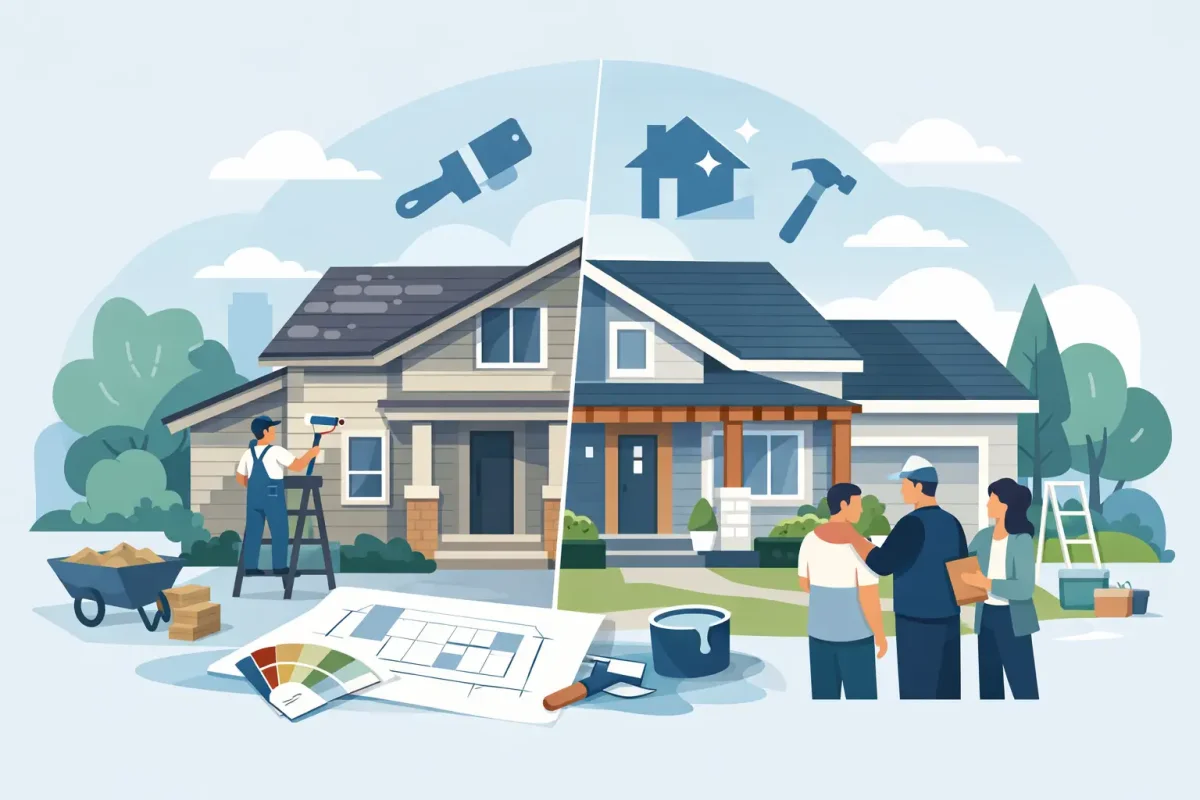
The houses that need the most work rarely need just one fix. A roof leak shows up at the same time the siding is faded, the gutters overflow in heavy rain, and the front entry makes the whole place look older than it is. That is why a complete home exterior makeover often makes more sense than tackling each problem one at a time.
For many homeowners, the real issue is not whether the house needs attention. It is how to handle multiple exterior problems without dragging the project out for months, hiring several trades, and paying for repeat visits, repeat cleanup, and repeat disruption. When the work is planned as one coordinated project, the result is usually better protection, better curb appeal, and fewer headaches.
What a complete home exterior makeover actually includes
A complete home exterior makeover is not just a cosmetic update. It usually combines the key parts of the home envelope that work together to protect the structure from water, wind, temperature swings, and everyday wear.
In most cases, that means reviewing siding, eavestroughs and downspouts, soffit and fascia, roofing components, windows, doors, and sometimes stone veneer or other accent materials. Not every home needs every service, but the big advantage is seeing the full picture before any material is ordered.
That matters because exterior systems affect each other. New siding installed beside failing fascia is a short-term improvement. New gutters attached to rotted trim do not solve the underlying problem. Replacing windows without addressing old siding details can leave weak spots around the openings. A coordinated plan helps avoid those mismatches.
Why homeowners choose a full exterior project instead of piecemeal repairs
The biggest reason is efficiency. If your home has several aging exterior components, doing the work in phases can look cheaper at first, but often costs more over time. Separate crews, separate estimates, separate disposal, and separate setup all add up.
There is also the issue of timing. In climates with freeze-thaw cycles, driving rain, snow, and humid summers, waiting too long between repairs can create new damage. A minor gutter problem can become fascia rot. Worn siding can let moisture reach the wall system. Drafty windows can keep energy bills high year after year.
A full project also gives homeowners more control over the final look. Instead of replacing one visible section now and trying to match the rest later, you can choose colors, profiles, trim, and accents as a whole. The home looks intentional, not patched together.
That said, not every property needs a full replacement on every surface. Sometimes a complete home exterior makeover means replacing the most critical systems now and updating secondary features in the same design plan. The right scope depends on condition, budget, and how long you plan to stay in the home.
Where to start with a complete home exterior makeover
Start with condition, not color.
Homeowners naturally think about style first because it is the most visible part of the project. But the smartest place to begin is a full inspection. You want to know where water is getting in, what materials are near the end of their life, whether ventilation is doing its job, and which upgrades will improve energy performance.
A proper exterior assessment should look at roof edges, flashing, gutter drainage, soffit ventilation, fascia condition, siding integrity, trim details, window and door performance, and visible signs of moisture damage. Once that information is clear, design choices become easier because you know what has to be addressed and what is optional.
The core parts of the project
Siding sets the tone and protects the walls
Siding usually has the biggest visual impact. It covers the largest surface area, and when it is faded, cracked, loose, or storm-damaged, the whole house looks tired. New siding can dramatically change curb appeal, but its job is not just appearance. It also helps defend the home against moisture and improves the performance of the wall assembly when installed correctly.
Material choice depends on budget, maintenance expectations, and style. Vinyl remains popular because it is cost-effective and low maintenance. Other options may offer different finishes or profiles. What matters most is proper installation, clean trim work, and making sure the siding system works with the rest of the exterior.
Eavestroughs, soffit, and fascia protect the roofline
These components do not always get much attention until something fails. But they are essential. Eavestroughs move water away from the house. Soffit helps with airflow. Fascia supports the gutter system and finishes the roof edge.
If one of these parts is deteriorating, replacing only the visible finish elsewhere can leave a weak point in the system. In many exterior renovations, the roofline details are what turn a decent result into a clean, complete one.
Roofing details matter even if you are not replacing the whole roof
Some homes need full roofing work. Others only need related exterior components checked and corrected during the renovation. The point is to inspect the roofline closely while access is already available.
If shingles are aging, flashing is compromised, or ventilation is poor, those issues should be addressed before or during the rest of the makeover. Skipping them can shorten the life of your other upgrades.
Windows and doors improve comfort as much as appearance
Old windows and entry doors often stand out after new siding is installed. More importantly, they can be a source of drafts, heat loss, and water intrusion.
A full exterior upgrade is a practical time to replace them because the openings and trim can be integrated cleanly with the new cladding. The result usually looks better and performs better than replacing them as a completely separate project later.
Stone veneer adds contrast when it is used carefully
Stone accents can make a front elevation look stronger and more finished. The key is restraint. Too much stone can make a home look heavy, while the right amount can define an entryway, garage surround, or lower wall section.
This is one area where design balance matters. A contractor should help you choose accent areas that fit the style of the house rather than adding material just because it looks premium.
Budget, timing, and trade-offs
A complete makeover is a larger investment, so homeowners need a realistic plan. The price depends on house size, material selection, access, existing damage, and how many systems are being replaced at once.
The trade-off is straightforward. A bigger upfront project usually costs more now, but it can reduce future repair bills, avoid duplicated labor, and increase the useful life of the home exterior as a system. It may also improve resale appeal, especially when the home looks updated and well maintained from the street.
Timing matters too. Many homeowners wait until damage becomes visible, but earlier planning gives you more control over materials, scheduling, and scope. If the project is done before failure gets worse, you are less likely to pay for hidden repairs after work begins.
Choosing the right contractor for a complete exterior makeover
This is not a job you want split between too many companies unless there is a very specific reason. The more moving parts involved, the more important it is to have one clear plan, one schedule, and one team responsible for the finished result.
Look for a contractor that handles multiple exterior services, provides on-site inspections, explains what is necessary versus optional, and gives a written scope that is easy to follow. Licensed and insured status matters. So do material warranties, labor warranties, cleanup standards, and a realistic timeline.
You should also pay attention to how the estimate process feels. If the recommendations are rushed or vague, that is a problem. A good exterior contractor should be able to explain why certain components should be done together and where a phased approach could still work if budget requires it.
For homeowners who want fewer moving parts, working with a company like Petra Eavestrough & Siding can simplify the process because the inspection, quote, installation, and final walkthrough are handled as one coordinated exterior project.
What a successful exterior makeover looks like
The best results are obvious before you get into technical details. Water drains where it should. Trim lines are straight. The color combination fits the house. The front entry feels sharper. Drafts are reduced. Cleanup is complete. And the home looks protected, not just refreshed.
A successful project also holds up after the crew leaves. Gutters manage heavy rain. Siding panels stay secure. Windows and doors close properly. Roof edges look finished. That is the difference between an exterior makeover that photographs well and one that actually solves homeowner problems.
If your home is showing wear in more than one area, treating the exterior as a connected system is usually the smarter move. The goal is not to replace everything for the sake of it. The goal is to make the house stronger, more efficient, and easier to maintain for years to come.

4 July 2026
Stone Veneer Installation Cost Explained

4 July 2026