
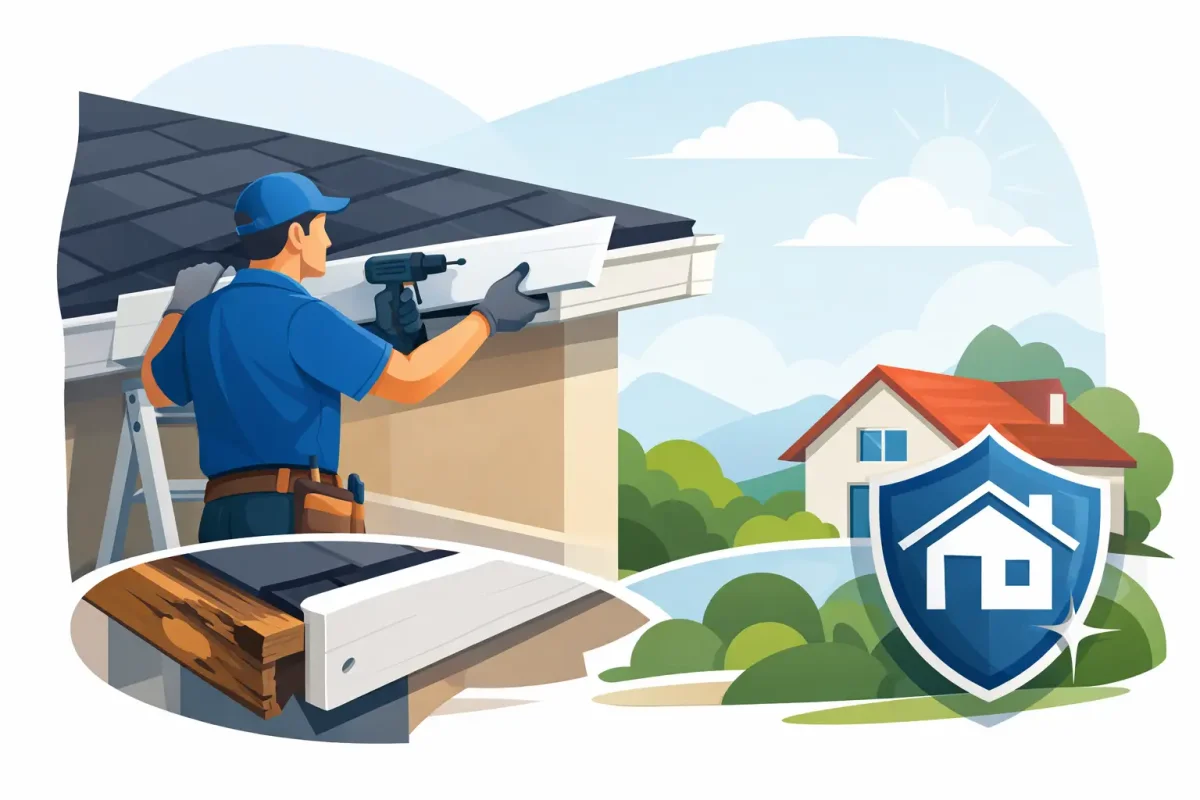
A failing fascia board can turn a small gutter issue into expensive damage behind your roofline. A professional fascia board replacement service addresses the exposed board where your roof edge, soffit, and eavestrough system meet – before rot, leaks, and loose gutters spread further into the home.
For homeowners, fascia is easy to overlook because it sits high on the exterior. But it performs a major job. It creates a finished roof edge, helps support eavestroughs, and protects the roof structure from repeated moisture exposure. When fascia starts to fail, prompt replacement is one of the most practical ways to protect your home and restore curb appeal.
What a Fascia Board Does for Your Home
Fascia is the long, straight board installed along the lower edge of the roof. Eavestroughs are commonly fastened directly to it. Along with the soffit beneath it, the fascia helps create a clean, sealed transition between the roof and exterior walls.
A solid fascia board provides a secure mounting surface for eavestroughs. That matters during heavy rain, snowmelt, and ice buildup, when gutters carry significant weight. It also covers vulnerable roof-edge framing that would otherwise be exposed to wind-driven rain, nesting pests, and moisture.
The board itself is only one part of the system. If water is overflowing from clogged or poorly pitched gutters, replacing fascia without correcting the drainage problem may only delay the next repair. The right contractor looks at the full roofline: shingles, drip edge, soffit ventilation, fascia condition, eavestroughs, downspouts, and the source of water intrusion.
Signs You Need Fascia Board Replacement
Peeling paint and faded trim are often the first visible warnings. They do not always mean the wood beneath is rotten, but they deserve attention. Water-stained areas, soft spots, cracks, gaps at the roof edge, and sagging eavestroughs are stronger signs that replacement may be needed.
Look up after a hard rain. Water spilling over an eavestrough, dripping behind it, or running down the siding can soak the fascia repeatedly. You may also notice gutters pulling away from the house, nail heads backing out, or sections that appear uneven. These conditions can indicate that the fascia no longer provides a secure base for the gutter system.
Inside the home, attic moisture, moldy odors, or stains near exterior walls can sometimes be connected to a roofline issue. However, these symptoms can also come from roof leaks, poor attic ventilation, or plumbing problems. An on-site inspection helps identify the actual cause instead of replacing material based on appearance alone.
Why Delaying Repairs Usually Costs More
Fascia damage rarely stays limited to one board. Once moisture gets into exposed wood, it can move into the soffit, roof sheathing, rafter tails, siding, and wall assembly. Insects and small animals may also use soft or open areas to enter the roof cavity.
There is also the gutter problem. A full eavestrough holding rainwater, wet leaves, or ice is heavy. When it is attached to weakened fascia, the fasteners can loosen and the gutter can pull away. That can damage the roof edge and direct water toward the foundation rather than away from it.
Replacing damaged fascia early is usually a focused exterior repair. Waiting until surrounding components have deteriorated can turn it into a larger roofing, soffit, siding, and eavestrough project. The goal is not to replace more than necessary. It is to fix the source of the problem while the repair remains manageable.
What a Professional Fascia Board Replacement Service Includes
A proper repair starts with inspection, not a quick cover-up. The contractor should assess the condition of the existing fascia, check whether the wood behind it is sound, and determine why the damage occurred. If the underlying framing is compromised, that needs to be repaired before new fascia is installed.
The damaged sections are then removed carefully. This may require temporarily removing eavestroughs, downspouts, soffit panels, or nearby trim to access the full extent of the issue. New fascia is installed level and securely fastened so it can properly support the gutter system.
Material selection depends on the home and the scope of work. Wood fascia can be appropriate where it matches existing construction, but it requires ongoing paint maintenance and is vulnerable if drainage problems return. Aluminum-wrapped fascia is a popular low-maintenance option because it provides a clean finished look and shields the board beneath from direct weather exposure. Vinyl or composite trim may also suit certain rooflines and exterior designs.
The key is that cladding is not a substitute for repairing rot. Covering damaged wood can hide the problem temporarily while moisture continues to work behind the trim. A dependable installation repairs the substrate first, then adds the finish material for long-term protection.
When to Replace Soffit and Eavestroughs at the Same Time
A fascia repair does not automatically mean every roofline component needs replacement. If your soffit is ventilating properly, your eavestroughs are securely attached, and the damage is limited to one area, a targeted repair may be the right value.
But coordinated replacement can make sense when several components are aging together. New fascia alongside dented gutters or failing soffit can leave the roofline looking unfinished. More importantly, a worn gutter system may continue to overflow and put the new fascia at risk.
Combining fascia, soffit, and eavestrough work often reduces repeat setup and helps ensure the parts fit correctly as one system. It is especially worthwhile when homeowners are also planning roof replacement, new siding, or exterior trim updates. A coordinated approach can improve drainage, ventilation, protection, and curb appeal in one project.
Choosing Materials for Southern Ontario Weather
Homes in Hamilton, Burlington, Oakville, Mississauga, and nearby communities face rain, snow, freeze-thaw cycles, humidity, and summer heat. Fascia materials and installation details need to hold up through those changing conditions.
Aluminum fascia is widely chosen for its low-maintenance finish and ability to match eavestrough and siding colors. Properly installed, it gives the roof edge a crisp appearance without the frequent scraping and repainting associated with exposed wood. It still needs a solid backing board and properly managed water flow to perform well.
Wood can offer a traditional look and may be necessary for certain repairs, but it needs careful sealing, painting, and maintenance. Composite products can offer strong moisture resistance, though material cost and compatibility with the existing exterior should be considered. There is no one material that fits every home. The best choice depends on the condition of the roofline, the look you want, maintenance expectations, and the surrounding exterior materials.
What to Expect During the Project
The process should be clear and organized. First, an exterior professional inspects the affected roofline and explains what is damaged, what can be retained, and what should be replaced. You should receive a customized estimate that identifies the work, materials, and any related gutter or soffit recommendations.
On installation day, the crew protects the work area, removes damaged material, completes structural repairs where needed, and installs the new fascia and trim. If eavestroughs are part of the project, they are reinstalled or replaced with correct pitch and secure fastening. A final walkthrough should confirm that the roofline is finished cleanly and that water will drain where it should.
Project timing depends on the extent of rot, access, weather, and whether multiple exterior systems are being upgraded. Small repairs can move quickly, while larger roofline transformations need more planning. What should not be rushed is diagnosing the source of moisture. Correcting that detail is what protects the investment.
Get the Roofline Fixed Before Water Finds a Way In
A fascia issue is not just a cosmetic concern. It can be an early warning that your gutter system, roof edge, or exterior drainage needs attention. Petra Eavestrough & Siding provides on-site inspections and practical recommendations for homeowners who want the repair handled correctly, with clean workmanship and materials built for the local climate.
If you see peeling fascia, sagging gutters, water stains, or visible gaps around the roof edge, schedule an inspection before the next heavy storm turns a repairable problem into broader exterior damage.

12 July 2026
How to Choose House Siding for Lasting Value
12 July 2026