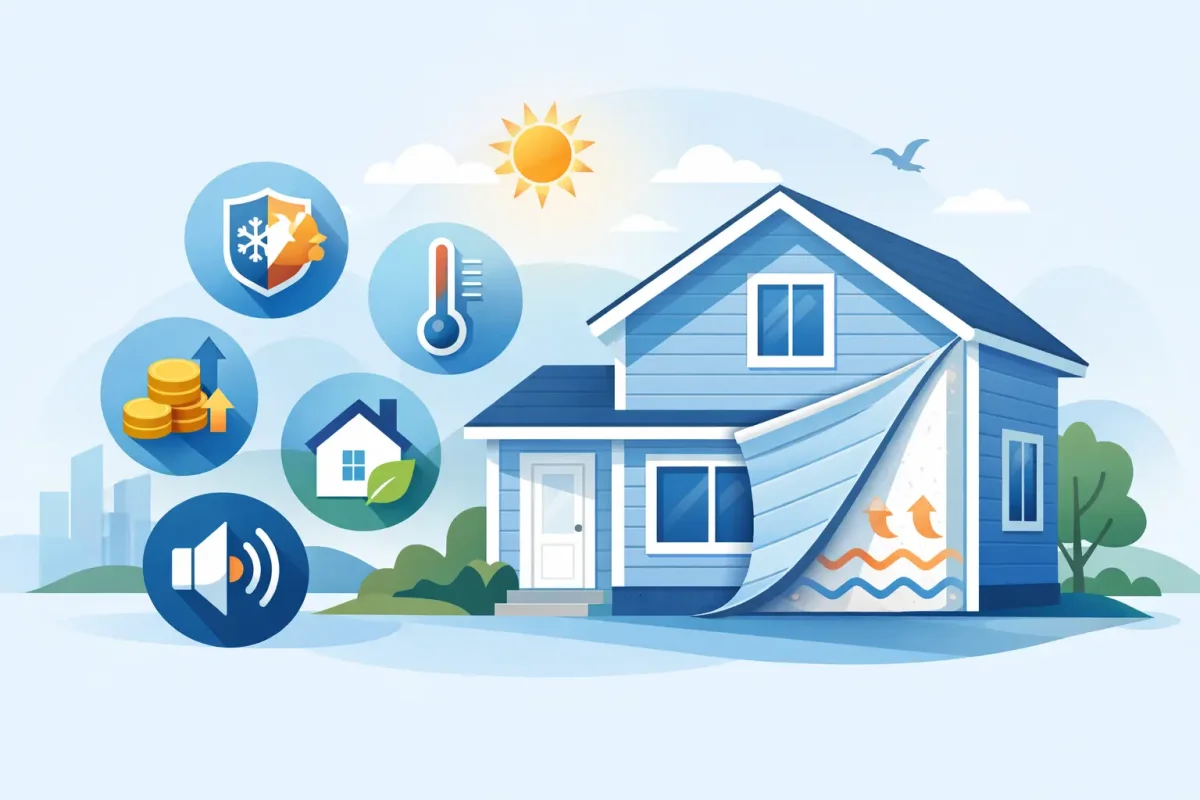
A cold room beside an exterior wall, siding that looks wavy after a hard winter, and rising heating bills can all point to the same part of your home: the exterior cladding. The five benefits of insulated vinyl siding are worth considering when aging siding no longer protects, performs, or looks the way it should.
Unlike standard vinyl panels, insulated vinyl siding has a rigid foam backing attached behind each panel. That added layer helps the siding sit flatter against the wall while adding a measure of thermal performance. For homeowners planning an exterior renovation, it can be a practical way to improve comfort and curb appeal in one project.
What Insulated Vinyl Siding Actually Does
Insulated vinyl siding is not a replacement for proper wall insulation, air sealing, windows, or roof ventilation. It is an exterior finish that adds a continuous layer of insulation over portions of the wall framing, where heat can otherwise move more easily through studs.
The foam backing also gives vinyl siding more support. Standard vinyl is designed to expand and contract with temperature changes, but unsupported panels can look loose or uneven over time. Insulated panels have a firmer surface behind them, which can create a cleaner finished appearance.
The right result still depends on the condition of the wall underneath. Before installation, a qualified contractor should inspect for moisture damage, soft sheathing, missing flashing, poor drainage, and areas where water may be entering around windows, doors, soffit, or eavestroughs. New siding should never be used to cover an active exterior problem.
Five Benefits of Insulated Vinyl Siding for Your Home
1. Better comfort along exterior walls
The first benefit is often the one homeowners notice most: rooms can feel more even. The foam backing helps reduce thermal bridging through wall studs and adds insulation directly behind the siding. In cooler climates, that can help reduce the cold-wall feeling in bedrooms, family rooms, and other spaces along the outside of the house.
Results vary by home. A well-insulated house with newer windows may see a modest change, while an older home with bare or poorly insulated walls may see a more noticeable improvement. Either way, insulated siding can complement other upgrades rather than forcing you to tackle every efficiency project at once.
2. A stronger, straighter-looking exterior
Vinyl siding is durable, but it is still a lightweight material. Without support behind it, panels can show ripples, gaps, or an uneven profile, especially when installed over walls that are not perfectly flat. Insulated siding adds a rigid backing that helps each panel hold its shape.
That makes a difference when sunlight hits the side of the home. The exterior tends to look more solid and consistent, with cleaner lines around windows, doors, corners, and trim. For homeowners who want a visible upgrade without the maintenance demands of wood siding, this is a major advantage.
A professional installation matters here. Proper nailing, expansion spacing, flashing details, and trim work allow the siding to move as designed without looking loose. A premium material cannot make up for rushed installation.
3. Lower maintenance without sacrificing curb appeal
Insulated vinyl siding offers the practical maintenance benefits homeowners expect from vinyl. It does not need routine painting, it resists rot, and it will not absorb moisture the way wood can. Most homes only need periodic rinsing with a garden hose and mild soap to remove dirt, pollen, and surface mildew.
That does not mean it is maintenance-free. Tree branches, lawn equipment, and severe impact can still damage any siding product. Caulking around penetrations and trim should also be checked as part of normal exterior maintenance. But compared with repainting and repairing deteriorated wood every few years, the upkeep is far more manageable.
The color and profile choices also make it easier to match the character of your home. Whether you prefer a traditional horizontal lap profile or a more textured look, siding can be coordinated with new soffit, fascia, eavestroughs, windows, doors, or stone veneer for a finished exterior rather than a pieced-together repair.
4. Added protection from weather and everyday wear
Your siding is part of the system that directs water away from the wall assembly. When installed with proper housewrap, flashing, trim, and drainage details, insulated vinyl siding provides a durable outer layer against rain, wind, snow, and temperature changes.
The foam backing helps the panels resist dents from minor impacts better than hollow vinyl siding. It will not make the wall indestructible, but it can provide more support during normal day-to-day wear. This is especially useful on exposed sides of a home, around walkways, or in areas where children, pets, and outdoor equipment see regular use.
Protection also depends on the details above and below the siding. Overflowing gutters, damaged fascia, roof leaks, or improperly flashed windows can send water behind any cladding. Coordinating these exterior components during the project helps protect the investment and avoids having to remove new siding later for repairs.
5. Long-term value for an exterior renovation
Insulated vinyl siding usually costs more than standard vinyl siding, so it should be evaluated as a long-term exterior upgrade rather than the lowest-price option. The added comfort, improved appearance, low upkeep, and durable finish can make it a strong value for homeowners who plan to stay in their homes for years.
It can also support resale appeal. Buyers often respond well to an exterior that looks clean, well maintained, and recently updated. While no contractor can promise a specific return on investment, new siding can reduce the concern that a buyer will need to take on an immediate repair project after closing.
Material warranties and workmanship coverage matter as much as the panel selection. Ask what is covered, how long the coverage lasts, and who handles a concern if it comes up after the job is complete. Clear answers are a sign of a contractor that stands behind the work.
When Insulated Vinyl Siding Makes the Most Sense
Insulated vinyl siding is a good fit when your existing siding is faded, cracked, loose, or repeatedly requiring repairs. It also makes sense when you want a more polished exterior and would benefit from a small but meaningful improvement in wall comfort.
It may not be the first step if your home has serious moisture issues, rotted framing, an active roof leak, or poorly performing windows. Those conditions need to be identified and addressed before new siding goes on. A thorough on-site inspection can separate a cosmetic siding problem from a larger exterior issue.
Homeowners should also consider the whole elevation, not only the wall panels. New siding beside stained gutters, failing soffit, or worn window trim can leave the project looking incomplete. Planning related work together often delivers a better final appearance and reduces disruption around the home.
Plan the Project Around Your Home, Not a Product Brochure
The best siding choice depends on your home’s condition, your budget, and what you want the renovation to accomplish. A trusted exterior contractor should measure the home, inspect the wall system, explain material options in plain language, and provide a detailed quote before work begins.
At Petra Eavestrough & Siding, that approach means looking beyond the siding panels to the details that protect the home: flashing, trim, soffit, fascia, gutters, and problem areas around windows and doors. A clean installation and a proper final walkthrough matter just as much as choosing the right color.
If your siding is showing its age, start with an inspection before another season of wind, rain, and temperature swings adds to the damage. The right exterior plan can make your home look sharper, feel more comfortable, and stay better protected for years ahead.
8 September 2026
Siding or Stucco Comparison for Your Home

8 September 2026