
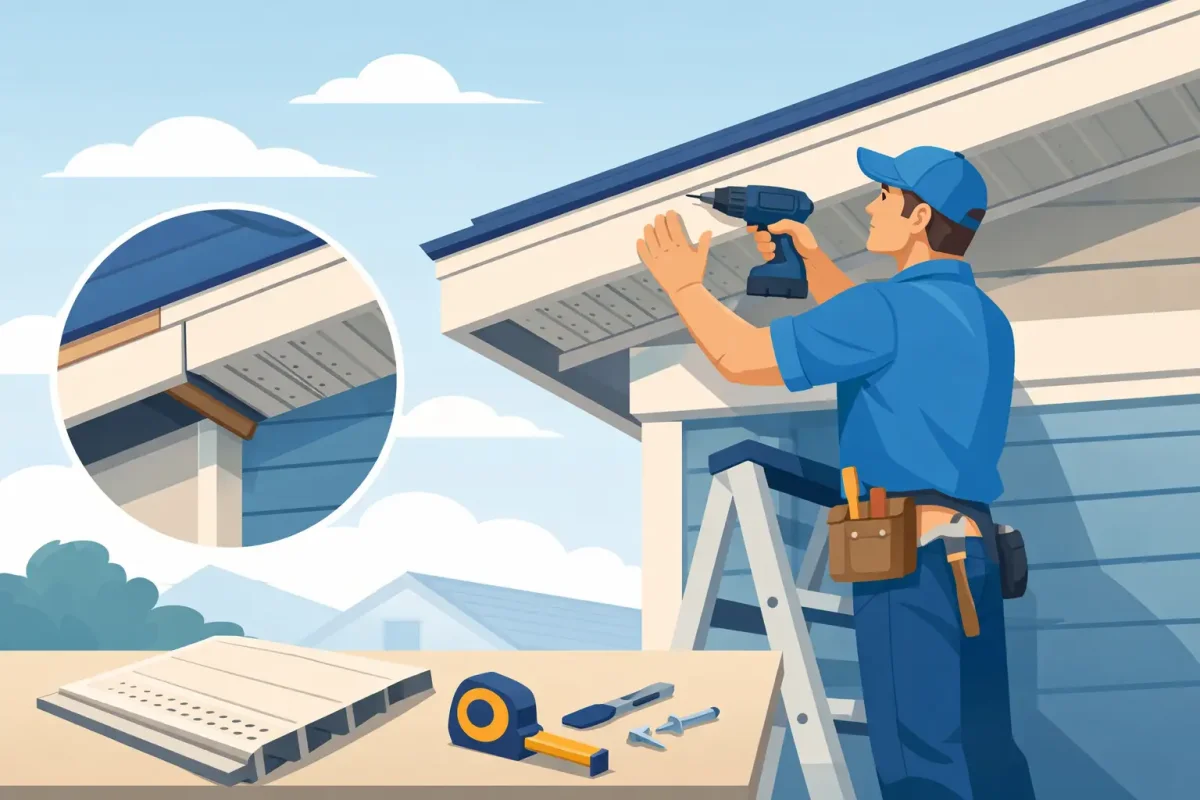
A dark stain beneath the roofline, peeling paint near the eaves, or birds slipping into a small opening may look like a minor exterior issue. Often, it points to failing soffit. This homeowner guide to soffit replacement explains what soffit does, when repair is no longer enough, and how a professional replacement protects the parts of your home you cannot easily see.
Soffit sits on the underside of your roof overhang, between the exterior wall and the fascia board. It gives your roofline a finished appearance, but its bigger job is ventilation and protection. Properly installed soffit helps fresh air move through the attic, limits moisture buildup, and closes off gaps where insects, birds, and small animals can enter.
Why Soffit Problems Should Not Wait
Soffit damage is easy to overlook because it is above eye level. Yet a weak section can allow water and pests into the roof structure, where damage becomes more expensive to correct. In a home with vented attic space, blocked or insufficient soffit ventilation can also trap heat and moisture. That may contribute to condensation, mold growth, insulation problems, and premature wear on roofing materials.
In many cases, soffit trouble is connected to another exterior problem. Overflowing gutters can soak the fascia and soffit edge. A roof leak can travel behind the trim before it becomes visible. Loose or damaged siding near the eaves can leave an opening for wind-driven rain. Replacing soffit without checking these connected components may improve the appearance while leaving the cause in place.
A qualified exterior inspection should look at the roofline as a system. That includes the shingles, flashing, fascia, eavestroughs, siding transitions, attic ventilation, and the condition of the existing soffit material.
Signs You May Need Soffit Replacement
Surface dirt alone does not mean your soffit needs to be replaced. A professional cleaning may be enough when the material is sound and ventilation is working. Replacement becomes the smarter option when there is visible deterioration or evidence that moisture has reached the structure behind it.
Watch for cracking, sagging, holes, rotted wood, peeling paint, loose panels, and recurring water stains. You may also notice wasps, birds, squirrels, or insects entering along the roof edge. Inside the home, musty attic odors, damp insulation, visible mold, or frost and condensation in colder months can point to poor ventilation or hidden moisture issues.
Vinyl and aluminum soffit can dent, fade, or come loose in high winds, while wood soffit is more vulnerable to rot and repeated paint failure. The material matters, but the pattern of damage matters more. A single impact area may be repairable. Widespread staining, multiple loose sections, or soft fascia boards often indicate a larger replacement project.
Repair or Replace? The Decision Depends on the Cause
Small repairs make sense when damage is isolated and the surrounding materials are secure. For example, one cracked vinyl panel, a loose fastener, or a minor pest entry point can sometimes be corrected without replacing the entire roofline.
Replacement is usually more cost-effective when the soffit is aging across several sides of the home, when matching an older material is difficult, or when water damage has spread into the fascia. It is also a practical time to replace soffit if you are installing new eavestroughs, siding, or roofing. Coordinating the work helps create clean transitions, consistent color, and fewer future disruptions around the home.
The goal should not be to replace material simply because it is old. The right decision comes from identifying what failed, correcting that issue, and choosing a material that fits your home, climate, and maintenance expectations.
Choosing the Right Soffit Material
For most homeowners, vinyl and aluminum are the leading choices because they are durable, low-maintenance, and available in vented and solid panel options. Both can provide a clean finished look when installed correctly, but each has trade-offs.
Vinyl soffit is a popular choice for its affordability, broad color selection, and resistance to rot. It works well on many homes and requires little upkeep beyond occasional washing. However, lower-quality vinyl can become brittle in extreme cold or warp when installed too tightly and unable to expand and contract.
Aluminum soffit offers a crisp appearance and performs well around rooflines exposed to moisture. It is non-combustible and does not rot, but it can dent from ladders, hail, or impact. Color-matched aluminum is often an excellent option when paired with aluminum fascia and eavestrough systems.
Wood soffit can suit older homes or specific architectural styles, but it requires regular painting and close attention to moisture. If your existing wood soffit has failed, switching to a low-maintenance material can reduce future upkeep while preserving the home’s overall character.
Your contractor should also recommend the right balance of vented and solid panels. More ventilation is not automatically better. The attic needs balanced intake and exhaust ventilation, so the soffit layout should work with ridge vents, roof vents, or other existing exhaust points.
What Happens During a Professional Soffit Replacement
A well-managed soffit project starts with an on-site inspection and a clear written estimate. Before installation begins, the crew should identify active leaks, damaged fascia, loose gutter sections, and any signs of pest activity. If those issues are not addressed first, new soffit may be exposed to the same conditions that damaged the old material.
During removal, the contractor takes down failed panels carefully and inspects the framing and boards behind them. This is the stage where hidden rot can be found. Any damaged fascia or backing should be replaced before new panels are installed. Covering compromised wood without repairing it may create a cleaner appearance for a while, but it does not restore the roofline.
Next, the crew installs the receiving channels and new soffit panels with enough room for proper movement. Vented panels are placed according to the ventilation plan, and all edges are secured for a straight, uniform finish. If fascia or eavestrough work is included, those components are installed and aligned after the soffit is secure.
A professional project should end with a cleanup and walkthrough. You should be able to see straight lines, consistent panel spacing, secure edges, and properly connected gutter sections. Ask what material and labor warranties apply, what maintenance is recommended, and whether any attic ventilation concerns were found during the job.
How to Prepare Your Home for the Work
Soffit replacement is typically less disruptive than a full roof replacement, but access around the home still matters. Move patio furniture, grills, vehicles, potted plants, and fragile decorations away from the work area. Make sure gates are unlocked and let the contractor know about pets, electrical lines, irrigation heads, or landscaping features that need extra care.
If crews will be working near windows or doors, keep them closed during removal and installation. Some dust and light debris are normal when old materials come down, particularly on homes with aging wood components. A reliable contractor will protect the work area, collect debris, and leave the property tidy once the job is complete.
Get More Value by Looking at the Whole Roofline
Soffit replacement is one of the best opportunities to correct several related exterior issues at once. New fascia can cover deteriorated boards. Properly sized eavestroughs and downspouts can move water away from the roof edge and foundation. Updated siding near the eaves can close gaps and improve the overall finish.
That does not mean every soffit project needs to become a full exterior renovation. If the rest of the system is in good shape, a focused replacement may be the right investment. But when gutters leak, fascia is soft, and siding is nearing the end of its service life, coordinating the work can save time, reduce repeat labor, and give the home a more consistent appearance.
For homeowners who want clear answers before damage spreads, Petra Eavestrough & Siding can inspect the roofline, explain the condition of each component, and provide a straightforward recommendation. The best next step is simple: address stains, sagging, and ventilation concerns while they are still visible, before they become hidden repairs inside the roof structure.

21 August 2026
Exterior Cladding That Protects Your Home

21 August 2026