
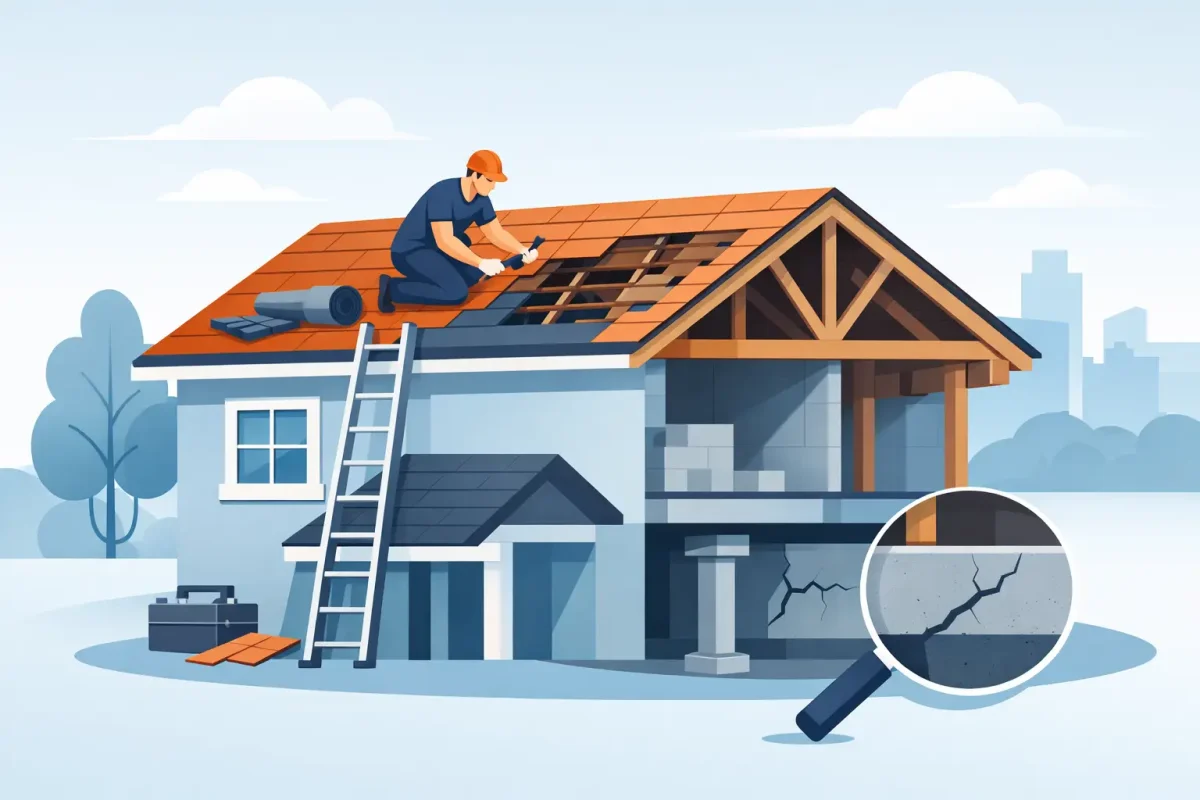
A roof leak that shows up as a ceiling stain can look minor at first. But when homeowners ask, is roof repair structural, what they really want to know is whether the problem stops at the shingles or reaches the parts of the home that actually carry weight. That distinction matters because the right fix, the urgency, and the cost can change quickly.
The short answer is this: some roof repairs are structural, and some are not. Replacing a few shingles after wind damage is usually not considered structural work. Repairing rotten roof decking, sagging rafters, damaged trusses, or framing that has weakened from long-term water intrusion often is. The challenge is that many roofing problems start on the surface and spread inward, so what looks like a basic repair can become a structural one once the roof is opened up.
Is roof repair structural or just surface-level?
Roofing systems have layers, and not all of them serve the same purpose. The outer roofing material – shingles, underlayment, flashing, vents, and sealants – protects against weather. Under that, the roof deck provides a solid base. Beneath the deck, the rafters or trusses form the structural skeleton that supports the roof and transfers weight to the walls of the home.
If the repair only involves the weatherproofing layer, it is usually non-structural. That includes replacing blown-off shingles, resealing flashing around a chimney, or fixing a small area of storm damage. These repairs are still important because they protect your home from water entry, but they do not typically change or rebuild the structural framework.
A repair becomes structural when the load-bearing parts of the roof have been compromised. That can happen from rot, repeated leaks, snow load stress, poor ventilation that causes moisture buildup, or age-related deterioration. Once the framing or deck can no longer do its job safely, the repair is no longer just about stopping water. It is about restoring the roof’s strength and stability.
What parts of a roof are considered structural?
For homeowners, this is where the confusion usually starts. Shingles are visible, so they feel like the whole roof. In reality, they are just one part of the system.
The structural components generally include the roof deck, rafters, trusses, collar ties, and other framing members that support the roof’s weight. In some cases, fascia boards can also become part of a larger structural conversation if rot has spread and affected attachment points or adjacent framing. If these parts are damaged, the issue goes beyond cosmetic wear or routine maintenance.
By contrast, shingles, ridge caps, vents, flashing, and underlayment are essential roofing materials, but they are not usually considered structural on their own. They matter because they protect the structural parts underneath. Once they fail, the hidden damage can build for months or years before anyone sees it.
Signs your roof problem may be structural
You do not need to diagnose the framing yourself, but there are warning signs that tell you the issue may be more serious than a standard roof patch.
A sagging roofline is one of the clearest red flags. Roof planes should look straight and even. If you notice a dip, bow, or uneven ridge, there may be a problem with the decking or framing underneath. Cracks in interior drywall near the ceiling, doors that suddenly stick, or visible water damage in the attic can also point to movement or moisture-related structural stress.
Long-term leaks are another major warning sign. A fresh leak after a storm may be limited to damaged shingles or flashing. A leak that has been ignored through multiple seasons can soak the decking and lead to wood rot. Once that happens, the repair often expands beyond the outer roofing material.
Heavy moss growth, soft spots underfoot, or areas where the roof feels spongy can also signal deck deterioration. If your home has experienced ice dams, repeated freeze-thaw cycles, or years of poor attic ventilation, those conditions can quietly damage structural roof components over time.
When roof repair is not structural
Not every roof issue should trigger alarm. Many common repairs are straightforward and do not involve the framing of the home.
If the problem is limited to missing shingles, cracked sealant, isolated flashing failure, or minor storm damage to the roof covering, the repair is usually non-structural. The contractor may replace materials, secure loose sections, and restore weather protection without touching the deck or framing.
This is why a professional inspection matters. Homeowners often hear the word roof and assume replacement. In many cases, targeted repair is enough. On the other hand, assuming every leak is minor can be just as costly if hidden rot is left in place.
Why the answer often depends on what is found after tear-off
One of the most honest answers to is roof repair structural is: it depends on what is underneath. Roofing contractors can identify likely problem areas during an inspection, but some damage only becomes visible once shingles and underlayment are removed.
A section of roof may look repairable from the outside, only to reveal soft decking below. In older homes, especially those with multiple roof layers or long-term moisture issues, hidden damage is common. That is why estimates for roof repair sometimes include allowances for deck replacement or note that structural repairs, if needed, will be addressed once the roof is opened.
This does not mean a contractor is being vague. It means they are being realistic. A good inspection can spot signs of trouble, but no one should promise that every roof issue is purely cosmetic before seeing the full condition of the substrate.
Does structural roof repair require permits or engineering?
Sometimes yes, sometimes no. Rules vary by municipality, but structural work is more likely to trigger permit requirements than a simple surface repair. If rafters, trusses, or major sections of roof decking need replacement, local building rules may require permits, inspections, or engineered solutions depending on the scope.
For homeowners, the practical takeaway is simple: if the repair affects the framing or load-bearing parts of the roof, it should be handled by a licensed and insured contractor who understands local code requirements. That protects your home now and avoids problems later if you refinance, sell, or file an insurance claim.
Why structural roof issues should not wait
A non-structural roof repair can still be urgent because water never improves with time. But structural roof damage raises the stakes. Once wood rot spreads or framing weakens, the repair becomes larger, more disruptive, and more expensive.
There is also a safety issue. A roof system carries shingles, underlayment, snow load, and the force of seasonal weather. If that support system has been compromised, delaying repairs can affect more than just the roof itself. Water can spread into insulation, ceilings, walls, soffit, fascia, and even siding near the roofline.
That is one reason many homeowners prefer working with a contractor who understands the full exterior envelope rather than treating the roof as an isolated problem. When roof failure starts affecting ventilation, gutters, fascia, or adjacent exterior materials, coordinated repairs save time and reduce the chance of missed damage.
What homeowners should expect from a proper inspection
If you are asking whether your roof repair is structural, the next step is not guessing from the driveway. It is scheduling an inspection with a contractor who can assess the roof surface, attic conditions, decking concerns, and visible signs of framing stress.
A proper inspection should look at the age of the roofing materials, signs of water entry, attic ventilation, soft spots, sagging areas, and any related damage to fascia or soffit. The goal is not just to patch the symptom. It is to understand whether the roof is still protecting the home the way it should.
At Petra Eavestrough & Siding, that practical approach matters because many exterior problems are connected. A roof leak may start at the shingles, but poor drainage, aging fascia, or ventilation issues can keep feeding the same problem if they are not addressed at the same time.
The right question is not just structural or not
Homeowners often want a yes-or-no answer, but the better question is: how far has the damage gone, and what is the right repair to protect the house long term? A surface repair done early can prevent structural work later. A structural repair done properly can restore safety and stop recurring leaks for good.
If your roof is showing signs of wear, leaking, sagging, or causing water damage inside the home, it is worth getting it checked before a simple repair turns into a larger rebuild. The sooner you know what is happening under the shingles, the more control you have over cost, timing, and the condition of your home.

29 June 2026
Flat Roof Repair and Installation Costs

29 June 2026