
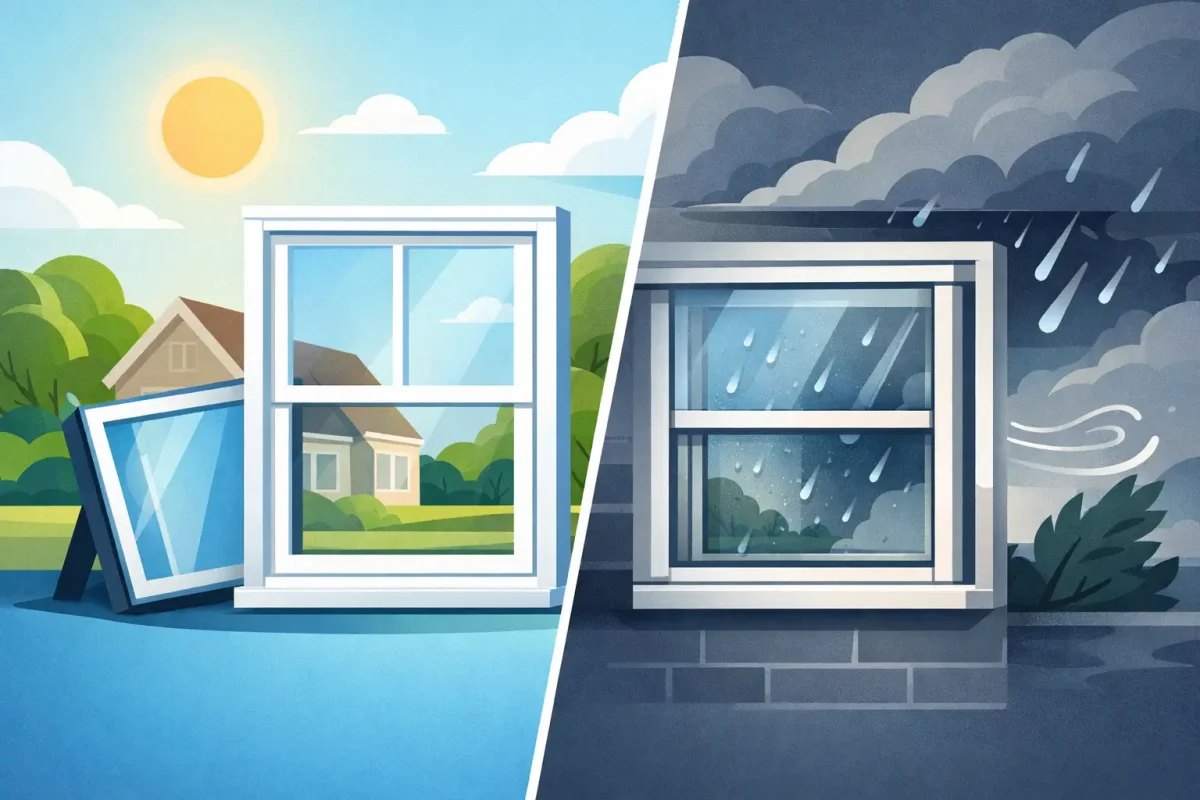
A window problem usually makes itself known on a cold morning. The room near the glass feels drafty, condensation gathers on the pane, or traffic noise cuts through more than it should. When weighing new windows vs storm windows, the right answer depends on what is actually failing: the glass, the existing frame, the weatherstripping, or the entire window assembly.
Storm windows can be a sensible, lower-cost improvement for the right home. But when existing windows are damaged, inefficient, or hard to operate, replacement windows are often the better long-term investment. The goal is not simply to add another layer of glass. It is to improve comfort, protect the structure, and avoid spending money twice.
New Windows vs. Storm Windows: The Real Difference
A storm window is a separate panel installed over an existing window, usually on the exterior but sometimes on the interior. It creates an extra air space between the storm panel and the primary window. That air space can reduce drafts, improve insulation, and help lessen outside noise.
New replacement windows remove the old operating window unit and install a new one. Depending on the condition of the opening, this may be an insert replacement that keeps the original frame in place, or a full-frame replacement that addresses the frame, trim, insulation, flashing, and window itself.
That distinction matters. Storm windows improve an existing window’s performance. New windows replace the components that may be causing the problem in the first place.
If the original window is a well-built wood window with sound frames and historic character, a quality storm window may preserve its appearance while improving comfort. If the sash is rotted, the locks do not work, the glass fogs between panes, or water has reached the surrounding wall, a storm panel will not solve the underlying issue.
When Storm Windows Make Sense
Storm windows are often worth considering when the existing windows are structurally sound but underperforming. Older single-pane wood windows are a common example. The glass may be intact, the frames may still be solid, and the home may have architectural details the owner wants to keep. Adding a properly fitted storm window can reduce air movement and provide a meaningful improvement during cold or hot weather.
They can also be useful when full replacement needs to be delayed. A homeowner may be planning a larger exterior project, such as siding, trim, or roofing work, and wants a temporary efficiency upgrade while budgeting for a complete window replacement later. In that situation, storms can buy time if the existing units are otherwise dry, secure, and operable.
However, storm windows have practical limitations. Exterior models need to be measured accurately, installed tightly, and maintained. They can collect dirt and moisture between layers if drainage and ventilation are not handled correctly. They also add another surface to clean and may need to be removed or adjusted for seasonal use, depending on the product.
A storm window will not repair failed caulking, decayed wood, loose trim, or water infiltration around the opening. It also will not restore a window that sticks, will not lock, or has a damaged balance system. Covering a weak window may reduce the draft you feel, but it does not stop deterioration inside the wall.
When New Windows Are the Better Investment
New windows make more sense when the whole window system has reached the end of its service life. Common warning signs include visible rot, cracked frames, warped sashes, water stains around interior trim, recurring condensation, cloudy insulated glass, or rooms that remain uncomfortable despite sealing efforts.
Modern replacement windows can improve several problems at once. Insulated glass units, low-emissivity coatings, tighter weatherstripping, and properly engineered frames help control heat transfer and air leakage. Better hardware also makes windows easier to open, close, lock, and clean. For homeowners with bedrooms near a busy street, upgraded glass packages and tighter construction may also reduce noticeable noise.
The installation is as important as the window itself. A quality product can still perform poorly if there are gaps around the frame, missing insulation, poor flashing, or damaged exterior trim. A professional installer should inspect the opening before making a recommendation. If the frame and surrounding materials are sound, an insert replacement may be efficient and cost-effective. If there is rot, water damage, or a need to change window size, a full-frame installation may be the smarter route.
Replacement is especially worth considering when window work is part of a larger exterior upgrade. New siding, soffit, fascia, and trim create an opportunity to address flashing and water management around openings correctly. Coordinating the work can provide a cleaner finished look and reduce the chance of disrupting new exterior materials later.
Energy Savings and Comfort: What to Expect
Both options can help with comfort, but they do not deliver the same result in every home. A storm window can make an older single-pane window feel noticeably less drafty. That is a real benefit, particularly in rooms where occupants spend a lot of time.
New windows offer more complete control over heat loss, solar gain, air leakage, and condensation when chosen for the home’s climate and exposure. A south-facing room with strong afternoon sun may need a different glass package than a shaded bedroom. Windows should not be selected on price alone or by a single efficiency rating. The orientation of the home, the condition of the walls, and the quality of installation all affect results.
It is also worth keeping expectations realistic. Replacing windows may lower heating and cooling demands, but it will not compensate for an uninsulated attic, a leaking roof, damaged siding, or gaps around exterior doors. Comfort problems often come from several areas of the exterior, which is why a full inspection is more useful than a quick product quote.
Cost, Lifespan, and Home Value
Storm windows generally cost less upfront because they use the existing window as their foundation. For a homeowner preserving original windows or postponing a larger project, that lower entry cost can be appealing. The trade-off is that the original window remains in place, including its maintenance needs and any weaknesses that have not yet become visible.
New windows require a larger initial investment, particularly when openings need repairs or full-frame work. In return, homeowners receive a new operating system, updated glass technology, new seals, and manufacturer warranty coverage. They can also improve curb appeal when aging frames, faded finishes, or mismatched styles are affecting the look of the home.
The best value is not always the lowest estimate. A window project should account for proper sizing, insulation, exterior sealing, trim work, cleanup, and a clear labor warranty. Ask what happens if hidden damage is found after the old window is removed. A contractor who explains that process upfront is helping protect your budget and your home.
How to Choose for Your Home
Start with the condition of the existing window, not the product you have seen advertised. If your wood windows are solid, operate properly, and have no signs of moisture damage, storm windows may be a practical way to improve performance while retaining their original look.
If you see rot, soft wood, failed glass seals, water staining, persistent drafts around the frame, or difficulty opening and locking the units, replacement deserves serious consideration. Those symptoms point to problems that a storm window cannot correct.
Then consider your plans for the property. Homeowners staying for many years may prefer the comfort, appearance, and reduced maintenance of new windows. Those protecting a historic home may place more value on retaining original sashes with storms. If an exterior renovation is already planned, reviewing windows, siding, trim, and drainage together can prevent missed details around the openings.
A clear on-site inspection should give you a direct recommendation, not pressure to replace every window immediately. The right contractor will identify which units can be repaired or improved, which should be replaced, and how the work fits into the overall condition of the exterior.
Before making a decision, have the windows inspected from both inside and outside. Knowing whether you are dealing with a simple draft or a failing opening turns a costly guess into a confident home improvement plan.

21 July 2026
Are New Windows Worth It for Your Home...

21 July 2026