
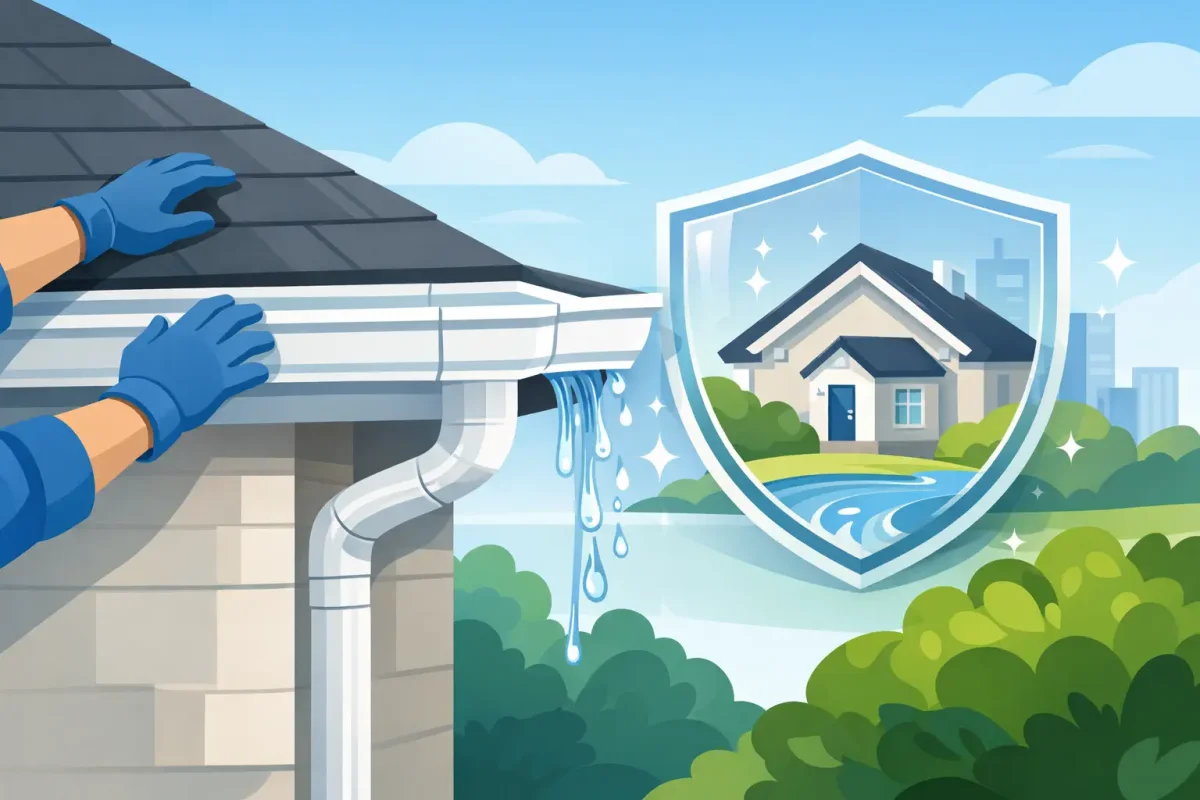
Water should leave your roof and move well away from your foundation – not spill over entryways, soak landscaping, or collect beside your basement walls. Seamless eavestrough installation gives homeowners a cleaner, more dependable way to manage rainwater before it turns into a repair problem.
An eavestrough, also called a gutter, may look like a simple part of the exterior. Its job is anything but simple. It has to collect roof runoff, maintain the right slope across each section, carry water to properly placed downspouts, and stay secure through heavy rain, wind, snow, and seasonal temperature changes. When any part of that system falls short, water finds another path – often toward the areas of the home you most want to protect.
What Makes Seamless Eavestrough Installation Different?
Traditional sectional gutters are assembled from pre-cut pieces. Each connection is another potential location for debris buildup, sealant failure, or leakage over time. Seamless eavestroughs are formed on-site from a continuous coil of aluminum and cut to the exact length required for each run of your roofline.
There are still end caps, corners, outlets, and downspout connections, because every gutter system needs them. But eliminating unnecessary seams along straight sections reduces the number of places where water can escape. It also creates a smoother appearance that complements siding, soffit, fascia, and trim.
For most homes, aluminum is the practical choice. It is lightweight, corrosion-resistant, available in a wide range of colors, and strong enough for everyday residential conditions when it is properly supported. The right material matters, but workmanship matters just as much. A quality gutter can still fail if it is undersized, poorly pitched, or fastened to damaged fascia.
Why Proper Drainage Protects More Than the Roofline
Overflowing gutters are easy to notice during a storm. The more serious damage often happens gradually. Water that repeatedly runs behind the gutter can stain or rot fascia boards, damage soffit, and create openings where moisture reaches the roof edge. Water falling directly beside the home can erode soil, overwhelm window wells, and increase pressure around the foundation.
A well-planned system protects several parts of the property at once: the roof edge, siding, exterior doors, landscaping, walkways, and foundation perimeter. This is why eavestrough replacement is often worth considering alongside soffit and fascia work, roof repairs, or new siding installation. Addressing connected exterior components at the same time can prevent a new gutter from being attached to weak or deteriorated wood.
There is no one-size-fits-all layout. A small ranch home with a simple roof may need only a few carefully placed downspouts. A larger home with multiple valleys, upper roof sections, or long runs may require wider troughs, additional outlets, and more deliberate drainage planning. The goal is not to install the most downspouts possible. The goal is to move the expected volume of water away efficiently without creating concentrated runoff in the wrong place.
The Details a Professional Installer Checks First
A reliable installation begins with an on-site inspection, not a quick measurement from the driveway. The roof shape, runoff patterns, existing drainage issues, fascia condition, and grade around the home all affect the recommendation.
Roof Area and Water Volume
Roof valleys channel a surprising amount of water into a small section of eavestrough. During hard rain, these areas may overflow if the trough is too narrow or the downspout capacity is too limited. An experienced installer considers where water naturally concentrates, not just the overall square footage of the house.
Fascia and Roof-Edge Condition
Eavestroughs need a solid mounting surface. If fascia boards are soft, warped, or damaged by previous leaks, simply installing new gutters can hide the problem for a while without fixing it. Replacing compromised fascia before the new system goes up provides a secure, long-lasting base.
Slope and Support
Eavestroughs should have a subtle slope toward the downspout. Too little slope can leave standing water and debris. Too much slope can look uneven and may allow water to rush past the outlet during intense rainfall. Proper hanger spacing also matters, particularly in areas that see snow and ice. Secure fasteners help the system hold its shape and prevent sagging.
Downspout Placement and Discharge
A downspout does not solve the drainage problem if it empties beside the foundation. Extensions, splash blocks, underground drainage connections, or a revised discharge location may be needed, depending on the property layout. Water should be directed away from the home without sending it toward a neighbor’s property, a driveway, or a walkway where it can create ice in colder weather.
What to Expect During Installation
For a straightforward replacement, the work can often be completed quickly once materials are ready. The crew starts by removing the old eavestroughs and checking the fascia and roof edge. If repairs are needed, they should be discussed clearly before the new system is installed.
Next, each run is measured and formed on-site. The installer establishes the correct slope, secures the eavestrough with durable hangers, installs outlets and downspouts, and seals the necessary connections. The final step should include checking alignment, confirming that downspouts discharge in suitable locations, and cleaning up the work area.
Homeowners should not have to guess what happens to old materials, loose fasteners, or metal offcuts. A professional crew protects the surrounding property, keeps the job site orderly, and completes a final walkthrough so you know what was installed and why.
When Replacement Makes More Sense Than Another Repair
Minor repairs can be worthwhile when the issue is isolated. A loose hanger, a small leak at an end cap, or a disconnected downspout may be fixed without replacing the full system. Repeated leaks, widespread sagging, peeling paint, rust, frequent overflow, or water damage behind the gutter point to a larger issue.
Replacement is especially worth considering when the current eavestroughs are sectional and leaking at multiple joints, the downspouts are undersized, or the fascia needs work. It may also be the right time when you are replacing roofing, siding, soffit, or fascia. Coordinating exterior work reduces the chance of duplicating labor and helps ensure colors, trim lines, and drainage components work together.
Gutter guards can be useful for homes with heavy tree cover, but they are not automatically necessary for every property. They can reduce leaf buildup and make maintenance easier, yet they do not replace correct sizing, slope, or regular visual checks. The best choice depends on the type of debris around the home, the roof design, and how accessible the system is for cleaning.
Choose the Installation Team, Not Just the Lowest Price
A low quote can be tempting, especially when gutters are not a planned expense. But the price should reflect the full scope of work: material thickness, hanger quality, fascia repairs if needed, downspout layout, removal of old materials, cleanup, and warranty coverage. A quote that leaves out drainage planning or necessary repairs can become more expensive once problems show up after the next major storm.
Look for a licensed and insured exterior contractor that can explain the recommendation in plain language. You should know the eavestrough size being installed, where the downspouts will go, whether the fascia is sound, and how water will be moved away from the house. At Petra Eavestrough & Siding, that practical inspection-first approach helps homeowners make decisions based on their property, not a generic package.
A properly installed eavestrough system is quiet protection. You may only notice it when rain is coming down hard and the water is flowing exactly where it should. If your current gutters leak, sag, overflow, or send water toward your foundation, an on-site assessment can give you a clear path to a cleaner, better-protected exterior.

5 August 2026
How to Choose Replacement Windows for Your Home

5 August 2026