
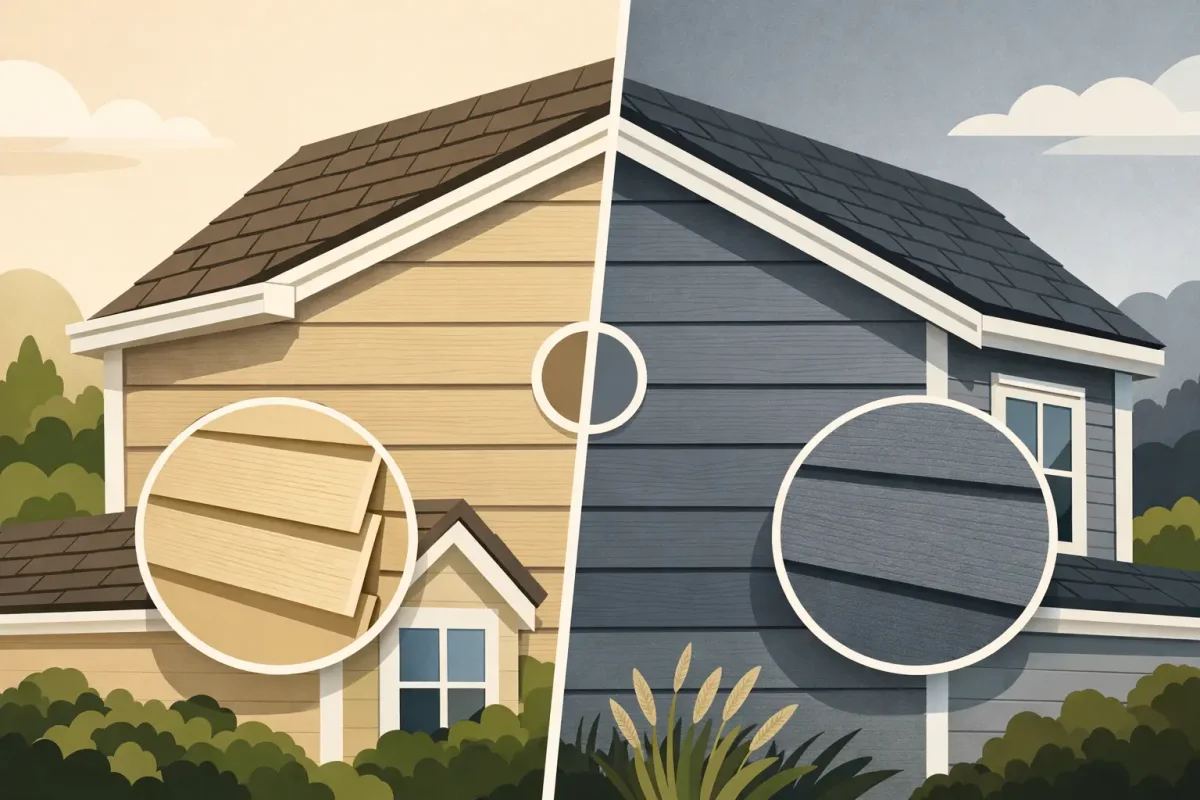
A siding replacement is more than a color change. It is your home’s first defense against rain, wind, pests, and years of temperature swings. When homeowners compare vinyl siding vs fiber cement, the better choice usually comes down to budget, desired appearance, maintenance expectations, and the condition of the exterior behind the old siding.
Both materials can improve curb appeal and protect a home when they are properly installed. But they perform differently, cost differently, and demand different levels of upkeep over time. Here is a clear look at what matters before you choose.
Vinyl Siding vs Fiber Cement: The Main Difference
Vinyl siding is a lightweight plastic exterior cladding made from PVC. It is widely chosen because it is cost-effective, low maintenance, and available in many colors and profiles. It can give a home a clean, updated look without the expense of painted wood or masonry finishes.
Fiber cement is a heavier product made from cement, sand, cellulose fibers, and water. It is designed to create the look of painted wood lap siding, shingles, or vertical panels while offering stronger resistance to fire, insects, and impact than many traditional siding materials.
The practical difference is straightforward: vinyl is generally the more affordable, easier-care option, while fiber cement is usually the higher-investment choice for homeowners who want a more substantial, painted-wood appearance and are prepared for periodic repainting.
Cost: Upfront Price vs Long-Term Value
For many homeowners, the first decision point is cost. Vinyl siding typically has a lower material and installation cost than fiber cement. It is lighter to handle, faster to install in many cases, and does not require painting after installation.
Fiber cement costs more because the boards are heavy, cutting requires specialized safety procedures, and installation takes more labor and precision. Details around windows, doors, corners, trim, soffit, and flashing must be handled carefully to prevent moisture from reaching the wall system.
That higher initial cost can make sense when the appearance of fiber cement matches the home and the homeowner plans to stay for many years. A well-selected fiber cement design can provide a premium exterior look, particularly on older homes, larger properties, or homes with architectural details that suit wider lap boards and painted trim.
Vinyl can also deliver strong value. Modern insulated and premium-grade vinyl options have come a long way in color, profile depth, and visual appeal. For a homeowner looking to refresh an aging exterior while keeping the project budget under control, vinyl is often the practical choice.
Appearance and Curb Appeal
Fiber cement is often selected for its finish. It can closely resemble painted wood, especially from the street, and it works well with traditional, craftsman, colonial, and modern home styles. The material can be painted in virtually any color, giving homeowners more freedom when they want a custom exterior palette.
Vinyl siding has a more recognizable profile, although higher-quality options can look sharp and clean. It comes in a broad selection of factory colors, and the color runs through the material rather than sitting only on the surface. That means small scratches are usually less noticeable than they would be on painted siding.
The trade-off is color flexibility. If you choose vinyl and later want a completely different exterior color, repainting is possible with the right products and preparation, but it is not as simple as repainting fiber cement. Vinyl also expands and contracts with temperature changes, so it must be installed with proper clearance and fastening techniques to avoid buckling or waviness.
A good contractor will help match the siding profile, trim color, window style, gutters, and roofline so the finished exterior looks coordinated rather than pieced together.
Weather Resistance and Durability
Both materials can perform well, but neither is maintenance-free or invincible.
Vinyl siding does not rot, and insects do not eat it. It handles everyday moisture well because water does not absorb into the material. However, vinyl can crack if it takes a hard impact in very cold weather. It can also warp or melt when exposed to unusually high heat, such as heat reflected from certain low-E windows or an outdoor grill placed too close to the wall.
Fiber cement is noncombustible and highly resistant to termites and rot when it is correctly installed and maintained. It holds up well against wind and impact, making it a strong option for homeowners focused on durability. However, it is not unaffected by moisture. The cut edges, joints, and caulked areas need to be properly finished, and the paint system must be maintained. If water gets behind poorly installed fiber cement, the wall structure can still suffer damage.
The siding itself is only one part of weather protection. Quality house wrap, flashing, window and door integration, soffit ventilation, fascia condition, and functioning gutters all matter. Replacing siding is a smart time to inspect these components because problems hidden behind old panels can be addressed before they become more expensive repairs.
Maintenance Requirements
Vinyl is the simpler material to maintain. Most homes need an occasional gentle wash to remove dirt, pollen, and mildew. Avoid high-pressure washing at close range, since forcing water behind the panels can create moisture issues. Periodic inspections are still worthwhile, especially after storms, to look for loose panels, cracks, or damaged trim.
Fiber cement requires more commitment. The painted finish eventually needs attention, and caulk at joints and trim connections should be inspected regularly. Repainting schedules vary based on climate, sun exposure, product quality, and installation, but homeowners should expect to repaint fiber cement at some point during its service life.
That does not make fiber cement a poor choice. It simply means the material suits homeowners who value its appearance enough to plan for ongoing exterior maintenance. If your priority is doing less painting and less routine upkeep, vinyl has the advantage.
Installation Quality Matters More Than Most Homeowners Expect
A great siding product cannot compensate for poor installation. This is especially true around penetrations and transitions, including windows, doors, utility lines, roof-to-wall areas, and the connection between siding and masonry.
Vinyl must be hung, not nailed tightly in place, so it can move naturally as temperatures change. Fiber cement must be fastened correctly, flashed carefully, and finished according to the manufacturer’s requirements. In either case, incorrect installation can lead to leaks, drafts, mold, or premature damage.
Before work begins, ask what will happen if damaged sheathing, rot, or missing flashing is found after the old siding comes off. A clear inspection process and written scope help prevent surprises. It also helps to work with a licensed, insured contractor that can coordinate siding with eavestroughs, soffit, fascia, roofing details, and exterior trim when needed.
Which Siding Is Right for Your Home?
Choose vinyl siding when you want a dependable exterior upgrade with a lower upfront cost, minimal maintenance, and a broad selection of ready-made colors. It is a strong fit for homeowners who want visible curb appeal improvement without taking on regular painting.
Choose fiber cement when your home’s style calls for a more refined painted-wood look, you want excellent fire and impact resistance, and you are comfortable with a larger initial investment and future paint maintenance. It can be an especially good choice when exterior trim and architectural details are central to the finished design.
There is no one material that wins for every property. The right answer depends on the home’s condition, exposure to weather, budget, design goals, and how long you expect to own it. Before selecting a color or profile, have the existing siding, wall structure, drainage, and trim inspected together. The best exterior upgrade protects the home behind the siding as well as the view from the street.
17 July 2026
Home Siding Replacement Guide for Lasting Protection

17 July 2026