A window replacement should do more than change the view. The window trends homeowners are choosing now focus on warmer rooms in winter, less heat gain in summer, quieter interiors, and a cleaner exterior finish that works with the rest of the house. For families planning an exterior upgrade, the best choice is rarely the trendiest style on its own. It is the window that fits the home, the climate, and the condition of the siding, trim, and doors around it.
For homes with aging frames, condensation between panes, drafts, or rising heating and cooling costs, replacement windows can make a noticeable difference. The key is choosing features that deliver value for years, not just a quick visual update.
Window Trends Homeowners Are Choosing
Larger glass areas with slimmer-looking frames
Homeowners continue to ask for more natural light, especially in kitchens, living rooms, and rear-facing spaces. Picture windows, larger casement units, and combinations of fixed and operable windows can open up a room without changing its footprint.
The trade-off is that bigger glass areas require the right glass package and professional installation. A large window facing strong afternoon sun can bring in plenty of light, but it can also add unwanted heat if the glass is not selected for that exposure. The frame, flashing, insulation, and exterior trim matter just as much as the view.
For many homes, a practical solution is a fixed picture window in the center with operating casement windows at the sides. This creates a broad view while still allowing fresh air when needed. It can also reduce the number of moving parts compared with installing several separate operating units.
Dark exterior frames and high-contrast details
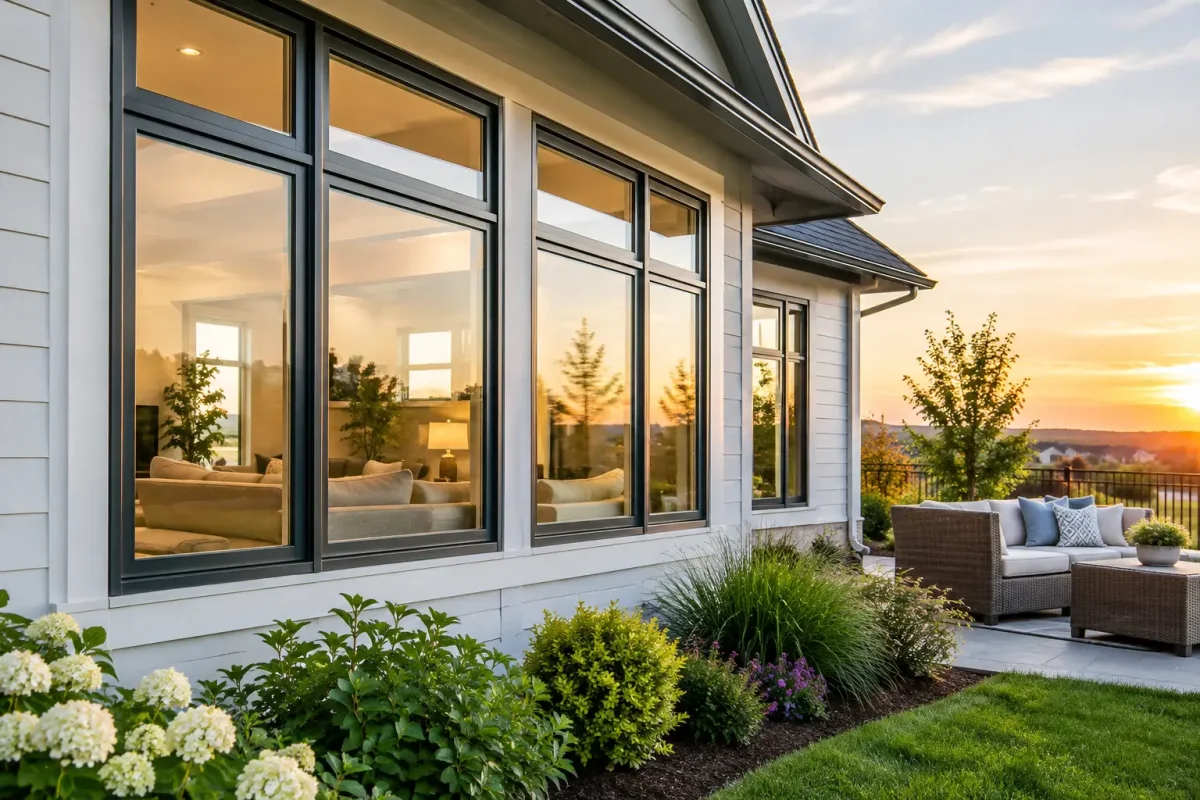
Black, charcoal, and deep bronze window exteriors remain popular because they create definition against light siding, stone veneer, brick, and stucco. They work especially well on modern farmhouse, contemporary, and updated traditional homes.
Dark frames are not the right answer for every property. On a heavily shaded home with dark brick, they can make the exterior feel flat. On a bright facade, they can give windows a crisp, intentional look. The best choice depends on the roof color, siding profile, soffit, fascia, front door, and existing masonry. Looking at samples outdoors is more reliable than choosing from a small indoor color chip.
Homeowners also do not need dark frames everywhere. A darker front elevation paired with lighter side and rear windows can create curb appeal while keeping the budget focused where it has the most visual impact.
Energy performance that homeowners can feel
Energy efficiency is one of the most useful window trends because it affects everyday comfort. Modern insulated glass units can help reduce drafts near windows, limit exterior noise, and keep room temperatures more consistent. Low-emissivity coatings, insulated frames, and properly sealed installation details all contribute to performance.
There is no single best glass package for every home. South- and west-facing rooms may benefit from glass designed to reduce solar heat gain, while colder or shaded areas may call for a different balance of insulation and daylight. A contractor should assess the orientation of the home, how each room is used, and whether the existing issue is heat loss, overheating, condensation, or all three.
If a bedroom feels cold even after the furnace is running, the problem may not be the window alone. Air leakage through aging siding, poorly detailed trim, attic insulation gaps, or worn weatherstripping around a nearby door can all affect comfort. An exterior inspection helps identify the full picture before work begins.
Clean, simple grille patterns
Windows with no grids, prairie-style grids, or simple two-over-two patterns are replacing busy colonial grille designs on many renovations. The goal is a clearer view and a more current appearance without making the house look out of place.
This choice should match the architecture. A simple grid pattern may suit a craftsman or traditional home, while a large unobstructed pane often fits a contemporary renovation. Removing grids from a home with strongly traditional proportions can sometimes look disconnected. Consistency across the front of the house matters more than following a style trend room by room.
Better ventilation where it matters
Casement and awning windows are gaining attention because they can provide effective airflow and a tight seal when closed. Casements work well beside a bed or in a living area, while awning windows are useful in bathrooms, basements, and kitchens because they can often be opened during light rain.
Double-hung windows remain a familiar choice for many homeowners, particularly on classic homes. They offer a traditional look and can be easier to coordinate with existing window openings. The right operating style depends on the location, access, cleaning needs, and the way furniture is arranged inside the room.
Design Windows as Part of the Whole Exterior
A window replacement can look unfinished when the surrounding exterior is near the end of its service life. Old aluminum capping, rotted wood trim, cracked siding, or damaged fascia can take attention away from new windows and create gaps where water can enter.
This is why coordinated exterior projects are becoming more common. Replacing windows alongside siding, trim, soffit and fascia, or a front door allows the details to line up properly. It also gives homeowners one clear plan instead of hiring separate trades at different times and hoping the finished colors and materials work together.
For example, new vinyl siding may require updated window trim dimensions to achieve a clean finish. If the eavestrough system is also being replaced, downspout locations can be planned around the new exterior design instead of treated as an afterthought. Coordinating the work can reduce repeat labor and help protect the home from water-related issues.
What Matters More Than a Trend
A good-looking window will not perform well if it is installed poorly. Water management is critical. Proper flashing, insulation around the opening, exterior sealing, and correctly fitted trim help direct water away from the wall system and reduce the risk of drafts and damage.
Before approving a window project, homeowners should ask what condition the installer finds around the existing opening. If there is soft wood, staining, mold, or damaged sheathing, covering it up is not a solution. The affected area should be assessed and repaired before the new window is finished.
It is also worth asking how the interior and exterior will be protected during the work, what cleanup is included, and what material and labor warranties apply. A clear written scope prevents surprises. It should explain the window style, frame color, glass features, trim work, capping, disposal, and any repairs that may be needed after removal.
How to Choose the Right Window Direction
Start with the problem you want to solve. If your priority is lower energy use, focus first on glass performance, air sealing, and the condition of the openings. If curb appeal is the main goal, consider frame color, grille pattern, trim width, and how the windows connect visually with the front door and siding. If noise is a concern, discuss glass construction and sealing rather than assuming every replacement window will perform the same way.
Next, separate must-haves from nice-to-haves. A large feature window may be worth the investment in a main living area, while standard-size, high-performing windows may be the smarter choice in secondary rooms. Spending strategically usually produces a better result than choosing the same premium option for every opening.
Finally, plan for the home you have, not only the look you saw in a photo. A skilled contractor can recommend window styles and exterior details that respect the home’s proportions while improving comfort, protection, and resale appeal.
The strongest window projects are built around real conditions: where water moves, where heat is lost, what the exterior needs next, and how your family uses each room. A careful on-site inspection is the best place to start before selecting colors, glass, or styles.
1 October 2026