
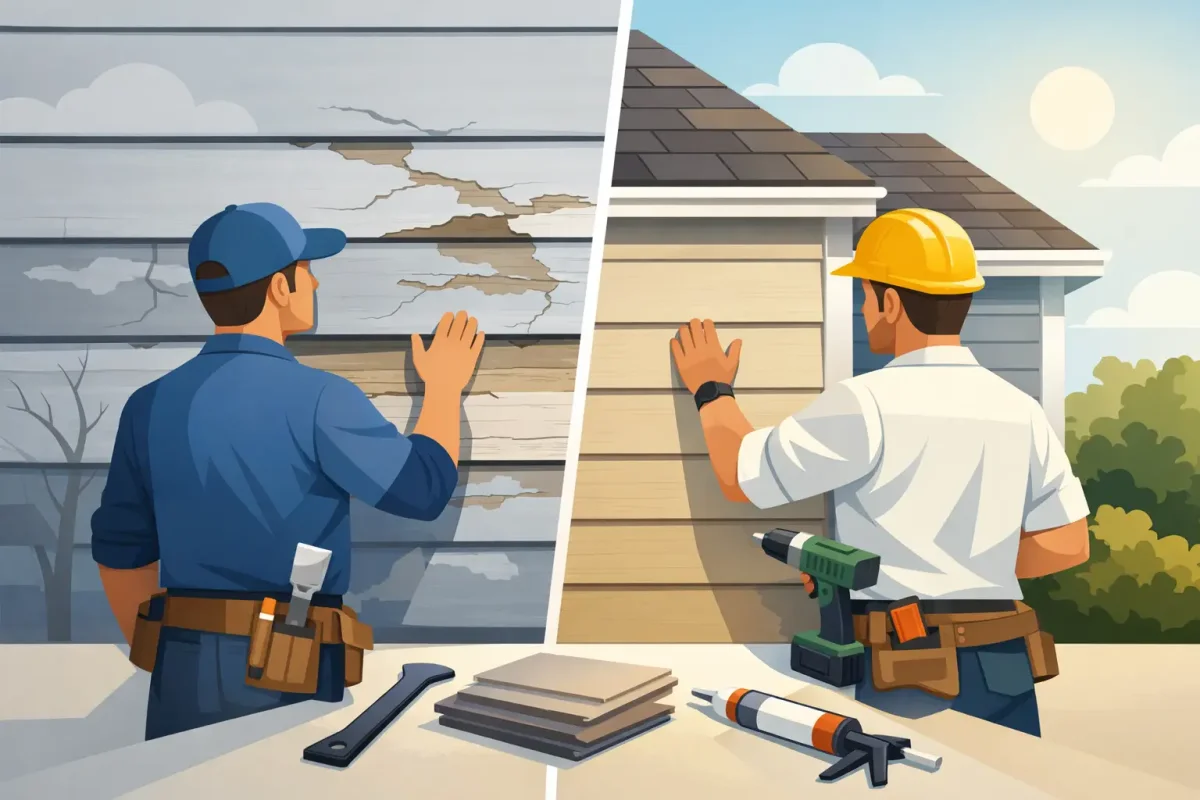
A few loose panels after a windstorm can look minor from the driveway. The problem is what you do not see – trapped moisture, softened sheathing, rising energy bills, and damage that spreads behind the wall. That is why siding repair or replacement is not just a cosmetic decision. It is a protection decision, and the right answer depends on the age of the siding, the extent of the damage, and how long you want the fix to last.
For many homeowners, the hardest part is knowing when a quick repair makes sense and when it is simply delaying a larger problem. A small crack, one missing piece, or a section that took a hit from hail may be repairable. Widespread fading, repeated moisture issues, buckling, rot, or multiple damaged elevations usually point toward replacement. The key is to look at the whole exterior, not just the most visible problem area.
How to decide on siding repair or replacement
The first question is simple – is the damage isolated or is it a sign of broader failure? If a few panels came loose because of wind and the rest of the siding is still in good shape, repair is often the smart move. If the siding is brittle, warped, mismatched, or nearing the end of its service life, replacing those same panels may only buy you a short amount of time.
Age matters more than many homeowners expect. Older siding often becomes harder to match in color and profile, even if the original product line still exists. Sun exposure changes the appearance over time, so a repaired section can stand out sharply. If curb appeal matters to you, that mismatch can be frustrating. If resale is on your mind, patchwork repairs may not send the message you want.
There is also the question of what is happening underneath. Siding is your home’s outer skin, but it works as part of a larger system with house wrap, trim, soffit, fascia, and eavestroughs. When water gets behind failing siding, it does not stay put. It can affect insulation, framing, and interior comfort. In that case, replacement gives a contractor the chance to inspect the wall assembly, correct hidden damage, and rebuild the exterior properly.
When siding repair is the right call
Repair is often the right choice when the issue is limited, recent, and clearly caused by one event. Think storm damage, impact damage, a handful of loose panels, or minor trim separation around a window or door. If the surrounding material is still secure and the moisture barrier has not been compromised, a targeted repair can restore protection without turning the project into a full exterior renovation.
Repair also makes sense when the siding is relatively new. If the material still has plenty of life left and matching pieces are available, replacing only the damaged sections can be cost-effective and practical. Homeowners who are planning a broader exterior upgrade in a few years sometimes choose repair as a short-term step to keep the home protected until they are ready to tackle everything together.
That said, a good repair should still be done carefully. The damaged siding has to be removed without disturbing adjacent sections, and any underlying moisture issues need to be addressed before new material goes on. A fast patch that ignores what caused the problem in the first place usually leads to repeat service calls.
Signs replacement is the better investment
Replacement becomes the better option when problems are no longer isolated. If you are seeing warping across multiple walls, soft spots, recurring leaks, peeling interior paint near exterior walls, mold concerns, or noticeably higher heating and cooling costs, the siding may no longer be doing its job.
You should also pay attention to repeated repairs. One repair is normal. Several repairs over a short period often mean the system is wearing out. At that point, continued patching can cost more over time while leaving the home vulnerable in between. Replacement gives you a clean starting point and a more predictable long-term result.
Appearance is another factor, and it is not just about looks. Faded, chalky, damaged siding can make an otherwise well-kept home look tired, but it can also signal aging material that has lost strength and weather resistance. If you are already replacing gutters, soffit, fascia, windows, or roofing components, it is often worth considering siding at the same time. Coordinating exterior work reduces disruption and helps create a more finished, consistent result.
The real cost question
Many homeowners start with one assumption – repair costs less, so repair is better. In the short term, that is often true. But the better question is what gives you the best value over the next five, ten, or fifteen years.
A repair can be the cheapest option if the problem is small and the siding is otherwise sound. It becomes less attractive when matching materials are difficult to source, labor is high because of the area that has to be carefully disassembled, or hidden water damage turns a surface issue into a wall repair. In those cases, replacement may cost more upfront but prevent repeat spending.
Replacement also brings benefits repair cannot always deliver. New siding can improve insulation performance, reduce maintenance, increase curb appeal, and give you warranty coverage on materials and workmanship. For homeowners who plan to stay in their home, that added predictability matters. For those planning to sell, updated siding can support a stronger first impression and reduce buyer concerns about deferred maintenance.
What Southern Ontario weather does to siding
Homes in this region deal with a rough mix of freeze-thaw cycles, wind, heavy rain, humidity, and summer sun. That combination puts siding under constant stress. Small gaps can widen, trapped moisture can linger, and older materials can become brittle faster than expected.
This is one reason surface appearance does not tell the whole story. A wall may look mostly fine from the yard while still allowing moisture intrusion around trim, joints, or penetrations. If your siding has been through years of seasonal expansion and contraction, an inspection is worth it before deciding on a simple fix.
For homeowners in Hamilton, Burlington, Mississauga, and surrounding areas, local experience matters because installation details have to match local conditions. Proper flashing, trim integration, ventilation, and water management are just as important as the siding panels themselves.
Why full exterior planning can save money
Siding decisions are rarely isolated. If your eavestroughs are overflowing, your fascia is deteriorating, or your windows are drafty, those issues can contribute to siding damage or make it worse. Treating one symptom at a time may feel manageable, but it can create a cycle of partial fixes.
A more practical approach is to look at the entire exterior system. When siding replacement is paired with updated trim, moisture control, and other exterior improvements, the result is usually better protection and a cleaner finish. It can also shorten the total project timeline compared with hiring separate trades at different times.
That is where a contractor with broader exterior experience can add real value. Petra Eavestrough & Siding approaches these projects with the understanding that homeowners want one clear recommendation, one project plan, and one accountable team.
What a professional inspection should tell you
A proper inspection should do more than confirm visible damage. It should identify the likely cause, show whether the issue is isolated or widespread, and explain the pros and cons of repair versus replacement based on your home and budget.
You should expect clear answers to practical questions. Can the material be matched? Is there evidence of water behind the siding? How much life is realistically left in the existing exterior? Will a repair solve the issue, or is it a short-term patch? A reliable contractor should walk you through those points without pushing a bigger job than you need.
The best recommendation is not always the biggest one. Sometimes a focused repair is exactly right. Other times, replacement is the smarter move because it stops ongoing damage and gives you a stronger exterior for the long haul.
If you are unsure, the safest next step is simple – get the siding inspected before the next storm season turns a manageable issue into a major one. A straight answer today can save you a much bigger project later.
19 June 2026
Maibec siding
19 June 2026