
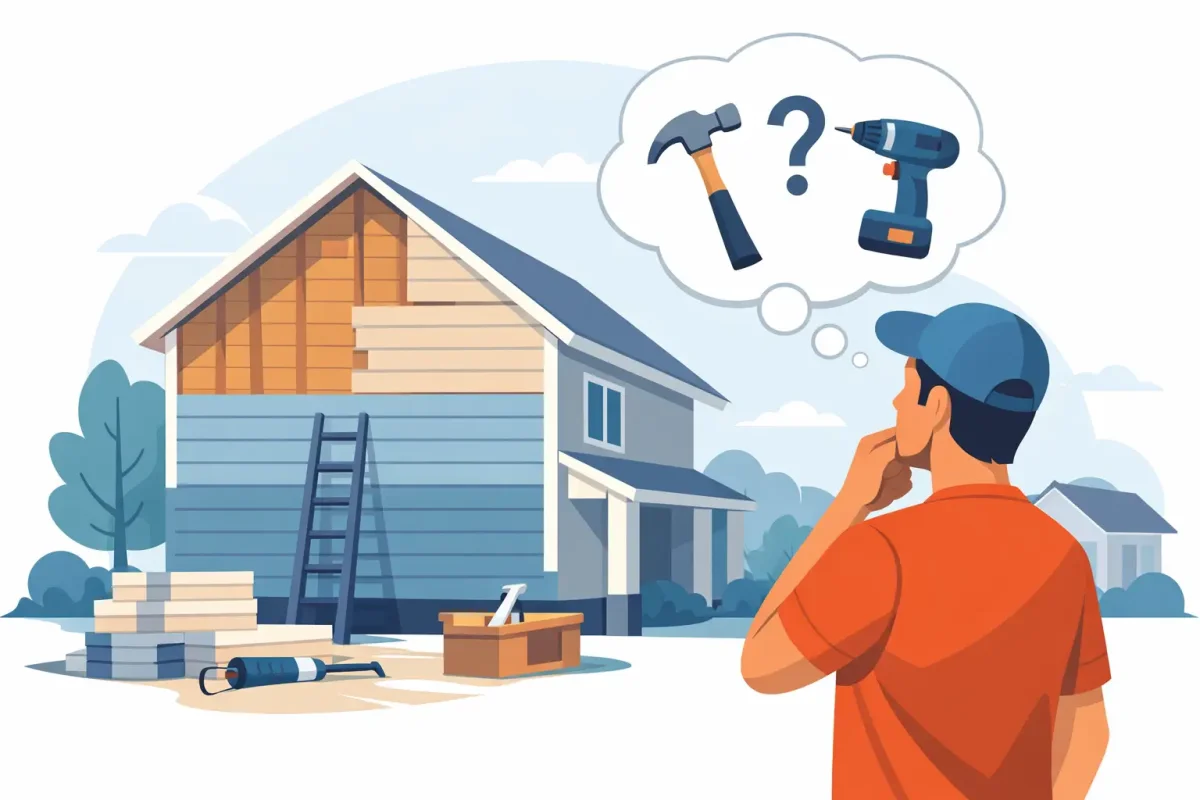
A siding project can look straightforward from the driveway. Panels go up, the house looks cleaner, and curb appeal improves fast. But if you’re asking is installing siding difficult, the honest answer is yes – especially when the goal is not just appearance, but long-term protection against water, wind, and energy loss.
Most homeowners are not comparing siding installation to hanging shelves or painting a room. They are trying to figure out whether this is a realistic weekend project or a job that can cause expensive mistakes. In most cases, siding installation is less about attaching material to a wall and more about managing moisture, alignment, ventilation, trim details, and the condition of everything underneath.
Is installing siding difficult in real-world conditions?
On a brand-new, perfectly flat wall with no weather damage, no awkward rooflines, and no window or door issues, siding can seem manageable. Real homes are different. Walls may be uneven. Old sheathing may have hidden rot. Flashing may be missing or poorly installed. Corners, gables, soffits, fascia, and window trim all need to work together.
That is where the difficulty shows up.
A proper siding job starts before the first panel is installed. The existing exterior has to be inspected carefully. If there is trapped moisture, deteriorated wood, loose house wrap, or signs of water entry around windows, those problems need to be addressed first. Covering them over may make the home look better for a while, but it does not solve the issue.
This is one reason professional installation matters. A good crew is not just installing siding. They are checking how the full exterior system performs.
Why siding is harder than it looks
Siding materials are designed to protect the home, not simply decorate it. That means installation has to account for movement, drainage, fastening patterns, and clean transitions at every edge.
Vinyl siding, for example, expands and contracts with temperature changes. If it is nailed too tightly, it can buckle or warp. If starter strips are off by even a small amount, the error can carry across the whole wall and become visible from the street. Fiber cement brings a different challenge. It is heavier, harder to cut, and less forgiving if handling or fastening is done poorly.
Then there is water management. Siding itself is not the only barrier keeping moisture out. House wrap, flashing tape, metal flashing, sealants, and proper overlap details all matter. If one area is installed incorrectly, water can get behind the siding and damage insulation, sheathing, framing, or interior walls over time.
That is why many siding failures are not obvious on day one. The home may look finished, while moisture problems are quietly building underneath.
The parts homeowners underestimate
Most of the difficulty is in the details. Corners have to line up cleanly. J-channels around windows and doors need to be neat and correctly positioned. Trim pieces have to allow movement while still protecting openings. Upper walls, dormers, and peaks require ladder work or scaffolding, which adds both safety risk and time.
Older homes make the work even more demanding. It is common to uncover uneven framing, old repairs, damaged insulation, or previous installation shortcuts. Once that happens, the job shifts from simple replacement to exterior renovation.
The biggest DIY risks
Homeowners often think the main risk is cosmetic. They worry the lines will not be perfectly straight or the finish will not look as clean as a professional job. That matters, but the bigger concern is performance.
Poor siding installation can lead to water intrusion, mold, drafts, pest entry, and shortened material life. A small mistake around a window or roof transition can create a much larger repair later. Even if the siding itself is under manufacturer warranty, that does not help much if the problem came from improper installation.
Safety is another major factor. Siding work regularly involves cutting tools, heavy materials, ladder use, and high sections near rooflines. For a one-story shed, that may be manageable. For a two-story home with multiple elevations, it becomes a serious risk.
There is also the issue of time. Many homeowners start with the idea that they will save money by doing it themselves. But once demolition, disposal, repairs, trim work, and weather delays enter the picture, the project can stretch far longer than expected. During that time, parts of the home may be exposed.
When siding replacement gets more complicated
Some homes need more than new siding panels. If your siding is old, faded, cracked, loose, or storm-damaged, there is a good chance other exterior components should be reviewed at the same time.
This is especially true when issues show up near soffit, fascia, eavestroughs, roof edges, or window trim. These parts all work together to move water away from the home and protect vulnerable areas. Replacing siding without looking at the rest of the exterior can leave weak points untouched.
For homeowners planning to stay in the house long term, that bigger-picture approach usually delivers better value. It is easier to coordinate materials, protect exposed areas properly, and improve the look of the whole home in one project rather than patching one issue at a time.
Material choice affects difficulty too
Not all siding products install the same way. Vinyl is lighter and generally faster to install, but precision still matters. Engineered wood and fiber cement can offer a different look and durability profile, but they often require more specialized cutting, handling, and fastening.
The right material depends on your budget, design goals, maintenance expectations, and the condition of the home. A contractor should be able to explain the trade-offs clearly. Some homeowners prioritize low maintenance. Others care most about impact resistance, insulation value, or a more upscale appearance. There is no one-size-fits-all answer.
So, should homeowners ever install siding themselves?
For most full-home siding projects, no. The better question is not whether a homeowner can physically install siding. It is whether they can install it correctly, safely, and efficiently enough to protect the home for years.
A small repair on an accessible section may be one thing. A complete exterior replacement is another. Once windows, corners, rooflines, waterproofing details, and structural surprises enter the equation, professional installation becomes the smart move.
That is particularly true if your goal is to increase home value, reduce maintenance, and avoid hidden damage. A siding project is too expensive to get halfway right.
What professional installation gives you
A professional siding crew brings more than labor. They bring a process.
First comes the inspection. The contractor checks the condition of the current siding, trim, moisture barriers, and problem areas around openings and roof intersections. Then they recommend materials that make sense for the home and explain what needs repair before installation begins.
Next comes preparation. Old materials are removed carefully, the wall system is assessed, and damaged sections are replaced as needed. New siding is then installed with proper spacing, flashing, trim integration, and clean finishing details. After that, the site is cleaned up and the completed work is reviewed.
That process matters because it reduces surprises and helps the finished job perform the way it should.
For homeowners who want speed, protection, and a cleaner result, this is where a company like Petra Eavestrough & Siding stands out. The value is not just in putting up new siding. It is in handling the project as part of a complete exterior system, with the workmanship, scheduling, and warranty support homeowners expect when their home is on the line.
How to tell when it’s time to call a contractor
If your siding is cracked, loose, warped, faded, or repeatedly needs patching, it is worth getting a professional opinion. The same goes for rising energy bills, signs of moisture near exterior walls, peeling paint around trim, or staining under roof edges and gutters.
An on-site inspection can tell you whether the problem is limited to the siding or connected to soffit, fascia, eavestroughs, windows, or roofing details. That kind of clarity helps you make a better decision before a cosmetic issue turns into structural damage.
The good news is that homeowners do not need to become siding experts before making the call. You just need a clear assessment, honest recommendations, and an installation team that knows how to protect your home while improving how it looks.
If you have been wondering is installing siding difficult, the short answer is yes. The more useful answer is that difficult does not have to mean stressful – not when the job is planned properly, installed correctly, and treated as an investment in your home’s protection.

21 June 2026
What Impacts Siding Installation Cost?

21 June 2026