
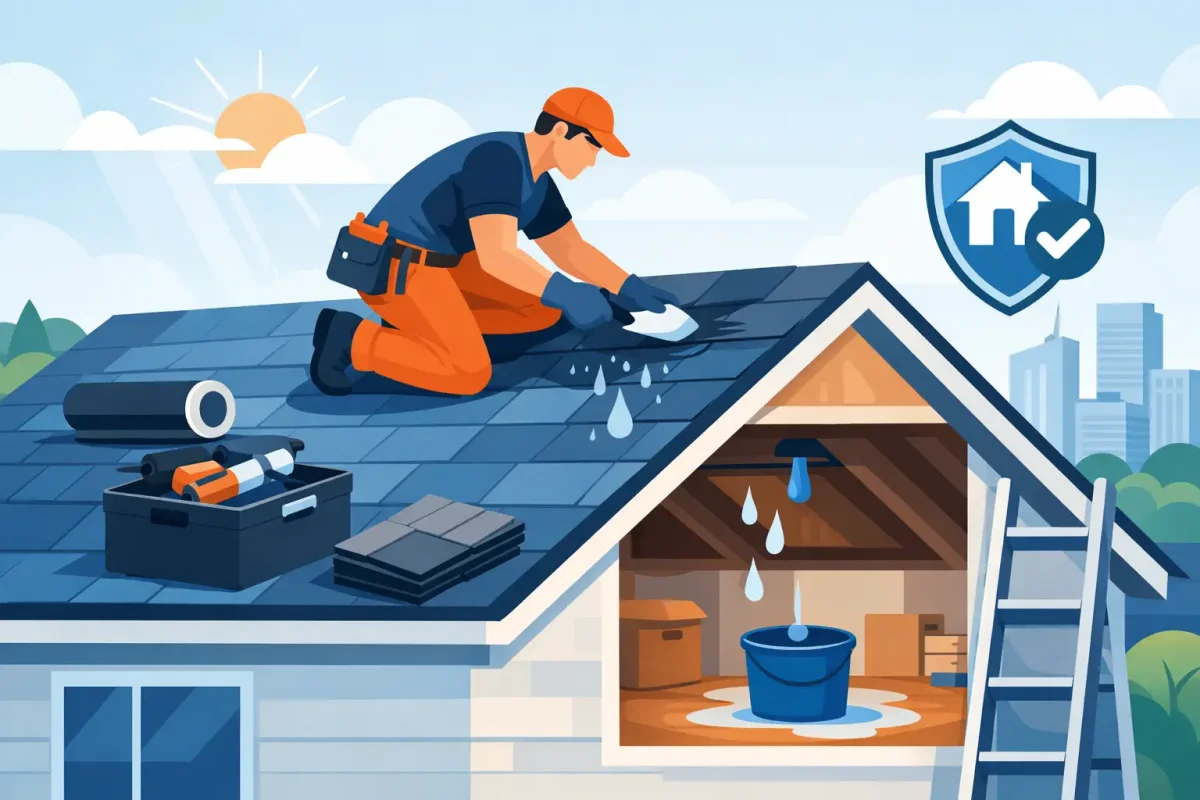
A roof leak rarely starts with a dramatic ceiling collapse. More often, it shows up as a small water stain, a drip during heavy rain, or damp insulation in the attic after a storm. Residential roof leak repair works best when that first warning sign is taken seriously, because the leak you see inside is usually only part of the problem.
For homeowners, the real concern is not just stopping water for today. It is protecting insulation, drywall, framing, soffit, fascia, and the rest of the exterior system before the damage spreads. A quick patch can buy time in some cases, but a lasting repair depends on finding the true entry point and understanding why the roof failed in the first place.
What usually causes a residential roof leak
Most roof leaks are not caused by one missing shingle alone. They happen where materials meet, where water slows down, or where age has weakened the system. Flashing around chimneys, plumbing vents, skylights, and wall intersections is one of the most common failure points. When flashing pulls away, rusts, or was installed poorly to begin with, water can get behind the roofing materials and travel farther than homeowners expect.
Damaged shingles are another frequent issue. Wind can lift them, hail can bruise them, and years of sun exposure can make them brittle. Once the protective surface wears down, water has an easier path into the roof deck. In colder climates, ice damming can also play a role. If heat escapes from the attic, snow melts and refreezes at the roof edge, trapping water where it should be draining away.
Sometimes the source is not the main roofing field at all. Clogged gutters, deteriorated soffit and fascia, or poor roof ventilation can all contribute to moisture problems that look like roof leaks from the inside. That is why a proper inspection matters. Treating the symptom without checking the surrounding exterior often leads to repeat problems.
Why leak location can be misleading
Water does not always drip straight down from the entry point. It can run along roof decking, rafters, insulation, and even wiring before it shows up on a ceiling. A stain in a bedroom may actually trace back to flashing near a bathroom vent or a roof valley several feet away.
This is where homeowners can lose time and money. If the visible stain gets patched from below, or if the wrong section of roofing is repaired, the leak may return with the next storm. Good residential roof leak repair starts outside and inside. The roof surface, flashing details, attic condition, ventilation, and drainage all need to be checked together.
Temporary fixes versus lasting repairs
There are times when an emergency tarp or sealant is appropriate. If a storm has just torn off shingles or exposed a section of the roof, a temporary measure can help limit immediate water intrusion until full repairs are scheduled. But temporary fixes should be treated for what they are – temporary.
A lasting repair usually means removing affected materials, inspecting the roof deck underneath, replacing damaged components, and rebuilding the area with the correct flashing and roofing details. If the leak is tied to a broader issue such as failing valleys, widespread shingle deterioration, or poor attic ventilation, a small repair may not be enough.
This is where honesty matters. Some leaks can be solved cleanly with a focused repair. Others are warning signs that the roof system is reaching the end of its service life. The right recommendation depends on age, material condition, the extent of water intrusion, and whether fixing one area will actually protect the home long term.
When repair makes sense
A repair is often the right choice when the leak is isolated and the roof is still in generally good condition. That might include a section of wind-damaged shingles, failed flashing around a vent, or a problem near a chimney where the surrounding roof still has years of life left.
In these cases, the goal is to stop water entry, replace compromised materials, and restore the roof’s ability to shed water properly. A good repair should blend functionally with the existing roof and address any related components nearby, not just the visible hole or gap.
For many homeowners, this is the most cost-effective path. It protects the house without forcing a full replacement before it is necessary. The key is making sure the issue is truly isolated.
When a larger roofing project is the smarter move
If a roof has multiple leak points, widespread granule loss, curling shingles, soft decking, or repeated repair history, continuing to patch it can become expensive fast. The same is true when the leak has affected other exterior components such as fascia boards, gutters, or attic insulation.
At that point, a broader roofing project often gives better value than repeated spot work. It solves the active leak, reduces the risk of hidden moisture problems, and lets the homeowner address ventilation and drainage at the same time. For homes with aging exteriors, this can also be the right moment to coordinate roofing with soffit, fascia, eavestrough, or siding work so everything performs together.
That bigger-picture approach is often what saves money over time. Exterior systems are connected. If water is getting behind roofing materials and into trim or wall assemblies, fixing one piece while ignoring the rest may only delay the next repair.
What a professional roof leak inspection should include
A proper inspection should do more than confirm that water is getting in. It should identify where it is entering, what damage it has caused, and what repair options make sense based on the roof’s overall condition.
That usually includes checking shingles, valleys, flashing, vents, roof penetrations, roof edges, gutters, soffit, fascia, attic moisture, and signs of deck damage. On some homes, the inspection may also reveal ventilation issues that are shortening roof life or causing winter moisture buildup.
For homeowners, this kind of inspection removes guesswork. Instead of hearing that the roof simply “needs patching,” you get a clearer picture of whether the problem is minor, moderate, or a sign of larger wear. That leads to a quote that reflects the real scope of work, not just the fastest visible fix.
Why speed matters after a leak starts
Even a small leak can cause more damage than expected if it is left alone. Wet insulation loses performance. Drywall stains and softens. Wood framing can stay damp long enough to support mold growth. In colder weather, trapped moisture can freeze and create more stress in surrounding materials.
Fast action does not always mean rushing into the biggest job. It means getting the roof inspected quickly, stopping active water intrusion, and making a repair plan before secondary damage grows. Homeowners who act early usually have more repair options and lower restoration costs inside the home.
That is especially true after major wind or rain events. What looks minor from the ground can turn into a larger issue if exposed areas are left through another storm cycle.
Choosing the right contractor for residential roof leak repair
Homeowners are usually not looking for a crash course in roofing. They want a contractor who can inspect the problem, explain it clearly, and fix it without turning the house into a long, stressful project. That means looking for a company that is licensed, insured, experienced with residential exteriors, and able to spot related issues beyond the leak itself.
Clean job sites, realistic timelines, and strong workmanship warranties matter too. So does clear communication. If a contractor cannot explain why the leak happened or what the repair includes, that is a warning sign. The best service experience is straightforward: inspect, quote, repair, clean up, and confirm the work before the job is closed out.
For homeowners dealing with recurring leaks or older exterior materials, it also helps to work with a contractor who understands how roofing interacts with gutters, ventilation, trim, and siding. Companies that only look at one isolated area may miss the reason the leak developed in the first place.
Residential roof leak repair is really about protecting the whole home
A leaking roof is never just a roof problem for long. Water moves into insulation, trim, ceilings, and structural wood if it is not stopped properly. That is why the best repair work is practical and thorough. It addresses the leak, checks the surrounding exterior, and gives the homeowner a clear answer on what needs attention now versus later.
At Petra Eavestrough & Siding, that bigger view matters because roofs, gutters, soffit, fascia, and siding all work together to protect a home. If you have noticed a stain, drip, or signs of roof trouble, the smartest next step is not to wait for the damage to become obvious. It is to get the problem inspected while a repair is still simple, controlled, and worth doing.

5 July 2026
Complete Home Exterior Makeover Guide

5 July 2026