
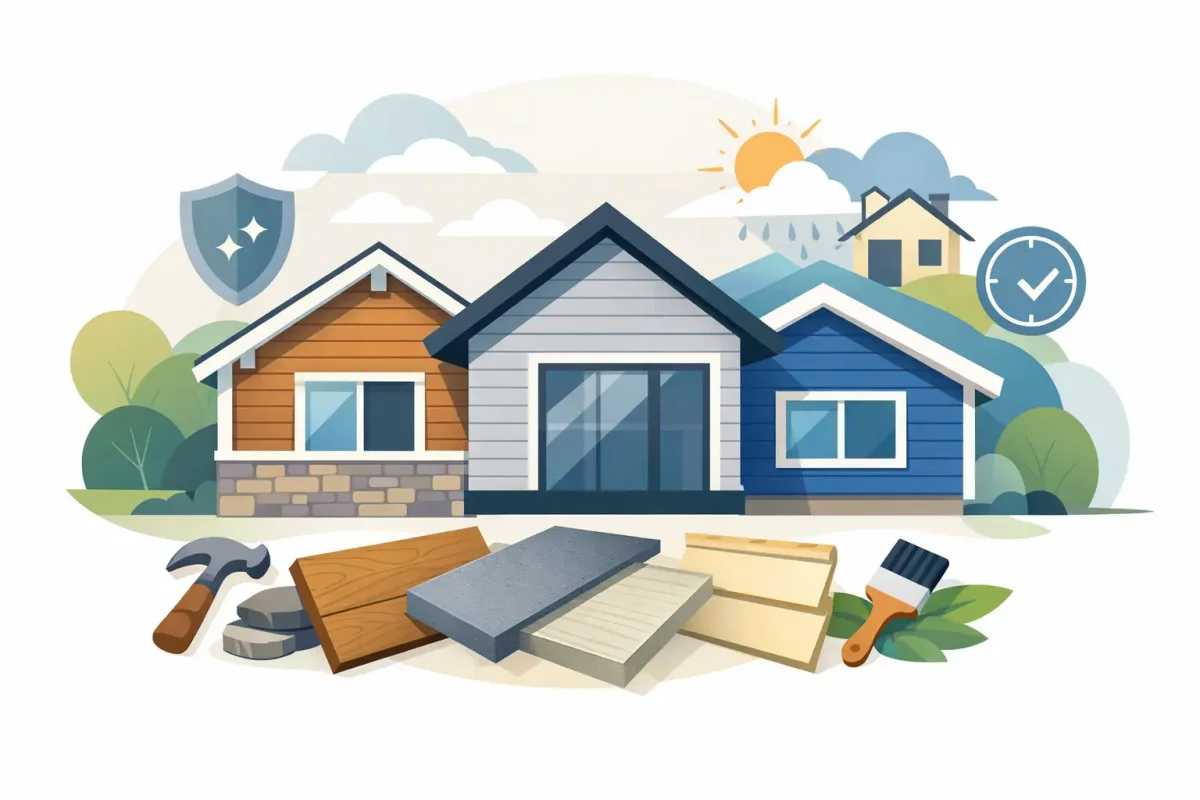
A siding project is rarely just about changing the color of a house. It is often the point when homeowners address fading panels, cracked trim, rising energy bills, moisture concerns, or an exterior that no longer matches the condition of the home inside. The best siding materials for homes balance appearance with the job siding must do every day: shed water, handle temperature swings, resist impact, and protect the wall system behind it.
There is no single right choice for every property. A low-maintenance material may be the smartest fit for a busy family home, while a premium finish may make more sense for a long-term exterior transformation. The condition of the existing walls, the home’s architectural style, local weather exposure, and the quality of installation all matter as much as the material itself.
What Makes a Siding Material Worth the Investment?
Good siding needs to work as part of a complete exterior system. That means it should fit properly around windows and doors, meet cleanly with soffit and fascia, and direct water away from vulnerable areas. If the home has failing eavestroughs, deteriorated trim, or poorly flashed roof edges, installing new siding alone may leave the underlying problem in place.
For most homeowners, the decision comes down to five practical factors: durability, maintenance, curb appeal, energy performance, and total installed cost. The lowest upfront price is not always the best value if the material needs frequent painting, repairs, or early replacement. On the other hand, the most expensive option is not automatically necessary for every home.
A professional on-site inspection helps identify what is happening behind the old siding. Soft sheathing, missing insulation, poor drainage, and hidden rot should be corrected before new panels go up. This is where a complete exterior contractor can save homeowners from coordinating multiple trades or paying twice for work that should have been handled together.
Best Siding Materials for Homes: The Main Options
Vinyl siding: practical, versatile, and low maintenance
Vinyl remains one of the most popular choices because it delivers a clean appearance at a manageable price point. Modern vinyl comes in a wide range of profiles, colors, and textures, including options that imitate painted wood. It does not need painting, and routine care usually involves a gentle seasonal wash to remove dirt and mildew.
For homeowners who want reliable protection and a noticeable curb-appeal update without moving into premium pricing, vinyl is often a strong choice. It performs well when properly installed with room for normal expansion and contraction.
Its trade-off is impact resistance. Very hard hits can crack lower-grade vinyl, and dark colors may show more heat-related movement in direct sun. Product quality makes a difference, so thinner bargain panels are not always the value they appear to be. Proper trim, flashing, and installation are equally critical to prevent wind-driven rain from getting behind the siding.
Fiber cement siding: durable with a painted-wood look
Fiber cement is a strong contender for homeowners who like the look of traditional wood lap siding but want better resistance to fire, insects, and rot. It is available in smooth, wood-grain, board-and-batten, shake, and panel styles. The finished appearance can be especially effective on older homes, craftsman-inspired designs, and projects where a more substantial exterior is the goal.
This material is heavier and more labor-intensive to install than vinyl. It needs careful cutting, accurate clearances, and paint or factory-finished protection at exposed cuts. It also costs more upfront. Still, when installed correctly and maintained as recommended, fiber cement can provide a long service life and a high-end appearance that does not look overly manufactured.
Homeowners should plan for periodic caulking and repainting over time. Fiber cement is low maintenance, not no maintenance. That distinction matters when comparing the lifetime cost with vinyl or metal.
Engineered wood: warm character with added protection
Engineered wood siding gives homeowners the warmth and texture of wood while addressing some of natural wood’s common weaknesses. It is manufactured from treated wood strands and resins, then finished with protective overlays. The result can be a convincing wood appearance in lap, panel, and shake profiles.
This option works well for homeowners who want a more traditional exterior but do not want the constant attention associated with raw wood. It is generally lighter and faster to install than fiber cement, and it can be easier to customize around detailed architectural features.
The key is protecting every exposed edge and keeping moisture under control. Poor flashing, damaged paint, or siding installed too close to roofing, soil, or masonry can shorten its lifespan. Engineered wood should be installed by a crew that follows the manufacturer’s clearance and fastening requirements exactly.
Metal siding: clean lines and serious durability
Steel and aluminum siding are attractive options for homes with modern, farmhouse, or contemporary designs. Metal panels can create crisp vertical lines, strong shadow detail, and a distinct finish that stands apart from conventional lap siding. They are also resistant to insects and do not rot.
Steel offers impressive strength, while aluminum is naturally corrosion-resistant and lightweight. Both can be excellent choices in wet or demanding climates when the finish, detailing, and installation are handled properly. Metal is also useful as an accent material on gables, entryways, and additions where homeowners want contrast without covering the entire home.
Cost and denting are the main considerations. Metal siding can cost more than standard vinyl, and certain lighter gauges may dent from hail or direct impacts. A quality coating and professional flashing details are essential, particularly around openings and transitions.
Natural wood: unmatched appeal, ongoing commitment
Nothing duplicates the character of genuine cedar, wood clapboard, or wood shakes. For the right property, natural wood can deliver depth, texture, and architectural authenticity that other materials only approximate. It is particularly suited to historic homes and homeowners who are willing to invest in a distinctive exterior.
That beauty comes with responsibility. Wood requires regular inspection, paint or stain maintenance, and quick attention to peeling finishes, moisture exposure, and insect activity. It is not the best fit for every household, but it remains a worthwhile option when appearance is the priority and maintenance is part of the plan.
Do Not Choose Siding by Material Alone
Even the best siding can fail early if the exterior details are neglected. Water usually finds its way in at joints, roof-to-wall connections, windows, doors, and improperly installed trim – not through the middle of a siding panel. That is why a siding estimate should look beyond square footage and color samples.
Ask whether damaged sheathing will be replaced if discovered, how windows and doors will be flashed, and how the siding will connect to soffit, fascia, roofing, and eavestroughs. Also ask what happens to existing vents, exterior lights, hose connections, and utility fixtures. Clear answers before work starts lead to a cleaner project and fewer surprises.
Insulation deserves attention as well. Replacing siding can create an opportunity to improve the wall system with housewrap, insulated backing, or continuous exterior insulation where appropriate. The right approach depends on the home, climate, wall construction, and budget. It is not a one-size-fits-all upgrade, but it can improve comfort and reduce drafts when planned correctly.
Matching the Material to Your Home and Priorities
If low maintenance and cost control are leading priorities, quality vinyl is hard to overlook. If you want a more substantial, painted finish and are comfortable with a higher upfront investment, fiber cement may be a better match. Engineered wood brings warmth and architectural flexibility, while metal provides a sharper, more modern look. Natural wood remains the choice for homeowners who value authentic character and accept its upkeep.
Color should be considered with the same care. A bright white or neutral gray can keep a home classic and broadly appealing. Deep charcoal, navy, and black accents can look excellent, but darker finishes may absorb more heat and show dust or wear differently. Consider the roof color, brick or stone veneer, window trim, and neighboring homes before making a final selection.
Petra Eavestrough & Siding helps homeowners look at the entire exterior, not just the siding panels. A coordinated plan for siding, trim, drainage, soffit, fascia, and openings can protect the structure while giving the home a finished, intentional appearance.
The right siding should make your home easier to own, not add another maintenance problem to the calendar. Start with a thorough inspection, choose a material that fits how long you plan to stay and how much upkeep you want to manage, and make sure the installation details receive the same attention as the color you choose.
13 July 2026
Fascia Board Replacement Service That Protects Homes
13 July 2026