
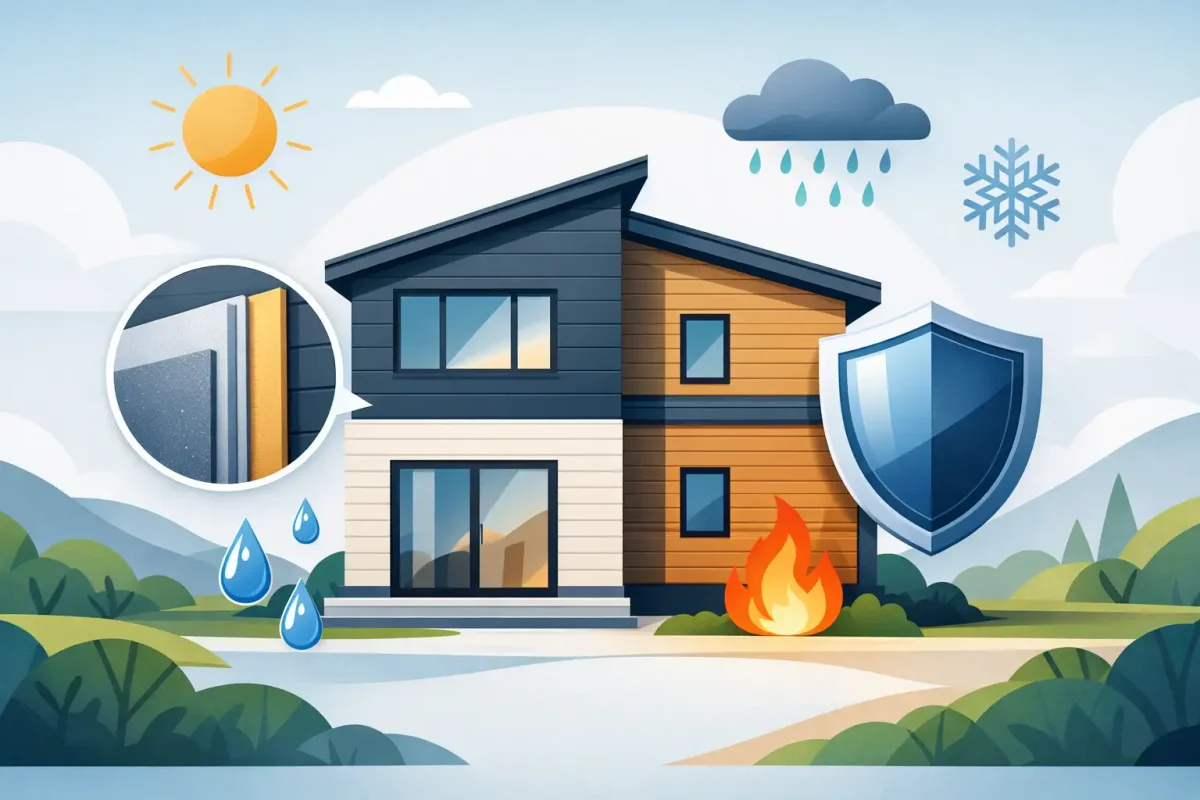
A siding problem rarely starts with a dramatic hole in the wall. More often, it starts with paint that will not hold, a loose panel after a storm, a stain near a window, or a draft in a room that used to feel comfortable. The right exterior cladding does more than change how your home looks from the street. It is part of the system that manages water, wind, temperature, and everyday wear.
For homeowners planning an exterior update, the goal should not be to pick the most attractive sample in a showroom and hope for the best. A long-lasting result comes from choosing a material that suits the home, then installing it with the proper flashing, trim, ventilation, and drainage details behind it.
What Exterior Cladding Does for Your Home
Exterior cladding is the finished protective layer installed over a home’s exterior walls. It may be vinyl siding, fiber cement, engineered wood, natural stone, manufactured stone veneer, metal, or another approved wall finish. While people often use the terms siding and cladding interchangeably, cladding can also include accent materials that create a more complete exterior design.
Its first job is water management. Rain should shed off the wall surface, move around windows and doors correctly, and drain away before it reaches the structure. Cladding also helps protect the wall from wind-driven rain, sun exposure, impact, insects, and seasonal temperature changes.
Just as important, it shapes curb appeal. New cladding can make an older home look cleaner, more current, and better maintained. When it is coordinated with soffit, fascia, eavestroughs, windows, doors, roofing, and stone accents, the improvement feels intentional instead of pieced together over several years.
Cladding is not insulation by itself, although a replacement project can be a good time to improve insulation and air sealing where the wall system allows. If your home feels drafty or rooms are difficult to heat and cool, an on-site inspection should look beyond the visible siding.
Choose the Material for the House You Own
There is no single best material for every property. Budget matters, but so do maintenance expectations, architectural style, exposure to weather, and the condition of the existing walls. A contractor should help you compare options honestly, including where one material makes more sense than another.
Vinyl siding
Vinyl remains a practical choice for many homeowners because it is cost-effective, low maintenance, and available in many colors and profiles. It does not need painting, and quality products can perform well for years when installed correctly.
The trade-off is that vinyl can crack under hard impact or extreme cold, and lower-grade products may fade or look wavy if installed over an uneven wall. Proper fastening is critical. Panels need room to expand and contract, so they should never be nailed too tightly.
Fiber cement siding
Fiber cement gives homeowners a more substantial, painted-wood appearance with strong resistance to fire, insects, and rot. It works especially well for homeowners who want clean lap siding, board-and-batten details, or a more traditional finish without using natural wood.
It is heavier and more labor-intensive than vinyl, which usually means a higher installed cost. It also requires careful cutting, correct clearances, and a reliable paint or finish system. This is not a material to treat as a quick cosmetic upgrade.
Engineered wood siding
Engineered wood can offer the warmth and profile of wood with improved moisture and impact resistance compared with traditional wood products. It is often a strong option for homes where texture and architectural detail matter.
As with any wood-based product, the installation details matter greatly. Proper gaps, flashing, ground clearance, and maintenance protect the material at edges and joints. If a contractor skips those details, even a good product can develop problems early.
Stone and stone veneer
Stone veneer creates a high-impact focal point around entryways, garages, porch columns, and lower wall sections. It can add depth and character without covering the entire house in a heavier material.
Stone is usually best used as part of a coordinated design rather than added as an afterthought. The right transition between stone, siding, trim, and drainage components prevents a patchwork appearance and helps water move where it should.
The Details Behind Exterior Cladding Matter Most
A new wall finish can look excellent on installation day and still fail if the work behind it is incomplete. The visible material is only one layer in the wall system. Before cladding goes up, a professional crew should assess the sheathing, house wrap or weather-resistive barrier, flashing, trim conditions, and any signs of concealed water damage.
Windows and doors deserve special attention. These openings interrupt the wall surface and are common locations for leaks. Proper flashing directs water out and away from the wall instead of allowing it to run behind the siding. Caulk has a role, but it should not be the only defense against water intrusion.
The same principle applies at rooflines, chimneys, decks, porches, and the points where one cladding material meets another. These transitions need to be planned, not improvised. A clean finish line is valuable, but a properly managed drainage path is what protects the home long after the crew leaves.
Ventilation also matters. Soffit and fascia work is often connected to a cladding project because these components help protect roof edges and support attic airflow. Replacing damaged siding while ignoring failing fascia boards or undersized eavestroughs can leave the home vulnerable to the same moisture problems that caused trouble in the first place.
Signs It Is Time to Replace, Not Repair
Small repairs are worthwhile when damage is isolated and the surrounding material is still in good condition. A loose panel, minor storm damage, or a localized trim issue may not require a full replacement.
Replacement becomes the smarter investment when problems are widespread or recurring. Watch for cracked, warped, faded, or brittle siding; soft spots around windows; peeling paint; gaps at seams; visible rot; repeated leaks; or exterior walls that look uneven. You may also notice higher energy bills, musty odors near outside walls, or interior water stains after heavy rain.
Color matching is another practical consideration. If older siding is discontinued or heavily faded, a small repair may stand out more than expected. In that situation, replacing one elevation or planning a broader exterior update can create a better result and improve resale appeal.
Plan a Cladding Project Around the Whole Exterior
Homeowners often save time and avoid duplicate labor by addressing connected exterior components in one project. For example, replacing siding may reveal worn window trim, failing fascia, or eavestroughs that no longer direct water away from the foundation. Handling those items together can create a cleaner finished look and reduce the chance of damaging new work later.
That does not mean every project needs to be extensive. The right scope depends on the inspection findings and your priorities. A good contractor should clearly separate urgent protection work from optional appearance upgrades, so you can make decisions without pressure.
Before approving a quote, ask what materials are included, how damaged sheathing is handled if discovered, what flashing work is planned, how the crew protects landscaping, and what cleanup and warranty coverage you can expect. Clear answers at the start prevent costly assumptions halfway through the job.
Installation Quality Protects Your Investment
Even premium exterior cladding cannot compensate for poor installation. Licensed, insured installers bring value through accurate measurements, manufacturer-approved methods, safe work practices, and the ability to identify issues before they become hidden behind a new wall finish.
A professional process should be straightforward: inspect the home, explain the findings, provide a tailored estimate, complete the work on schedule, clean the property, and walk through the finished project with you. The final walkthrough is your opportunity to review trim lines, transitions, cleanup, and any warranty information before the project is considered complete.
Petra Eavestrough & Siding helps homeowners coordinate siding, stone veneer, soffit, fascia, eavestrough, roofing, windows, and doors when a home needs more than a surface-level repair. The benefit is not just convenience. It is a better chance that every component will work together to protect the property.
If your siding is aging, leaking, or simply making the rest of your home look dated, start with a professional exterior inspection. Seeing the condition of the full wall system before choosing a material is the clearest path to a project that looks right, drains properly, and lasts.

21 August 2026
Eavestrough Drainage Inspection What It Finds
21 August 2026