
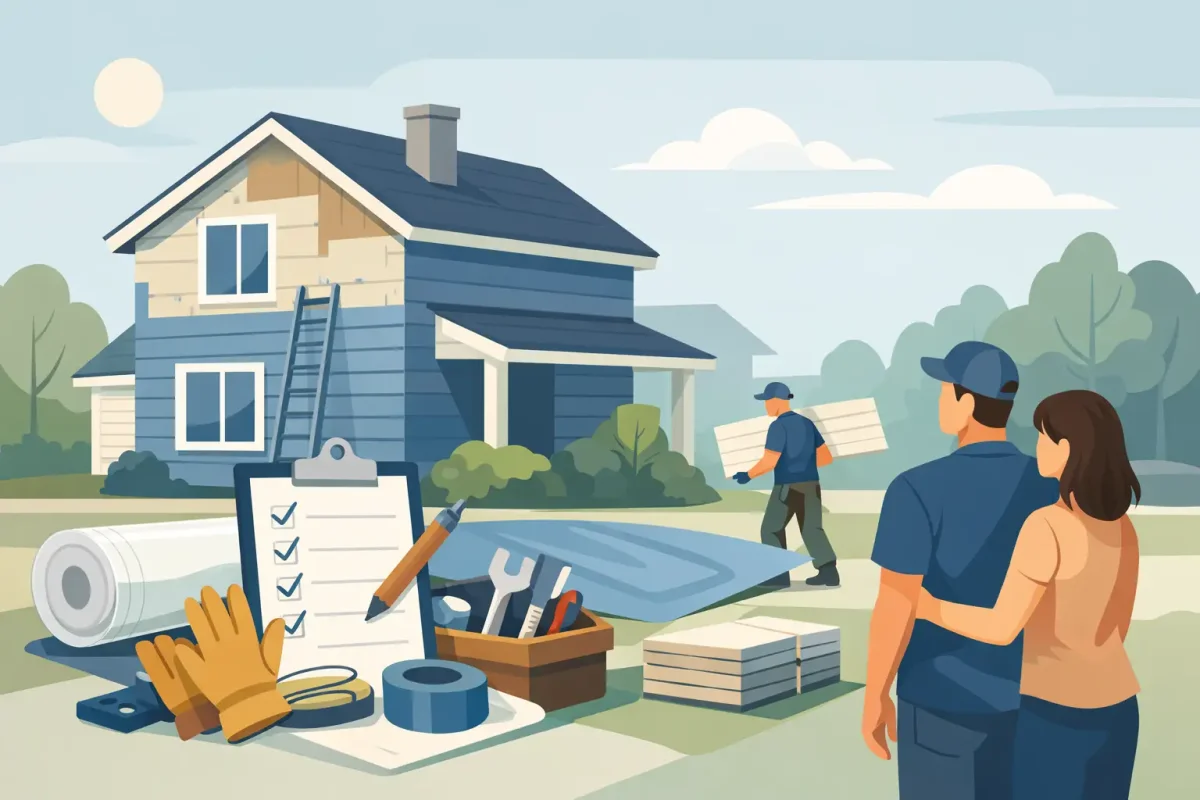
A siding project changes more than the appearance of your house. It puts your exterior walls, trim, gutters, and landscaping within reach of an active work area for several days. Knowing how to prepare for siding installation helps protect your property, gives the crew room to work safely, and keeps the job moving on schedule.
Most of the preparation is simple. The goal is not to manage the installation yourself. It is to clear access, protect the things you value, and make sure your contractor has the information needed to address any concerns before work begins.
Confirm the Scope Before Materials Arrive
A clear plan prevents surprises. Before installation day, review the approved quote with your contractor and confirm exactly what is included. That may cover old siding removal, wall repairs, house wrap, new siding, trim, soffit, fascia, eavestrough work, shutters, and cleanup. If you are combining siding with new windows, doors, or roofing repairs, ask how the work will be sequenced.
This is also the time to discuss material details. Confirm the siding color, profile, trim color, and finish so there is no confusion once products are delivered. Looking at samples outdoors is worthwhile because sunlight can make a color appear different than it does indoors or on a screen.
Ask who will handle permits if your project requires them and whether your neighborhood association has any exterior approval rules. A professional contractor should explain the timeline, crew access needs, disposal plan, and what happens if hidden wall damage is found after old siding comes off. Minor repairs are common on older homes, especially around windows, doors, and rooflines. Addressing them correctly protects the investment in your new exterior.
Clear the Work Zone Around Your Home
Installers need safe access to every wall receiving siding. Walk around your home a few days before the start date and move belongings at least 10 feet away from the exterior where possible. This gives the crew space for ladders, materials, and debris removal.
Move patio furniture, grills, planters, toys, garden tools, decorative items, and outdoor storage bins. If an item is heavy or difficult to relocate, point it out during the pre-job walkthrough. Your contractor may be able to protect it in place, but it is better to decide that before work starts.
Trim back shrubs, tree limbs, climbing vines, and other vegetation that touches the house. Siding crews can work around established landscaping, but overgrowth slows installation and may be damaged when old materials are removed. If you have delicate plants close to the foundation, let the crew know. Covering them may help for short periods, but avoid leaving plants covered for long in hot weather.
Keep driveways and access paths open for the delivery truck, trailer, dumpster, and crew vehicles. If you normally park close to the house, plan to use a different spot until the project is complete. Material deliveries can be large, and moving vehicles during the workday creates unnecessary delays.
Protect the Interior of Your Home
Siding removal and installation create vibration. It is usually not disruptive enough to affect the structure of your home, but loose items inside can shift or fall. Remove fragile decorations, pictures, and shelves from exterior-facing walls, particularly in rooms where installers will be working directly outside.
If you have items stored against exterior walls in a garage, shed, or finished basement, move them back if possible. This is especially helpful if repairs are needed behind the existing siding. The crew may need temporary access to inspect framing or address moisture damage from the outside, and a clear interior area makes communication easier if questions arise.
Close windows during working hours to reduce dust and noise. Window air-conditioning units, exterior security cameras, decorative lights, and hose reels may need to be removed or temporarily disconnected. Ask in advance which items the crew will handle and which ones you should arrange to have serviced. Do not disconnect electrical equipment unless you are comfortable doing so safely.
Plan for Children, Pets, and Daily Routines
A siding installation site is not a good place for children or pets. There will be ladders, tools, sharp pieces of old material, and workers moving around the home. Keep children away from the work zone and let them know not to pick up anything they find in the yard.
Pets should stay indoors or in a separate area away from exterior doors being used by the crew. If your dog reacts to unfamiliar people or construction noise, consider arranging daycare, a visit with family, or a quiet room away from the busiest side of the house. Tell the project lead about pets before work begins so gates are kept closed.
Think through your normal schedule as well. If you work from home, identify a quieter room or plan meetings around the noisiest parts of the day. If you need access to a specific gate, parking space, or exterior door, let the contractor know before the first morning. Good communication is usually enough to accommodate normal household needs without slowing down the work.
Make Access and Utilities Easy to Use
Your crew may need access to exterior electrical outlets and a water source. Test the outlets you expect them to use, and make sure hoses, gates, and side yards are accessible. If access requires a code, key, or advance notice, provide clear instructions to the project manager.
Mark anything that cannot be seen easily, such as sprinkler heads, landscape lighting wires, septic components, shallow utility lines, or decorative edging. A small flag or marker can prevent accidental damage while materials are being moved around the property.
If your home has an alarm system, exterior cameras, or motion-activated lighting, adjust settings as needed. Construction activity can trigger repeated alerts. It is also smart to tell nearby neighbors about the project, especially if shared driveways, close lot lines, or on-street parking are involved. A quick heads-up makes the temporary noise and activity easier for everyone.
Expect Noise, Dust, and a Changing Work Area
Even an efficient installation creates some disruption. Old siding may come down in sections, and crews will use saws, nail guns, ladders, and debris containers throughout the day. The yard can look busy before it looks better.
Professional installers should protect surrounding areas, collect debris regularly, and complete a final cleanup, but homeowners can help by keeping the work zone clear. Avoid walking through material staging areas or moving supplies after they have been organized. If something concerns you, speak with the crew lead rather than trying to correct it yourself.
Weather can also affect the schedule. Light rain does not always stop all exterior work, but heavy rain, high winds, or unsafe conditions may require a delay. That is not a sign of poor planning. Proper installation depends on dry, secure wall conditions and safe working practices. A contractor who protects the quality of the job will not rush through unsuitable weather.
Do a Final Walkthrough Before and After Installation
Before the crew begins, take a few photos of your landscaping, driveway, and exterior features. This is simply good recordkeeping. Then walk the property with the project lead if possible. Point out areas of concern, confirm the siding layout, and make sure everyone understands which doors and gates may be used.
When the project is complete, take time for a final walkthrough. Look at the siding from several angles and ask about trim, flashing, vents, caulking, and transitions around windows and doors. Ask where materials expand and contract, how to clean the siding, and what maintenance is recommended for your specific product.
Keep your warranty information, final invoice, and any care instructions in a safe place. If your installation includes eavestroughs, soffit, fascia, or other exterior components, make sure you understand how those systems work together to direct water away from the home.
A prepared property gives your siding crew the best chance to deliver clean, efficient work and gives you fewer details to worry about during the project. Clear the access, communicate early, and let qualified installers focus on building an exterior that protects your home for years to come.

6 September 2026
Energy Efficient Siding Trends for Smarter Homes

6 September 2026