
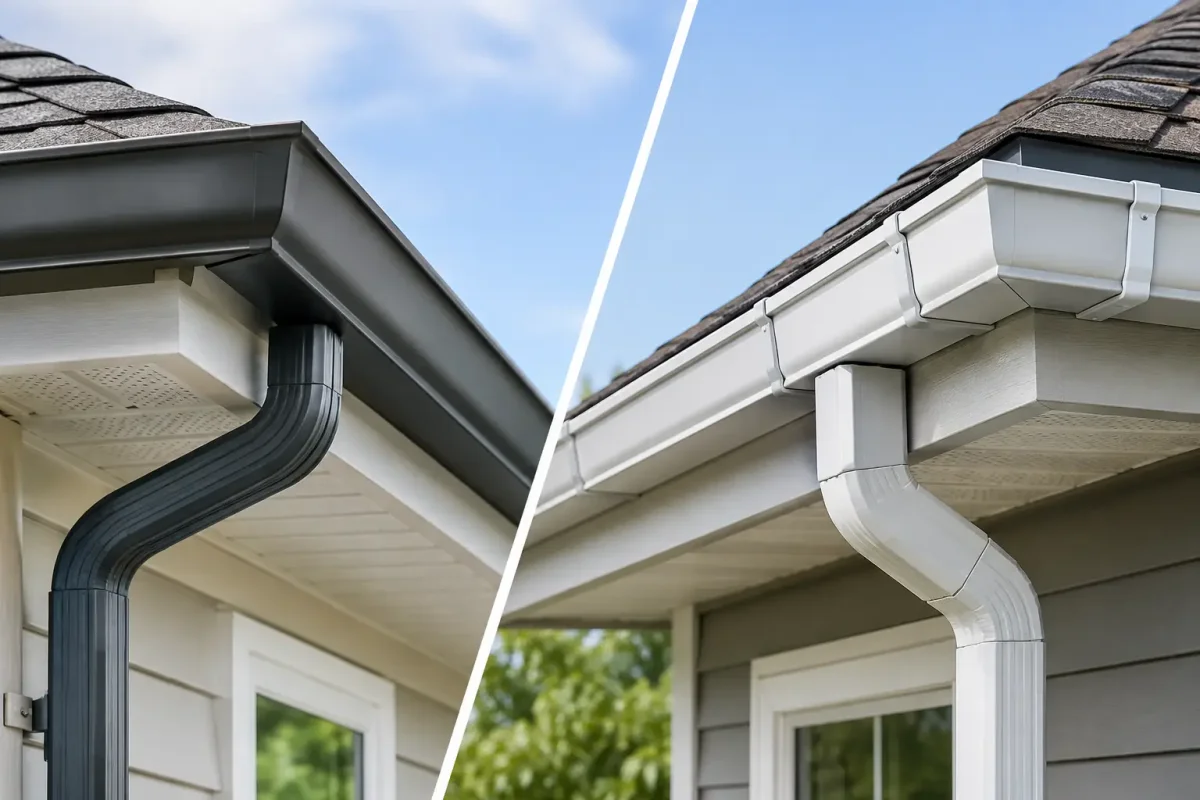
A dark water stain below the roofline, a wet basement corner, or soil washing away beside the foundation can all point back to one overlooked system: your eavestroughs. When comparing seamless versus sectional eavestroughs, the real question is not which option is universally best. It is which system will move water reliably off your specific home, through heavy rain, snowmelt, and repeated freeze-thaw cycles.
For most homeowners replacing aging gutters, the choice comes down to fewer joints and a cleaner finished look versus lower upfront material costs and easier piece-by-piece repairs. The quality of the installation matters just as much as the system you choose.
Seamless Versus Sectional Eavestroughs: The Core Difference
Sectional eavestroughs are assembled from pre-cut lengths that connect along the roof edge. Each connection is sealed and secured during installation. They are commonly available in standard sizes and materials, making them a familiar option for straightforward runs and smaller repair projects.
Seamless eavestroughs are formed on-site from a continuous coil of metal, typically aluminum. A contractor uses a roll-forming machine to create each run to the exact length of your roofline. There are still connections at corners, end caps, and downspout outlets, but there are no joints along the straight sections.
That difference affects where leaks are most likely to develop, how the system looks from the street, and how it holds up over time.
Why joints deserve attention
Every joint in a sectional system depends on sealant, fasteners, and proper alignment. Those connections can perform well for years when installed correctly. But they are also common trouble spots as sealant dries out, debris collects, ice expands, or the gutter shifts after seasons of heavy weather.
A continuous-run system reduces the number of these vulnerable points. Fewer straight-run joints usually means fewer places for water to work its way out. It does not mean the system is maintenance-free or impossible to leak. Corners and outlets still need professional sealing, and standing water caused by poor slope can create problems in any eavestrough.
Leak Resistance and Long-Term Performance
For homeowners focused on protecting foundations, fascia, siding, and landscaping, continuous-run eavestroughs often offer the stronger long-term case. Their reduced joint count helps limit the gradual seal failures that can occur in sectional systems.
This is especially useful on long rooflines. A sectional installation may require several connected pieces across one side of a home. A custom-formed aluminum run can cover that same distance in one piece, with a consistent profile and fewer interruption points.
However, the system itself cannot overcome poor workmanship. An eavestrough needs the right pitch toward the downspouts, secure hangers, properly sized outlets, and downspouts that discharge far enough from the foundation. A one-piece gutter installed with the wrong slope can overflow just as easily as a sectional one.
Roof drainage also needs to be considered as a complete system. Water may be entering behind the gutter because of damaged drip edge, worn fascia, or roof issues. If the surrounding exterior components are failing, replacing only the eavestrough may not solve the source of the problem.
Appearance and Curb Appeal
Eavestroughs sit at the edge of the roof, so homeowners often notice their appearance only after they begin to sag, stain, or pull away from the fascia. A custom-formed system creates long, uninterrupted lines that look neat and tailored to the house. For homes with newer siding, fresh soffit and fascia, or a recent roof replacement, this cleaner finish can make a visible difference.
Sectional eavestroughs can also look good, particularly on short runs and simple roof shapes. But the seams remain visible, and age can make those connections stand out. If the sections begin to separate slightly or discolor around old sealant, the roofline can look patched together.
Color matching matters, too. Aluminum eavestroughs are available in colors designed to coordinate with siding, trim, soffit, and fascia. Choosing a system as part of an exterior update creates a more finished result than treating water management as an afterthought.
Installation, Cost, and Repair Considerations
Sectional eavestroughs can cost less upfront because the pieces are manufactured in standard lengths and do not require on-site forming equipment. For a small detached garage, a short addition, or a limited repair, they may be a practical option when budget is the main concern.
Custom-formed systems generally cost more at the start. The price reflects on-site fabrication, professional measuring, material quality, fastening hardware, and the labor needed to fit the system accurately around corners and roof details. For many full-home replacements, the added cost is justified by fewer straight-run joints and a more polished appearance.
Repairs are where sectional systems have an advantage in some situations. If one section is damaged by a ladder, fallen branch, or impact, that piece can often be removed and replaced. With a continuous-run gutter, a damaged long section may require replacement of the full run rather than a small segment.
That said, repairs should not be judged only by whether a piece can be swapped quickly. If a sectional system has repeated leaking joints, replacing one section may only delay the next repair. Homeowners who have resealed the same seams more than once should consider whether a full replacement will be better value.
Which System Is Right for Your Home?
A continuous-run aluminum eavestrough is often the better fit when you are replacing an older system throughout the home, dealing with recurring seam leaks, or improving curb appeal during a larger exterior project. It is particularly well suited to long, straight rooflines where sectional joints would otherwise add up.
Sectional eavestroughs may make sense for a small, isolated replacement, a simple outbuilding, or a situation where a homeowner needs the lowest possible initial cost. They can also be useful when an existing system is in generally good condition and only one short damaged area needs attention.
The right recommendation should account for your roof area, roof pitch, downspout placement, number of valleys, landscaping, drainage patterns, and the condition of the fascia behind the gutter. Homes with large roof surfaces or concentrated valleys may need wider eavestroughs, additional downspouts, or improved drainage routes regardless of which style is selected.
Do Not Overlook Material and Installation Details
Most residential eavestrough replacements use aluminum because it is lightweight, corrosion-resistant, and available in many colors. Steel can offer strength but may be more vulnerable to corrosion if its protective finish is damaged. Vinyl is usually the lowest-cost option, but it can become brittle or warp in areas with significant temperature swings.
For aluminum systems, ask about the thickness of the material, hanger spacing, fastener type, downspout size, and how corners and outlets will be sealed. These details have a direct effect on performance. So does the condition of the fascia board. If water has been leaking behind old gutters for years, hidden wood damage should be addressed before new eavestroughs are installed.
A professional inspection should also identify whether guards are appropriate. Guards can reduce the amount of leaves and debris entering the system, but they do not eliminate maintenance. The roof, valleys, and gutter edges still need to be checked, especially after major storms.
A Better Way to Make the Decision
Avoid choosing based on a quick material price alone. A lower upfront quote may not include fascia repairs, downspout extensions, proper drainage corrections, or the hardware needed to keep the eavestrough secure through changing weather.
Instead, have the roofline measured and the water flow assessed before committing to either option. A clear estimate should explain what will be removed, how the new system will be fastened, where downspouts will drain, and whether related soffit, fascia, siding, or roofing work is needed.
The best eavestrough is the one that fits the house, directs water away from the foundation, and is installed carefully enough that you do not have to think about it every time rain starts falling.

28 September 2026
Stone Veneer Reviews Homeowners Can Trust
28 September 2026