
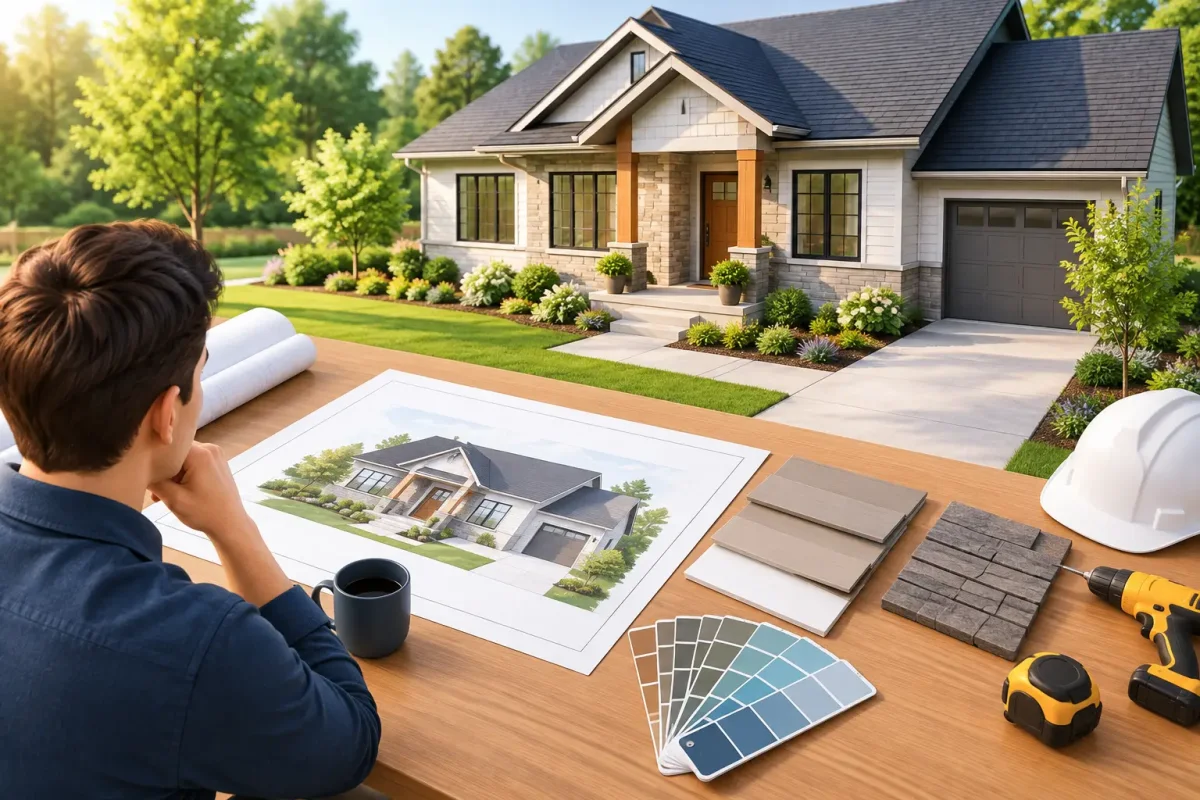
A leaking gutter, faded siding, drafty windows, and worn roof edges rarely fail on the same day. But they are connected. Water management, ventilation, insulation, and exterior finishes all work together to protect your home. When you plan an exterior renovation as one coordinated project instead of a series of emergency repairs, you can avoid repeat labor, protect your investment, and get a finished look that makes sense from every angle.
For homeowners, the goal is not simply to replace what looks old. The goal is to fix the conditions that can lead to moisture damage, heat loss, and expensive repairs behind the walls.
Start Your Exterior Renovation Plan With an Inspection
The smartest renovation decisions are made before materials are selected. A professional exterior inspection helps identify what is cosmetic, what is nearing the end of its service life, and what needs immediate attention.
Look closely at areas where water travels or collects. Overflowing eavestroughs, loose downspouts, cracked caulking, missing flashing, soft fascia boards, and stains near rooflines can point to a drainage problem. A siding issue may also be more than surface-level if panels are warped, loose, cracked, or showing signs of moisture behind them.
Windows and doors deserve the same attention. Drafts, condensation between panes, difficult operation, and deteriorating trim can affect comfort and energy efficiency. A roof inspection should include shingles, vents, valleys, flashing, and the edges where the roof meets gutters and fascia.
A good inspection gives you a clear starting point: repair isolated damage, replace failing components, or combine several upgrades into a complete exterior project. Petra Eavestrough & Siding helps homeowners assess these connected systems on-site, so the scope is based on the condition of the home rather than guesswork.
Decide What Must Be Done First
Exterior renovation work has an order. Ignoring that order can lead to damaged new materials or paying twice for the same labor.
Water protection comes first. If your roof is leaking, gutters are pulling away, or fascia is rotting, address those issues before investing in cosmetic siding or stone veneer. Water that is not directed away from the house can damage trim, foundations, landscaping, and wall assemblies.
Roofing-related work is often completed before new eavestroughs, soffit, fascia, and siding details are finalized. If you are replacing windows or exterior doors, it usually makes sense to coordinate them with siding work. This allows the contractor to properly integrate flashing, insulation, trim, and cladding around the openings.
Stone veneer and other finish details generally come later, once the wall is dry, sound, and correctly prepared. The exact sequence depends on the condition of your home and the materials you choose, but the principle is simple: solve protection problems first, then complete the finishes.
Build a Scope Around Your Real Goals
Not every home needs a full exterior transformation. A limited eavestrough replacement may be the right answer if the roof, siding, and trim are in good shape. On the other hand, patching one section of siding may not be cost-effective when the surrounding material is brittle, faded, or close to failing.
Before requesting estimates, decide what you want the project to accomplish. Most homeowners are balancing three priorities: stopping damage, improving curb appeal, and lowering energy loss. Rank them so you can make practical choices if the project needs to be phased.
For example, a family dealing with overflowing gutters and peeling fascia should prioritize drainage and wood repair. A homeowner preparing to sell may focus on siding, trim, a new front door, and stone accents for a stronger first impression. If rooms feel cold in winter or hot in summer, windows, doors, insulation details, and properly installed siding can have a larger impact than a color change alone.
A clear scope also prevents a common mistake: comparing estimates that include different work. One quote may cover removal, repairs, flashing, disposal, and cleanup, while another may only include the visible installation. Ask exactly what is included before comparing price.
Choose Materials for Performance, Not Just Appearance
Exterior materials need to handle rain, wind, sun, temperature swings, and regular maintenance. The lowest initial price is not always the best value if it leads to early replacement or frequent repairs.
Siding should suit both your home’s style and your maintenance expectations. Vinyl siding is a popular choice for many homeowners because it is cost-effective and low maintenance. Fiber cement can offer a more substantial look and strong durability, but installation requirements and project cost may be higher. Engineered wood products can create a warm, detailed appearance, though they need careful installation and maintenance planning.
Eavestrough size, placement, and downspout routing matter as much as the material itself. A gutter system that is too small or poorly pitched may overflow even when it is new. Make sure downspouts direct water well away from the foundation without creating slippery walkways or drainage issues near neighboring properties.
For windows and doors, look beyond glass and color. Proper sizing, flashing, insulation, and installation are critical to preventing drafts and water intrusion. With roofing, prioritize the full system – shingles, underlayment, ventilation, flashing, and edge protection – rather than selecting based on shingle color alone.
Set a Budget That Accounts for What You Cannot See
Exterior projects can uncover hidden damage once old siding, fascia, or roofing materials are removed. That does not mean every project will have surprises, but a realistic budget should include room for necessary repairs.
Ask for an itemized estimate that explains labor, materials, removal, disposal, permits if needed, and possible repair allowances. You should also understand whether the quote includes protection for landscaping, daily site cleanup, and a final walkthrough.
If your wish list is larger than your budget, phase the work in a way that protects the home first. Repair roof and drainage issues now, then schedule siding, windows, or decorative stone when the timing is right. Avoid splitting connected work simply to reduce the first invoice. Replacing siding now and windows a year later can mean removing and reinstalling trim around every opening.
Hire a Contractor Who Can Coordinate the Details
An exterior renovation involves more than putting new material on a wall. The contractor needs to understand how rooflines, flashing, gutters, soffit ventilation, siding, windows, doors, and trim meet each other.
Choose a licensed and insured contractor with experience in the specific services your project requires. Ask who will perform the work, how long the project is expected to take, how the property will be protected, and what happens if hidden damage is found. Warranty details should be clear, including both material coverage and workmanship coverage.
Photos and reviews can help you evaluate a contractor, but communication is just as important. You should receive straightforward answers about materials, scheduling, payment expectations, cleanup, and the next step if the scope changes. A reliable contractor does not pressure you into work you do not need, but they will explain the risks of postponing problems that can cause damage.
Prepare Your Home Before Work Begins
Once the schedule is set, a few simple preparations can make the job smoother. Move vehicles away from the work area, clear patio furniture and decorations, and keep pets safely indoors. Trim back plants that are tight against the walls, if requested, and let the crew know about exterior outlets, gates, irrigation lines, or any access concerns.
Expect noise, dust, and temporary disruption around the home. Professional crews should keep the site organized, protect nearby surfaces, remove debris, and complete a final cleanup. Before the crew leaves, walk around the property with them. Confirm that downspouts are placed correctly, trim and flashing are finished, windows and doors operate properly, and the work area is clean.
Plan an Exterior Renovation for the Long Term
The best exterior renovation is not the one with the most upgrades. It is the one that solves the right problems in the right order and gives your home a consistent layer of protection. Start with a thorough inspection, make water management a priority, choose materials that fit your goals, and work with a contractor who can coordinate every detail.
A well-planned project gives you more than a sharper-looking home. It gives you fewer maintenance worries when the next heavy rain, strong wind, or cold season arrives.

18 October 2026
Roof Replacement Signs and Smart Next Steps

18 October 2026