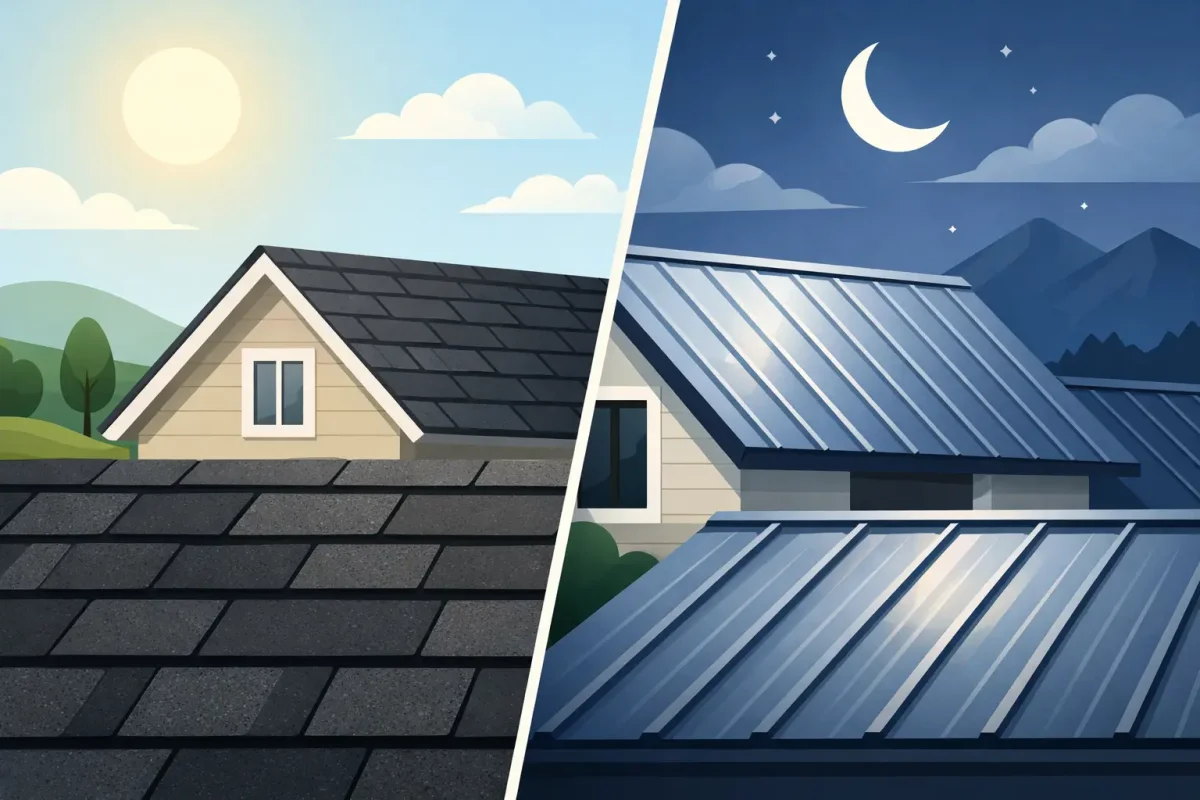
A roof replacement is not the kind of project most homeowners plan for years in advance. Usually, it starts with a leak, missing shingles after a storm, staining near the attic, or a roof that has simply reached the end of its service life. When comparing asphalt versus metal roofing, the right choice comes down to more than looks. Your budget, home design, local weather, long-term plans, and existing roof structure all matter.
Asphalt shingles remain the most common roofing material for good reason: they are familiar, affordable, and available in a wide range of colors and styles. Metal roofing costs more upfront, but it can deliver a much longer lifespan and strong performance in rain, snow, wind, and sun. The better roof is the one that fits your home and your priorities – not just the one with the lowest initial price.
Asphalt Versus Metal Roofing: The Main Difference
The biggest difference is the investment timeline. Asphalt roofing generally costs less to install, making it a practical choice for homeowners who need a dependable replacement without stretching the renovation budget. A properly installed architectural shingle roof can provide reliable protection for many years, especially when attic ventilation, flashing, gutters, soffit, and fascia are all in good condition.
Metal roofing is typically a larger upfront investment. Depending on the profile, material, roof complexity, and installation requirements, it can cost two to three times more than asphalt shingles. In return, homeowners may get several decades of service, lower maintenance needs, and a distinctive finished appearance.
Neither material is automatically right for every property. A homeowner planning to sell within a few years may place more value on asphalt’s lower cost and broad curb appeal. Someone intending to stay in the home long term may see metal as a worthwhile investment in durability and reduced replacement cycles.
Cost: What You Pay Now and Over Time
For many families, cost is the deciding factor. Asphalt shingles are usually the more accessible option because material and labor costs are lower and installation is straightforward for experienced roofing crews. They are also easier to repair when isolated damage occurs.
Metal roofs require more specialized labor, careful measurements, and detailed work around valleys, chimneys, skylights, vents, and transitions. The roof deck and framing should be inspected before installation, particularly on older homes. A quality metal installation is not a place to cut corners. Poor fastening, weak flashing details, or improper underlayment can create problems regardless of how durable the panels themselves may be.
Long-term value changes the picture. Asphalt roofs may need replacement after roughly 20 to 30 years, depending on shingle quality, weather exposure, maintenance, ventilation, and installation. Metal systems can often last 40 to 70 years or more. If you expect to own the home for decades, avoiding a second full roof replacement can make metal easier to justify.
Your estimate should account for the full scope of work, not just the visible roofing material. Damaged decking, ice and water protection, ventilation upgrades, chimney flashing, pipe boots, drip edge, and eavestrough conditions can all affect the final project cost. A clear on-site inspection helps prevent surprises once work begins.
Weather Performance for Real Homes
A roofing system has to stand up to more than a few sunny days. Heavy rain, wind-driven storms, snow load, ice, and repeated freeze-thaw cycles all put pressure on roof materials and the details around them.
Asphalt shingles perform well when they are correctly installed and matched to local conditions. Architectural shingles offer better dimensional appearance and wind resistance than basic three-tab options. They are a proven choice for many homes, but shingles can lose granules, crack, curl, or lift as they age. Storm damage and trapped moisture can shorten their service life.
Metal roofing sheds rain and snow quickly because of its smooth surface and panel design. It is also highly resistant to wind and does not absorb moisture. Quality metal panels will not rot, and they are not vulnerable to the same granule loss seen with aging asphalt shingles. However, snow shedding needs to be considered. On homes where snow can slide onto walkways, decks, driveways, or lower roof sections, snow guards may be needed to manage that movement safely.
The roof material is only one part of weather protection. Leaks often begin at flashing, penetrations, valleys, or roof-to-wall connections rather than in the middle of a roof field. That is why professional installation and detail work matter as much as the product you choose.
Energy Efficiency and Attic Ventilation
Metal roofing can reflect more solar heat than dark asphalt shingles, especially when installed in lighter colors or reflective finishes. That may help reduce heat absorption during warm weather. Still, a roof alone does not solve an inefficient home.
Proper attic insulation and ventilation have a major effect on comfort, energy use, and roof life. Inadequate ventilation can trap moisture and heat in the attic, contributing to premature shingle aging, condensation, mold concerns, and ice dams in colder climates. Before selecting a new roof, it is smart to have the attic and roofline evaluated as part of the overall project.
Appearance, Curb Appeal, and Home Style
Asphalt shingles offer flexibility. Homeowners can choose from many colors, textures, and architectural styles, including options designed to resemble wood shake or slate. This makes asphalt an easy fit for traditional homes, newer subdivisions, and properties where a classic roof appearance is the goal.
Metal roofing makes a stronger visual statement. Standing seam panels create clean vertical lines that work especially well on modern homes, farmhouses, cabins, and properties with contemporary exterior updates. Metal shingles and stone-coated steel can offer a more traditional look while keeping many of metal’s performance benefits.
Consider the whole exterior before making a decision. A new roof should work with your siding color, brick or stone, gutters, trim, windows, and front entry. A coordinated exterior upgrade can improve curb appeal far more than replacing one worn component in isolation.
Maintenance and Repair Expectations
No roof is maintenance-free. Asphalt roofs should be checked periodically for lifted, cracked, or missing shingles, exposed nail heads, granule buildup in gutters, damaged flashing, and moss or algae growth. Keeping eavestroughs clear helps water move away from the roof edge and foundation instead of backing up where it does not belong.
Metal roofs need less routine maintenance, but they still deserve inspection. Fasteners, sealants, flashing, and protective coatings should be checked over time. Scratches or coating damage should be addressed early, particularly in areas exposed to persistent moisture. Repairs can be more specialized than asphalt repairs, so choosing an installer with metal roofing experience is essential.
For both materials, the most important maintenance step is acting early. A small leak can soak insulation, stain ceilings, damage decking, and create a much larger repair bill if left alone.
When Asphalt Is the Better Choice
Asphalt roofing is often the right fit when you need strong protection at a more manageable upfront cost. It makes sense for homeowners replacing an aging roof before a sale, those working within a defined renovation budget, and homeowners who prefer a traditional appearance with many color choices.
It is also a good option when you want repairs to remain simple and widely available. With quality architectural shingles, proper ventilation, and professional installation, asphalt can be a reliable, attractive roof system for years.
When Metal Is Worth the Investment
Metal roofing is often worth considering when you plan to stay in your home long term and want to prioritize lifespan, weather resistance, and lower replacement frequency. It can be an excellent choice for homes exposed to severe wind, heavy snow, intense sun, or recurring moisture concerns.
It also suits homeowners who want a more distinctive exterior and are already investing in siding, soffit, fascia, windows, or other visible upgrades. The initial cost is higher, but the finished result can deliver lasting protection and a clean, high-end appearance.
Choose the Roof That Protects the Entire System
The best roofing decision starts with an honest inspection of your current roof, attic, drainage, and exterior details. A new roof should not hide damaged decking, poor ventilation, failing flashing, or clogged eavestroughs. Those issues need to be addressed so your investment performs the way it should.
Whether asphalt or metal fits your home best, choose materials you trust and an installer who explains the scope clearly, protects your property during the work, and leaves the site clean when the job is complete. A roof should give you more than a fresh look from the street – it should give you confidence every time the weather turns.

10 September 2026
Is Gutter Guard Value Worth the Investment?

10 September 2026