
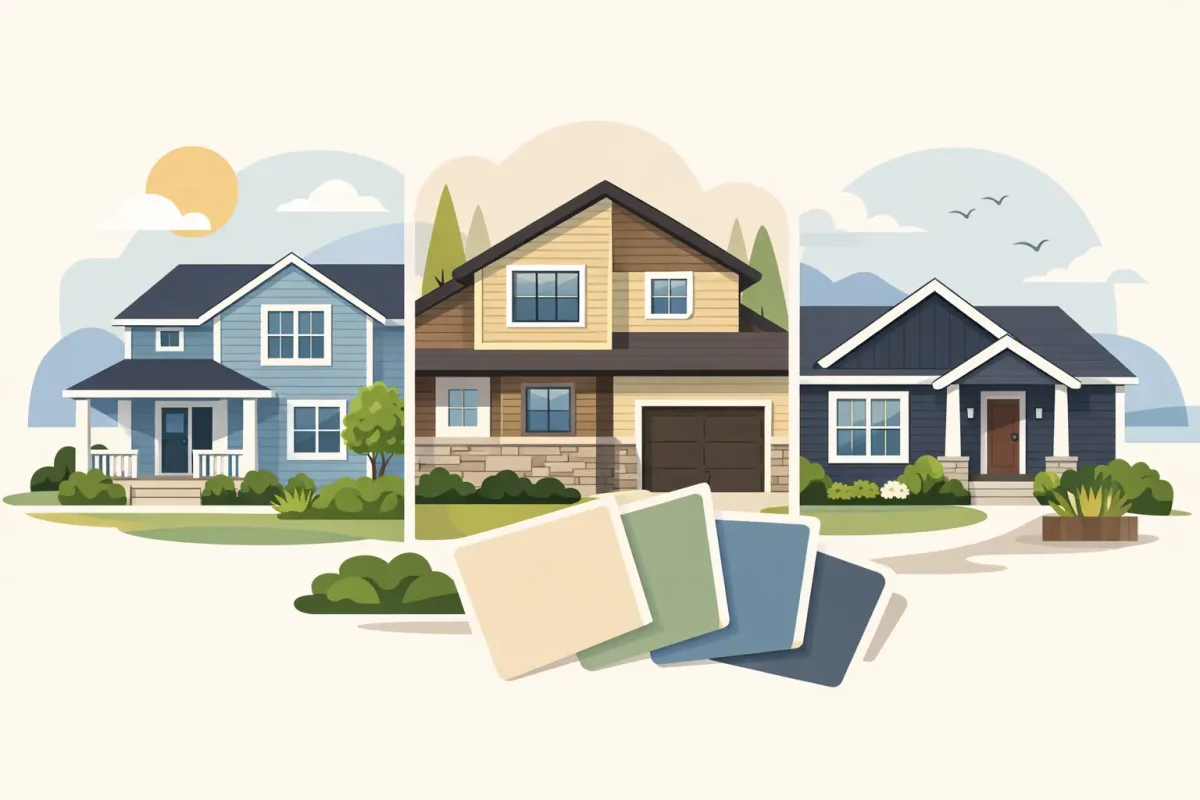
A siding replacement changes more than the look of your home. The right color can make an older property feel cared for, help architectural details stand out, and create a finished look that works with the roof, windows, stone, and trim. Current siding color trends favor grounded, flexible palettes over short-lived statements – a smart approach for homeowners making a long-term investment.
The best choice is not always the color getting the most attention online. Your home’s style, fixed exterior elements, neighborhood standards, sun exposure, and maintenance expectations all matter. A professional exterior inspection can help turn a color idea into a coordinated plan that looks right on your home, not just on a sample board.
Siding Color Trends Moving Beyond Basic Beige
Warm neutrals are taking the place of the flat gray and beige exteriors that dominated for years. Think soft taupe, mushroom, sand, and putty tones with a little warmth underneath. These colors feel clean and current without making a house look overly stark. They also pair easily with white, cream, bronze, or dark trim.
Greige remains a dependable option because it sits between gray and beige. It can suit traditional homes, newer construction, and properties with brick or natural stone accents. The trade-off is that undertones matter. A greige that looks balanced in one light can appear purple, green, or much cooler against a certain roof or masonry color.
Homeowners are also moving toward nature-based colors: muted sage, olive, smoky blue, clay, and weathered brown. These shades add personality while still feeling appropriate for a residential exterior. They tend to work especially well on homes surrounded by mature trees, stone landscaping, or earth-toned brick.
Deep Colors Are Being Used With More Intention
Dark blue, charcoal, black, and deep green siding remain popular, but the most successful projects use them strategically. A darker exterior gives a home strong definition and can make simple lines look more architectural. It is a natural fit for modern farmhouse, contemporary, and Craftsman-style homes.
That said, a dark exterior is not automatically the best choice. Dark colors absorb more heat in direct sun and can show dust, pollen, water marks, and surface scuffs more readily than mid-tone colors. Material quality, proper installation, and the manufacturer’s color recommendations matter when selecting a very dark shade, particularly on walls that receive intense afternoon sun.
A balanced approach often delivers the best result. Use a rich dark color on the main siding, then choose warm white trim and a lighter front entry area to prevent the facade from feeling heavy. Another option is to use dark siding as an accent on a gable, bump-out, or upper story while keeping the main body of the home lighter.
Black Is a Statement, Not a Default
Black siding can look sharp, especially with natural wood details, light stone veneer, and black-framed windows. But it needs enough contrast to avoid making the home look flat. On a small house or a heavily shaded lot, full black siding may lose detail and feel more imposing than expected.
Before committing, look at large samples outside at several times of day. A color that reads as crisp black in a showroom may look softer, charcoal, or almost brown outdoors. That is not a problem if it suits the rest of the exterior, but it should be a deliberate decision.
Lighter Exteriors Still Have a Place
White and off-white siding are not going away. They continue to be a strong choice for homeowners who want a bright, classic exterior with broad resale appeal. The shift is toward warmer whites rather than harsh, icy shades. Creamy white, linen, and soft ivory can make a home feel welcoming while coordinating better with warmer roofing, brick, and wood accents.
A light exterior does have practical advantages. It can make a smaller home appear larger, reflect more sunlight, and provide a clean backdrop for a colored front door or dark shutters. The maintenance consideration is simple: light siding can show mud splash and mildew in damp or shaded areas. Quality siding, correct drainage, and routine cleaning reduce those concerns.
For a home with a busy exterior – multi-toned brick, stone veneer, decorative roof shingles, or several window styles – a quiet light siding color can bring order to the overall design. Not every house benefits from another bold element.
Coordinated Trim Creates a Finished Exterior
The strongest siding color trends are less about one individual color and more about a complete exterior palette. Siding, soffit, fascia, eavestroughs, trim, doors, roofing, and stone should look like they belong together.
White trim remains popular because it creates clear contrast against nearly every siding color. Softer trim colors, such as cream, tan, and light bronze, are gaining ground on homes with warmer palettes. Dark trim can create a more modern look, but it requires clean lines and enough contrast against the siding to be visible from the street.
Do not overlook eavestroughs and fascia. They occupy long, highly visible lines along the roof edge. Matching them to the trim creates a clean, consistent result, while a poorly matched replacement can interrupt an otherwise well-planned siding project.
Work With What Cannot Easily Change
Start with the fixed elements of your property: roof shingles, brick, stone, driveway color, and permanent landscaping features. Roofing is especially important because it covers a large area and is expensive to replace solely to match a new siding choice.
If your roof has strong warm brown, red, or gold undertones, a cool blue-gray siding color may fight with it. If your brick has warm orange or red tones, an overly cool white can make both materials look harsher. Samples should always be viewed next to these fixed elements, not in isolation.
How to Choose a Color You Will Still Like Years From Now
Trends can provide useful direction, but your siding should serve your home for many years. A practical color-selection process prevents expensive second thoughts.
First, consider your home’s architecture. Traditional Colonials often suit whites, soft grays, blues, and classic neutrals. Craftsman homes can carry earthier greens, browns, and deep blues. Modern homes may support stronger charcoal, black, or two-tone combinations. The goal is not to follow a rulebook, but to choose a color that makes the structure look intentional.
Next, evaluate natural light. North-facing walls can make colors look cooler and darker, while south-facing walls receive stronger light that can wash out pale shades. Trees, neighboring homes, and covered porches also change how a color reads. View large samples in morning, midday, and late-afternoon light before deciding.
Then consider your neighborhood and resale plans. You do not need to copy nearby homes, but a color that fits the general character of the street is usually a safer long-term choice. If you live in a community with an HOA, confirm its requirements before ordering materials.
Finally, limit the palette. A reliable formula is one primary siding color, one trim color, and one accent color for the front door, shutters, or selected architectural features. More colors can work, but only when each one has a clear purpose.
Material and Installation Protect the Color Investment
A great color cannot compensate for worn siding, damaged sheathing, poor flashing, or failing gutters. Before installation begins, the exterior should be checked for moisture issues, rot, ventilation concerns, and areas where water is entering behind the siding.
This is also the right time to coordinate related work. Replacing soffit, fascia, eavestroughs, windows, or stone accents during a siding project can prevent mismatched finishes and avoid reopening completed areas later. A full exterior plan often produces a cleaner result and fewer disruptions than treating every component as a separate project.
Ask about the warranty coverage for both materials and labor, as well as recommended cleaning and maintenance. Durable siding is designed to hold its color well, but performance still depends on using quality materials and installing them correctly around windows, doors, rooflines, and drainage points.
A Color Choice Should Feel Good From the Curb
The most successful siding color is one that looks right in your light, works with the features you are keeping, and supports the value of your home without demanding constant attention. Whether you prefer a warm neutral, a deep dramatic blue, or a clean off-white exterior, take the time to see real samples on the house and build the decision around the full exterior. That extra step is what turns a new siding color into a home you are proud to pull up to every day.
11 September 2026
Asphalt Versus Metal Roofing: Best for You?

11 September 2026