
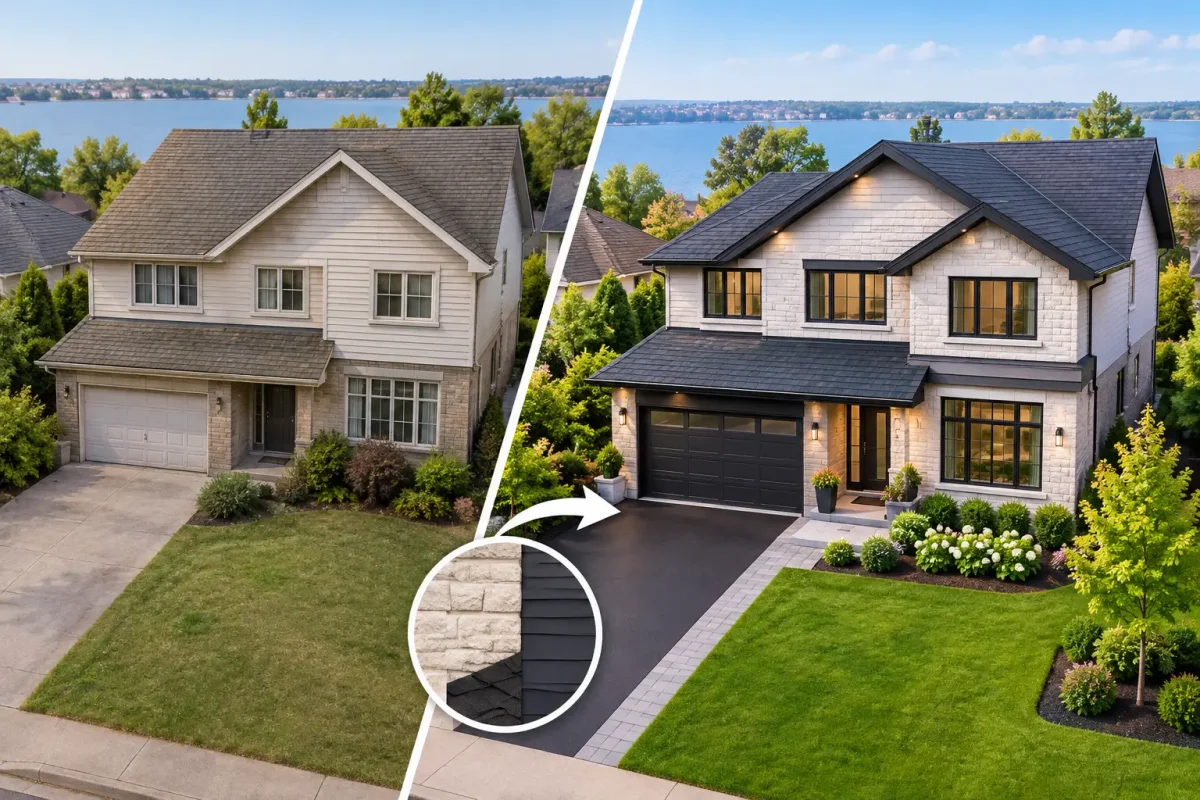
A home can look well maintained from the street while small exterior failures are already creating larger risks. In this Oakville exterior renovation case study, the homeowner originally called about aging siding and overflowing gutters. A full inspection showed that the problems were connected: worn exterior finishes, poor water control, and drafty openings were all affecting the home’s protection, comfort, and curb appeal.
The goal was not to replace every exterior component just because it was old. The goal was to complete the work that would make the home more durable, easier to maintain, and noticeably better looking without turning the project into a drawn-out construction site.
The Homeowner’s Concerns
This detached Oakville home had been through years of changing weather, including heavy rain, snow buildup, freeze-thaw cycles, and summer heat. Its original siding had faded unevenly and showed minor cracking around several edges. The gutters were undersized for sections of the roofline, with water spilling over near a front corner and soaking the ground beside the foundation.
The homeowners had also noticed cold spots near two older windows. They were not ready for a full interior renovation, but they wanted to address the exterior issues before water damage or energy loss became more expensive to correct.
Their priorities were clear: improve drainage, update the appearance of the home, reduce drafts, and avoid coordinating separate siding, gutter, window, and trim crews. They also wanted a contractor who could provide a clear scope of work, keep the site clean, and finish on a predictable schedule.
What the Inspection Found
A proper exterior project starts with more than a quick look at visible damage. The inspection focused on how water moved across the roof, through the gutter system, and away from the structure. It also included a close review of siding transitions, soffit and fascia, window trim, and areas where different materials met.
The most urgent concern was water management. Several gutter sections had poor slope, and debris had collected near the downspouts. Overflow had stained the siding and contributed to moisture exposure along the lower wall. The fascia behind one section was beginning to soften, which meant simply cleaning the existing gutters would not solve the underlying problem.
The siding was still protecting much of the home, but repairs would have been visible because the original color had faded. In cases like this, spot repairs can be a reasonable choice when the damage is isolated and matching material is available. Here, the more practical long-term option was a coordinated siding replacement with new trim details.
The window issue was more selective. Only two windows showed clear signs of air leakage and declining performance. Replacing every window would have increased the budget without delivering the same value, so the project focused on the units causing the greatest comfort concerns.
The Renovation Plan
The final plan combined siding, soffit and fascia, gutter replacement, targeted window replacement, and stone veneer at the front entry. Completing these elements together allowed the installation team to create clean transitions and avoid removing newly installed materials later.
New vinyl siding was selected for its low maintenance requirements, reliable performance, and consistent color. The homeowners chose a neutral main color with a darker accent around the front elevation. This created contrast without making the home look overly trendy or difficult to match in the future.
For the gutter system, the plan included correctly sized seamless eavestroughs, new downspouts, and improved placement to direct water away from the foundation. The fascia was repaired where needed before the new gutters were installed. This sequence matters. Fastening a new gutter to compromised wood may look fine on day one, but it can lead to sagging and leaks later.
The two replacement windows were chosen to improve insulation and reduce drafts in the rooms the family used most. New exterior trim tied those openings into the siding installation, giving the front and side elevations a finished appearance rather than a patched-together look.
Stone veneer was added around the entry area to give the facade more depth. Stone can make a strong visual impact, but it works best when used with restraint. Covering the entire front elevation would have added cost and visual weight. Limiting it to the entry created a focal point while keeping the design balanced.
How the Work Was Completed
The project was planned so that each trade supported the next. Old siding and damaged trim were removed first, allowing the wall areas and fascia to be assessed before new materials covered them. Any necessary repairs were completed before the siding installation began.
Next came the new siding, soffit, fascia, and window trim. Careful work around corners, rooflines, and openings was especially important because these are the areas where water can enter if materials are installed carelessly. The stone veneer work followed at the entry, then the gutters and downspouts were installed after the fascia was complete.
A coordinated schedule also kept disruption down. Rather than having separate crews arrive weeks apart, the exterior work was handled as one connected project. The homeowners did not have to wonder whether the siding installer, gutter installer, and window contractor were all working from the same plan.
Daily cleanup made a noticeable difference. Exterior renovations create scrap material, fasteners, packaging, and dust. A professional crew should keep work areas orderly throughout the job, not leave the full cleanup until the final afternoon. At completion, the property was cleared, the drainage routes were checked, and the homeowners received a walkthrough of the finished work and warranty information.
The Results: Better Protection and a Stronger First Impression
The most visible result was the change in curb appeal. Fresh siding, consistent trim, and the stone entry gave the house a more current, well-kept appearance. The color contrast added definition to the roofline and front elevation without overwhelming the home’s original character.
The more valuable result was improved protection. The new gutter system moved rainwater away from the home more effectively, and repaired fascia gave the system a secure base. Replacing the drafty windows improved comfort in the affected rooms, particularly during colder weather.
The project also made future maintenance simpler. Vinyl siding does not need frequent painting, and a properly designed gutter layout reduces the chance of recurring overflow at problem areas. That does not mean maintenance disappears completely. Gutters still need periodic inspection, especially near mature trees, and homeowners should watch for changes in caulking, drainage, or roof runoff over time.
What This Oakville Exterior Renovation Case Study Shows
The biggest lesson from this project is that exterior problems rarely stay isolated for long. Faded siding may be a cosmetic concern, but it can also reveal aging trim or moisture exposure. Overflowing gutters may seem like a cleaning issue, yet the real cause could be poor slope, improper sizing, or failing fascia. Drafty windows can affect comfort, but replacing only the units that are underperforming may be the best use of the budget.
A complete renovation is not always the right answer. If a roof, siding system, or gutter section is still in good condition, a focused repair may be more sensible. But when multiple exterior elements are reaching the end of their service life, planning them together can save time, improve the finished appearance, and prevent duplicate labor.
For homeowners, the right next step is a thorough on-site inspection and a written scope that explains what needs attention now, what can wait, and why. Petra Eavestrough & Siding approaches exterior work with that practical mindset: protect the home first, make the details look right, and leave the property clean when the job is done.
If your home has aging siding, leaking gutters, worn trim, or rooms that never seem comfortable, do not wait for visible water damage to force the decision. A clear inspection can turn a list of frustrating exterior issues into a plan that protects your home for years to come.
2 November 2026
Vinyl Versus Engineered Wood Siding Compared
2 November 2026