
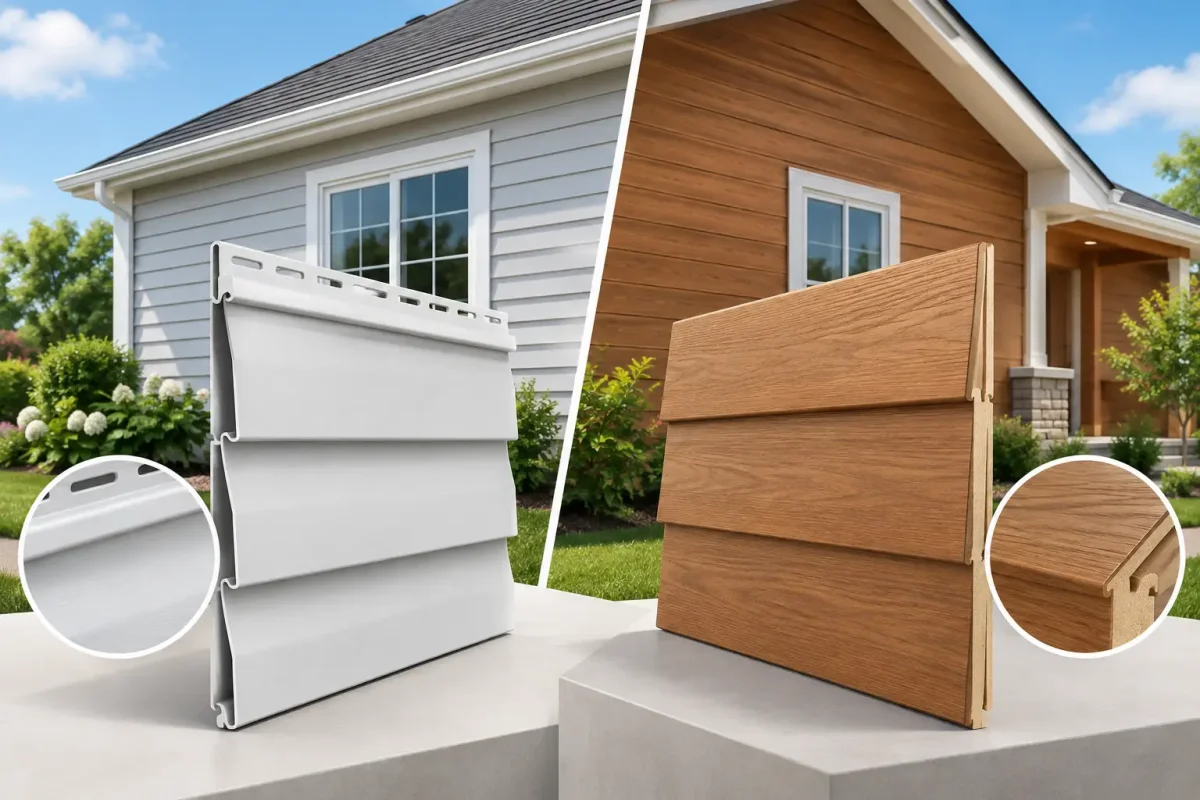
A siding replacement changes more than the appearance of your home. It affects how well the exterior handles rain, wind, moisture, impact, and years of seasonal temperature swings. When homeowners compare vinyl versus engineered wood siding, the best choice usually comes down to the look they want, the maintenance they are comfortable with, and the condition of the home behind the existing siding.
Both materials can be good long-term options when they are installed correctly. Neither is automatically right for every house. A professional inspection should look beyond faded panels or peeling paint to check the wall system, trim, flashing, soffit, fascia, and any signs of water damage before a material is selected.
Vinyl Versus Engineered Wood Siding at a Glance
Vinyl siding is a practical, lower-maintenance choice that works well for homeowners who want a clean exterior without routine painting. It is available in many colors and profiles, including traditional lap siding, vertical panels, shakes, and board-and-batten styles. Because the color runs through the material, small scuffs are often less noticeable than they would be on painted siding.
Engineered wood siding is manufactured from wood strands, resins, and protective binders. It is designed to provide the texture and character of real wood while resisting many of the moisture and pest issues associated with traditional wood siding. It can be painted in a wide range of colors and is often chosen for homes where architectural detail and a more substantial appearance matter.
The decision is not simply about “budget” versus “premium.” Vinyl can look sharp and perform well on the right home. Engineered wood can offer excellent value when its appearance, paint flexibility, and durability fit the project goals.
Cost: Look Beyond the Initial Price
Vinyl is commonly the more affordable material at the start of a siding project. The panels are lightweight, installation can move quickly on straightforward walls, and the material does not need to be painted after installation. For a homeowner managing a full exterior renovation budget that also includes eavestroughs, roofing, windows, or doors, vinyl may leave more room for other necessary upgrades.
Engineered wood usually has a higher installed cost. It is heavier, requires more detailed cutting and fastening, and needs proper priming, caulking, and paint or factory finish protection. The result can be a more customized exterior, especially when used with wider trim boards, gable accents, or contrasting colors.
A low material price should never be the only deciding factor. Improperly installed siding can allow water behind the wall, create gaps around windows, or lead to early damage. A detailed estimate should identify the siding product, removal of old materials, wall preparation, flashing, trim work, cleanup, and warranty coverage so there are no surprises once work begins.
Durability in Changing Weather
Vinyl siding will not rot, and it is not vulnerable to insects. It performs well in wet weather when the wall system behind it is properly prepared. However, vinyl expands and contracts with temperature changes. Installers must leave the right clearance at fasteners and trim pieces so the panels can move as intended without buckling or warping.
Vinyl can also crack after a hard impact, particularly in colder conditions. A flying branch, a baseball, or a sharp blow from yard equipment can damage an individual panel. Repairs are often possible, but matching older faded siding can be difficult if the original color or profile is no longer available.
Engineered wood offers greater rigidity and impact resistance than vinyl. It can handle everyday bumps well, and its solid appearance tends to suit homes with more detailed exterior design. Its performance, however, depends heavily on keeping moisture out of exposed edges, joints, and penetrations. Proper flashing around windows, doors, rooflines, and transitions is essential.
Neither product can compensate for a leaking roof edge, failing eavestrough, or poorly managed runoff. If water is overflowing near the foundation or running behind fascia boards, those issues should be addressed as part of the project. Siding is a protective layer, but it works best within a complete exterior system.
Maintenance Requirements
For homeowners who want the least hands-on upkeep, vinyl has the advantage. A gentle wash with water and a mild cleaner can remove dirt, pollen, and surface grime. Avoid harsh abrasives or high-pressure washing at close range, which can force water behind the panels or damage the finish.
Vinyl does not require painting, but it is not maintenance-free. Homeowners should still inspect caulking, trim, vents, and areas around windows each year. Mold or mildew on shaded sections may need cleaning, and damaged panels should be replaced before wind-driven rain reaches the wall behind them.
Engineered wood requires a more active maintenance plan. Factory-finished products can reduce early upkeep, but paint and caulk still need periodic inspection. Repainting intervals depend on sun exposure, the quality of the finish, and how well the original installation protected seams and edges. When maintained properly, engineered wood can hold its appearance for many years.
The trade-off is clear: vinyl offers easier ownership, while engineered wood gives homeowners more freedom to refresh the exterior with a new paint color down the road.
Curb Appeal and Design Flexibility
This is where engineered wood often stands out. It has deeper shadow lines, crisp edges, and a more natural grain pattern than standard vinyl. It can be installed in lap, panel, shake, and vertical applications, making it a strong fit for modern farmhouse, craftsman, and traditional home styles. Wider boards and coordinated trim can give the home a finished, high-end look.
Vinyl has improved considerably in style and color selection. Insulated profiles, darker shades, vertical siding, and shake accents can create a major curb appeal upgrade without the cost of a wood-based product. It is especially effective on straightforward home elevations where a clean, consistent finish is the priority.
For some homes, the strongest solution is a mixed-material design. Vinyl may be the practical choice for broad wall areas, while engineered wood-style accents, stone veneer, or upgraded trim create visual interest at the entry, gables, or garage. The goal is a balanced exterior, not a material choice made in isolation.
Energy Efficiency: What Siding Can and Cannot Do
Siding alone is not usually the biggest driver of home energy performance. Air leaks around windows, doors, rooflines, and wall penetrations can have a larger effect on comfort. Still, siding replacement is an ideal time to inspect the weather barrier, address damaged sheathing, and improve details that help control drafts and moisture.
Insulated vinyl siding can add a modest thermal layer and help reduce the hollow appearance of standard panels. Engineered wood has some natural insulating value, but neither product replaces proper wall insulation. If comfort is a concern, ask the contractor to assess the full wall assembly rather than relying on a siding claim alone.
Which Siding Is Right for Your Home?
Choose vinyl if you want an affordable, low-maintenance exterior with reliable moisture resistance and a wide range of standard colors. It is a sensible choice for homeowners who prefer not to plan for repainting and want a durable update completed efficiently.
Choose engineered wood if you want a more authentic wood appearance, stronger visual detail, and the ability to change colors in the future. It is a good investment when professional installation and a regular paint-and-caulk maintenance plan fit your expectations.
The right choice should also reflect the home’s age, architectural style, sun exposure, drainage conditions, and the condition of the surrounding exterior components. A siding project is the right time to correct small problems before they become costly repairs. With a clear inspection, quality materials, and careful installation, your new exterior can protect the home and make it look cared for every time you pull into the driveway.
1 November 2026
Your Guide to Seamless Gutter Installation
1 November 2026