A hot upstairs bedroom, peeling paint near the roofline, and ice building up at the eaves are not always insulation problems. Often, they point to an attic that cannot move air properly. The best roof ventilation improvements balance fresh air entering at the lower edge of the roof with warm, damp air leaving at the top. When that balance is right, your attic stays drier, your roofing system works harder for longer, and your home is more comfortable through changing weather.
For homeowners planning a roof replacement, soffit upgrade, or exterior renovation, ventilation should be part of the conversation from the start. It is much easier and more cost-effective to correct airflow while roofing components are already being replaced than to reopen finished work later.
Why Roof Ventilation Matters to Your Home
Your attic is the buffer between your living space and the roof. In summer, sunlight can push attic temperatures far beyond the outdoor temperature. In winter, warm household air can carry moisture upward, where it condenses on cold framing and roof sheathing.
Without dependable airflow, that heat and moisture have nowhere to go. Over time, the result can include damp insulation, musty odors, mold growth, stained sheathing, warped decking, and shingles that age before their time. In colder climates, trapped attic heat can also melt roof snow. The water runs down to colder eaves, refreezes, and contributes to ice dams.
Ventilation is not a standalone cure for every attic issue. Air leaks from the home, inadequate insulation, bathroom fans exhausting into the attic, and roof leaks can create similar symptoms. A proper inspection looks at the whole system before recommending a vent type or promising energy savings.
The Best Roof Ventilation Improvements Start With Balance
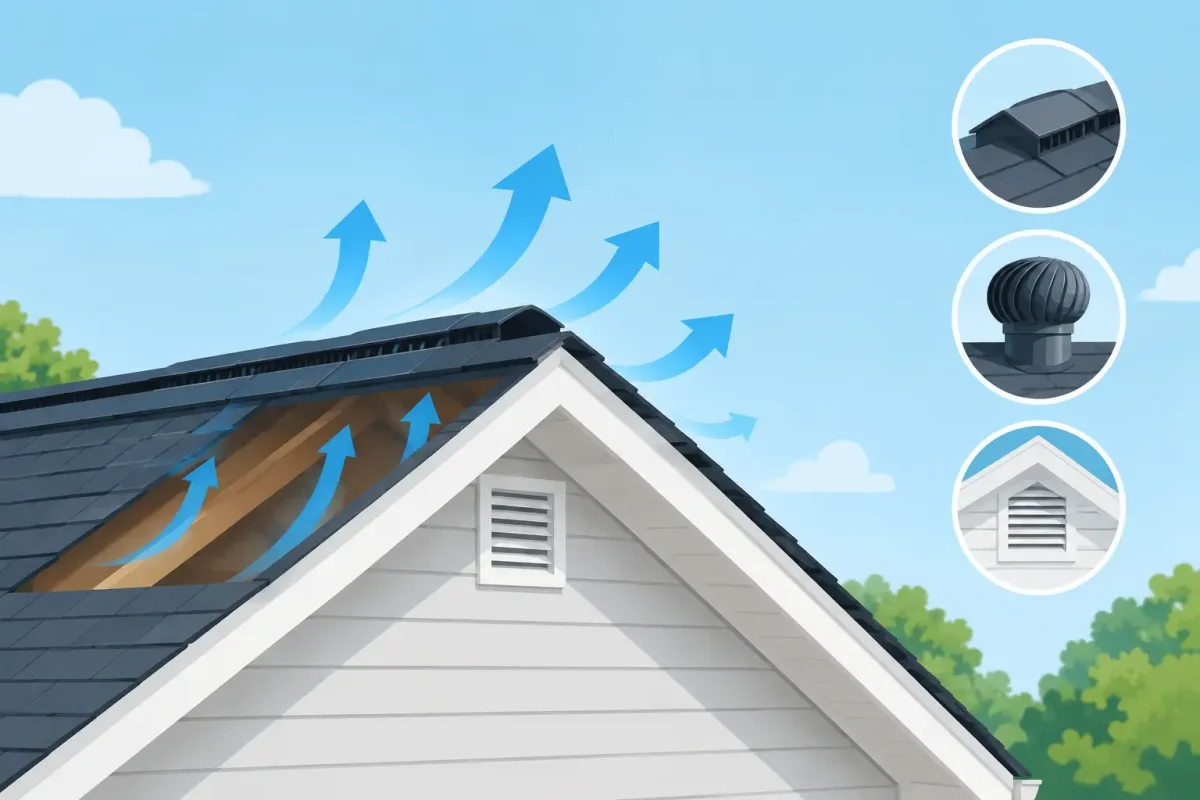
Effective attic ventilation depends on two working parts: intake and exhaust. Intake vents bring outside air into the attic at or near the eaves. Exhaust vents release rising warm air near the roof peak. As air exits through the upper vents, it pulls fresh air in through the lower vents.
Adding more exhaust without enough intake is a common mistake. The exhaust vents may pull air from gaps in the ceiling, recessed lights, attic hatches, or other unintended openings instead of from the soffits. That can draw conditioned air out of the house and bring moisture into the attic. More vents are not automatically better. The right amount, placement, and ventilation path matter.
A qualified roofing contractor can calculate the ventilation area needed for your attic size, roof design, and local conditions. They can also identify blocked pathways that prevent existing vents from doing their job.
Improve or Add Continuous Soffit Intake
For many homes, the most valuable ventilation improvement is at the eaves. Continuous vented soffit creates a long, even intake path along the roof edge. Compared with a few small individual vents, it supplies air more consistently across the attic.
Soffit work is especially worth considering when old soffits are damaged, enclosed, or being replaced as part of fascia, gutter, or siding work. A coordinated installation can improve airflow while giving the roofline a clean, finished appearance.
The detail inside the attic matters just as much as the material outside. Insulation often shifts into the eaves and blocks the intake vents. Proper rafter baffles, also called vent chutes, hold insulation back and preserve an open channel from the soffit into the attic. Without them, new vented soffit may offer little real benefit.
Install Ridge Venting When the Roof Allows It
A ridge vent runs along the peak of a sloped roof, allowing hot air to escape where it naturally collects. When paired with adequate soffit intake, it provides even ventilation across the attic and is usually less noticeable from the street than individual roof vents.
Ridge venting is often an excellent choice during a full roof replacement because it can be integrated cleanly with new shingles and ridge caps. However, it is not right for every roof. Complex rooflines, short ridges, low-slope sections, and certain existing vent layouts may limit how much effective exhaust a ridge vent can provide.
A contractor should inspect the attic and roof before suggesting ridge venting. The goal is a system that performs well, not simply a roofline with the most visible ventilation products.
Upgrade Undersized or Poorly Placed Exhaust Vents
Some homes rely on a small number of static box vents, turbine vents, or older louvered vents. These can work in the right layout, but they may not provide enough exhaust for a larger attic or may leave sections of the roof poorly ventilated.
Replacing damaged vents, improving their placement, or converting to a more evenly distributed exhaust system can help. Static roof vents can be a practical option where ridge venting is not feasible. Turbine vents can move significant air when wind conditions are favorable, but they have moving parts and are more visually prominent. Powered attic fans may be appropriate in specific situations, though they need careful planning so they do not pull conditioned air from the home.
The best choice depends on the roof design, available intake, attic layout, and the condition of the existing roofing materials.
Air Seal Before You Vent More
Ventilation works best when your attic floor is properly air sealed. Warm, moist indoor air should not be leaking around plumbing stacks, wiring openings, light fixtures, chimneys, or the attic access hatch. If it is, extra attic ventilation alone may not prevent condensation.
During an inspection, look for dark staining on roof sheathing, frost on nails in winter, compressed or damp insulation, and signs of air movement around ceiling penetrations. Bathroom and kitchen fans should vent outdoors, never into the attic. This is a simple issue with expensive consequences when it goes unnoticed.
Air sealing and insulation are separate from roof ventilation, but they work together. Air sealing limits moisture entering the attic. Insulation reduces heat transfer from the living space. Balanced ventilation removes the heat and moisture that still reach the attic. Skipping one part can reduce the benefit of the others.
When a Roof Replacement Is the Right Time to Improve Ventilation
If shingles are nearing the end of their service life, a roof replacement is the best opportunity to correct ventilation issues. The roof deck is easier to inspect, old vents can be removed or relocated, and new exhaust ventilation can be installed without patchwork repairs.
This is also the time to check the condition of fascia, soffit, and eavestroughs. Water management and roof ventilation are connected at the roof edge. Damaged fascia can complicate soffit intake installation, while poor drainage can create moisture problems that are mistaken for ventilation failures. Completing these components as one exterior project helps protect the home from top to bottom.
Homeowners should be cautious about quick fixes that add a single vent without checking intake airflow, insulation, roof leaks, and attic moisture. A low-cost patch can leave the original problem in place and make a future roof replacement more complicated.
Signs You Should Schedule a Professional Attic Inspection
A professional review is worthwhile if you notice recurring ice dams, unusually high upstairs temperatures, condensation in the attic, mildew odors, curling shingles, or visible moisture stains near ceilings and exterior walls. It is also smart to inspect ventilation before installing a new roof, replacing soffits, or adding insulation.
At Petra Eavestrough & Siding, a complete exterior assessment can connect the condition of your roof, soffits, fascia, and drainage system instead of treating each issue as an isolated repair. That approach helps homeowners invest in improvements that solve the cause of the problem and protect the finished work.
The right ventilation upgrade should make your home easier to maintain, not add another concern to your list. Start with an on-site inspection, ask how intake and exhaust will work together, and make sure the recommendation accounts for your attic, roofline, and exterior components as a complete system.
18 September 2026
Soffit and Fascia Guide for a Protected Home
18 September 2026