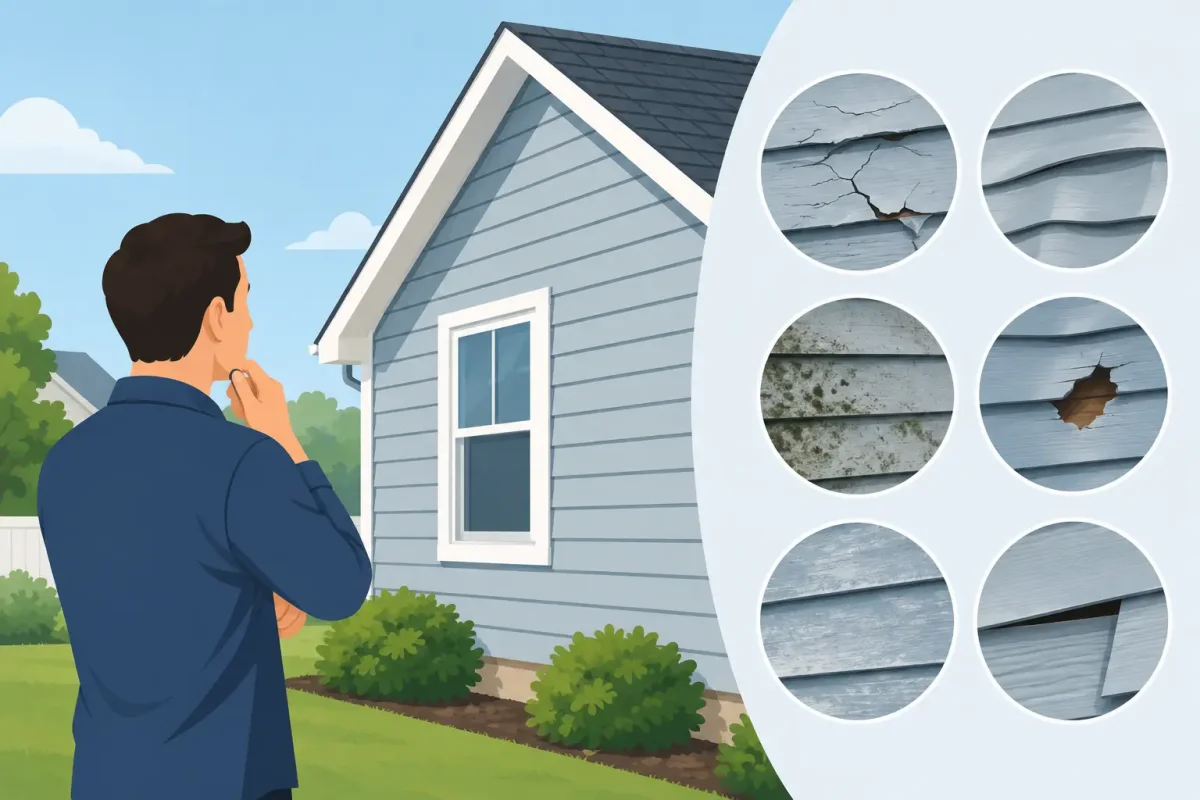
A siding problem rarely starts with a dramatic hole in the wall. More often, it begins with one loose panel, a small patch of peeling paint, or a damp spot that appears after heavy rain. Knowing the best signs siding needs replacement helps you address those warnings before moisture reaches the framing, insulation, or interior finishes.
Siding does more than improve curb appeal. It is part of your home’s weather barrier, protecting the structure from rain, wind, pests, and temperature swings. When it stops doing that job, a quick repair may be enough – but widespread damage often calls for replacement. Here is what homeowners should watch for.
9 Best Signs Your Siding Needs Replacement
1. Cracks, holes, or missing sections
Small cracks in vinyl siding can let water behind the panels, especially when wind-driven rain hits the wall. Holes can also give insects and small animals a path into the exterior wall system. One damaged piece may be replaceable if matching material is still available and the surrounding siding is in good condition.
When cracks appear in several areas, panels are brittle, or sections are missing after storms, replacement is usually the more dependable solution. Older siding can become fragile from years of sun exposure and temperature changes, making new damage more likely even after a repair.
2. Warped, buckled, or loose panels
Siding should sit flat and secure against the exterior walls. Panels that wave, bow outward, pull away at the seams, or repeatedly come loose are not just cosmetic issues. They can indicate improper installation, heat damage, moisture behind the siding, or movement in the wall beneath it.
Vinyl siding can warp when exposed to intense reflected heat, while wood siding may bend as it absorbs and releases moisture. A contractor should determine why the panels are moving before installing new materials. Replacing siding without addressing the cause can lead to the same problem again.
3. Rot, soft spots, or crumbling wood
Wood siding needs prompt attention when it feels soft, flakes apart, or shows dark areas around joints and lower wall sections. Rot means moisture has been present long enough to break down the material. It can spread behind trim, around windows, and into sheathing if left alone.
Probe suspicious areas gently, particularly near downspouts, rooflines, and the bottom edge of walls. If rot is limited to one board and the surrounding wall is dry, a repair may work. If several boards are failing or the damage extends behind the siding, replacement and wall repairs are often the smarter investment.
4. Bubbling, blistering, or peeling finishes
Paint that peels shortly after being applied is often a sign that moisture is trapped behind wood siding or trim. Bubbles and blisters can point to water intrusion, poor ventilation, or heat exposure. Repainting may improve the appearance for a season, but it will not solve a problem inside the wall.
This is one of the best signs your siding needs replacement when the issue appears across large sections of the home. A professional inspection can identify whether the siding itself has failed or whether roof drainage, flashing, gutters, soffit, or window trim is allowing water into the system.
5. Mold, mildew, or water stains indoors
Not every indoor stain comes from failing siding, but exterior walls deserve attention when you see mold, musty odors, peeling interior paint, or damp drywall. Water can enter through cracked caulking, open seams, failed flashing, or damaged panels and remain hidden behind the siding.
Check whether stains worsen after rain or snowmelt. Also look outside at the same location for damaged siding, clogged gutters, overflowing downspouts, or gaps around windows and doors. Finding the entry point early can limit the need for costly framing and insulation repairs.
6. Higher energy bills and drafty rooms
Old siding alone is not always responsible for high heating and cooling costs. Aging windows, attic insulation, air leaks, and HVAC performance can all play a role. Still, siding that has gaps, loose panels, deteriorated housewrap, or water-damaged sheathing can reduce the effectiveness of your wall insulation.
If rooms along exterior walls feel noticeably colder in winter or hotter in summer, schedule an inspection. A siding replacement project can be an opportunity to repair the weather barrier, improve insulation where practical, and seal problem areas around openings. The right scope depends on the home’s construction and the condition found behind the existing siding.
7. Frequent repairs are adding up
A few targeted repairs can extend the life of otherwise sound siding. That approach makes sense after isolated storm damage or a single failed trim detail. It becomes less cost-effective when you are replacing panels every year, repainting repeatedly, or paying to address new leaks in different areas.
Matching older siding can also be difficult. Even if the product is still made, sun exposure can change its color over time. A patch may stand out, and the rest of the siding may continue to fail around it. At that point, investing in a full replacement provides a consistent finish, updated protection, and one clear warranty plan.
8. Faded color and worn curb appeal
Fading is expected over time, particularly on walls that receive strong afternoon sun. On its own, it does not always mean the siding has failed. But severe fading, chalky residue, stains that will not clean off, and an overall worn appearance can make a home look neglected and reduce its curb appeal.
Replacement becomes more compelling when cosmetic wear is paired with cracking, loose panels, moisture damage, or outdated materials. New siding can update the home’s appearance while addressing the performance issues behind it. Coordinating siding with soffit, fascia, gutters, stone veneer, or replacement windows can also create a cleaner, more finished result than treating each item years apart.
9. Pest activity around exterior walls
Woodpecker holes, insect nests, rodent activity, and bees entering gaps near siding should never be ignored. Pests often take advantage of existing openings, softened wood, or loose trim. They can worsen the damage and, in some cases, create paths into attics and wall cavities.
Pest control may be needed first, but the exterior opening still needs to be repaired correctly. If damage is widespread or siding has become vulnerable in multiple locations, replacement offers a more lasting way to restore a sealed exterior.
When Repair Makes Sense vs. When Replacement Is Better
The right decision comes down to the extent of damage, the age of the material, and what is happening behind the siding. Repair is often practical when damage is confined to a small area, the siding is still in good shape, and the cause has been corrected. For example, replacing a few panels after a branch strike is very different from repairing rot along several walls.
Replacement is usually the better option when damage is widespread, the siding has reached the end of its service life, leaks are recurring, or matching materials are no longer available. It is also worth considering when a homeowner plans to replace windows, roofing components, gutters, soffit, or fascia soon. Coordinating exterior work can reduce disruption and help ensure the different components shed water properly together.
What a Professional Siding Inspection Should Check
A thorough inspection should look beyond the visible face of the siding. The contractor should examine seams, trim, caulking, flashing, roof-to-wall connections, window and door openings, lower wall areas, and drainage around the home. If replacement is recommended, ask how the existing siding will be removed, how damaged sheathing will be handled, and what weather-resistant barrier will be used before the new siding is installed.
You should also receive clear information about material options, projected timeline, cleanup, warranty coverage, and any related repairs that may be discovered once the old siding comes off. A detailed estimate helps prevent surprises and lets you compare value, not just the lowest price.
Do not wait for a small exterior issue to become an interior repair. A timely inspection gives you a clear picture of what is repairable, what needs replacement, and how to keep your home protected through the next stretch of rough weather.
18 September 2026
Best Roof Ventilation Improvements for Your Home
18 September 2026