
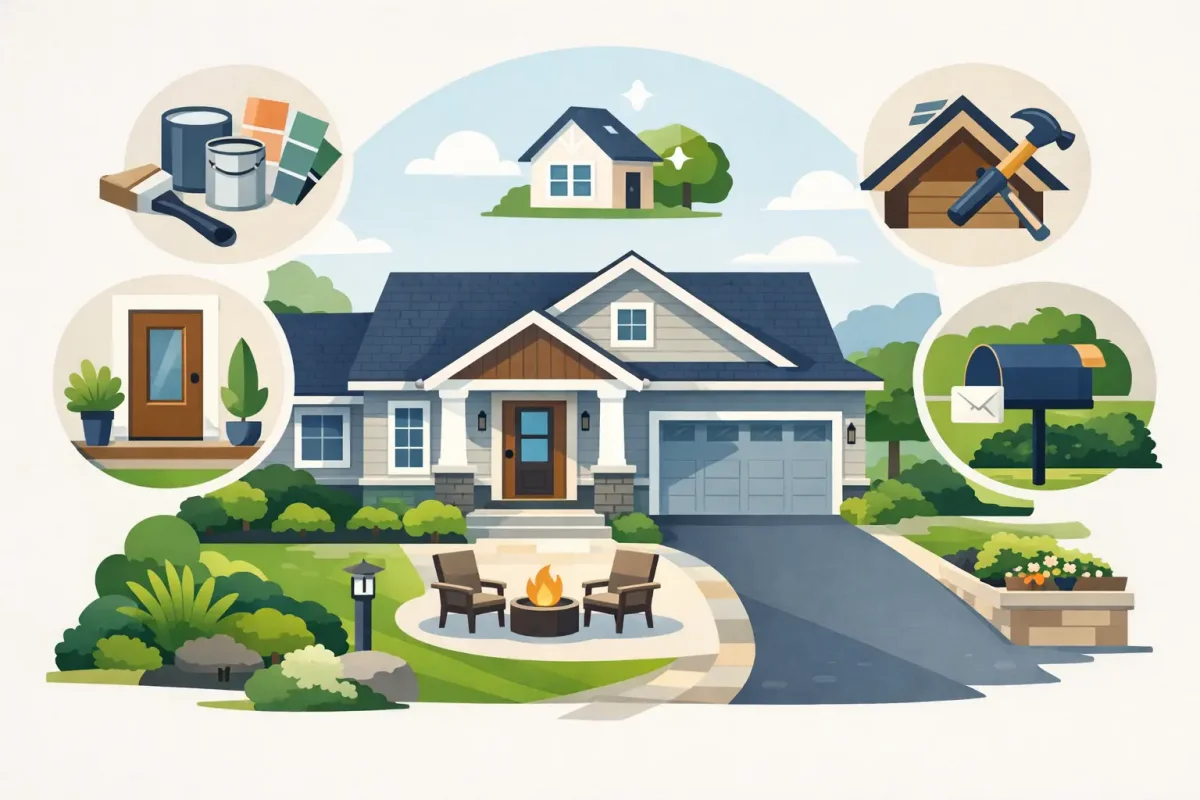
A tired exterior does more than make a home look dated. Loose gutters, faded siding, stained soffits, and worn trim can signal water problems and deferred maintenance to everyone who pulls into the driveway. The best curb appeal renovation ideas improve what people see from the street while also protecting the structure behind it.
For most homeowners, the goal is not to make every surface look brand new overnight. It is to make smart improvements in the right order, choose materials that hold up in changing weather, and avoid paying for cosmetic work that will need to be redone after a roof, siding, or drainage repair.
Start With the Exterior Problems You Can See
Before selecting colors or decorative details, look at the home as a complete exterior system. Roof edges, gutters, siding, windows, trim, soffit, fascia, doors, and stonework all affect both appearance and performance. When one component is failing, it often takes attention away from the rest of the home.
Walk to the curb and look at the property from both sides. Notice where the eye lands first. It may be a sagging eavestrough, a patch of damaged siding, black streaks beneath the roofline, or a front entry that no longer fits the house. Then look closer for practical concerns such as peeling fascia, missing caulking, water stains, cracked window trim, or downspouts draining too close to the foundation.
A professional exterior inspection can help separate cosmetic aging from active damage. That matters because replacing a front door before resolving a leaking gutter or failing roof edge can create more work and cost later.
Curb Appeal Renovation Ideas With the Biggest Impact
1. Replace damaged or faded siding
Siding covers a large portion of the home, so it delivers one of the most noticeable exterior changes. Cracked panels, warped boards, faded color, and frequent repainting make a house look older than it is. New siding can give the entire facade a cleaner, more current appearance while helping protect the walls from wind-driven rain and moisture.
The right material depends on the home’s style, maintenance expectations, and budget. Vinyl siding is a practical choice for many homeowners because it is durable and low maintenance. Fiber cement offers a more substantial look but may require a different investment and maintenance plan. The key is proper installation, flashing, and trim details. Even premium siding will not perform well if water is allowed behind it.
2. Update soffit, fascia, and eavestroughs together
These features may not be the first thing guests mention, but they frame the roofline and keep water moving away from the home. Old, bent, or mismatched gutters make an otherwise attractive exterior look unfinished. Rotting fascia or stained soffit can also point to overflow, poor roof drainage, or ventilation issues.
Replacing eavestroughs alongside fascia and soffit creates a clean, continuous roof edge. Seamless gutters in a color that matches the trim can blend in, while well-placed downspouts help protect landscaping and the foundation. If your gutters overflow during heavy rain, cosmetic upgrades should wait until drainage is corrected.
3. Give the front entry a clear focal point
The front door is where curb appeal becomes personal. A worn door, dated hardware, or weak lighting can make the entry feel less welcoming, even when the rest of the exterior is in good condition.
A new insulated entry door can improve appearance, security, and energy efficiency at once. Choose a color that works with the siding and roof rather than following a trend that may feel dated in a few years. Dark doors can look sharp against light siding, while natural wood tones often complement stone veneer and traditional brick.
Finish the area with updated house numbers, a properly sized light fixture, and clean trim. These are smaller details, but they make the entry look intentional instead of pieced together.
4. Upgrade old windows and exterior trim
Windows influence the rhythm and proportion of the front elevation. Fogged glass, peeling frames, damaged screens, and uneven trim make a home look neglected. Replacement windows can refresh the exterior while reducing drafts and improving comfort inside.
For the strongest visual result, coordinate window trim with the fascia, door color, and siding profile. Bright white trim remains a classic option, but darker trim can create contrast on contemporary homes. Just be realistic about maintenance and sun exposure. Very dark finishes can show dust, pollen, and fading more quickly in exposed areas.
5. Add stone veneer where it has purpose
Stone veneer can give a plain front elevation more depth and character. It works especially well around entryways, porch columns, lower sections of the facade, and garage areas. Used thoughtfully, it creates a solid, finished look without covering every exterior wall.
Restraint is important. Too much stone, or stone installed without regard for the home’s architecture, can make the facade feel busy. A contractor can help determine where veneer will add visual weight and where siding or clean trim should remain the focus.
6. Repair or replace roofing that has reached the end of its life
A roof is one of the biggest visual surfaces on the house. Missing shingles, curling edges, algae staining, and uneven rooflines can undermine every other improvement you make. More importantly, roofing issues can lead to leaks, damaged insulation, and interior repairs.
If the roof is aging, replacing it before new siding or fascia may be the better sequence. Roofing work can affect flashings, roof edges, and gutter connections, so coordinating the project helps prevent duplicate labor. Select a shingle color that complements the siding undertone and masonry. Cool gray siding may suit charcoal shingles, while warmer beige, tan, or cream exteriors often pair well with weathered brown tones.
7. Improve the garage door and surrounding trim
On many homes, the garage door takes up more visual space than the front door. A faded, dented, or poorly insulated garage door can pull attention away from the entire facade. Replacing it with a clean panel style, windows that match the home, or a finish that complements the entry door can change the balance of the exterior.
This is also a good time to inspect the trim, weatherstripping, and lighting around the garage. A well-finished garage area makes the property look cared for, particularly on wide suburban lots.
Choose a Cohesive Color and Material Plan
The strongest exterior renovations do not treat each service as a separate decision. Siding, roof shingles, gutters, window trim, doors, and stone should look like they belong together. Start with the fixed elements that are hardest to change, such as brick or stone, then select siding and trim colors that support them.
A simple palette is usually the safest choice: one main siding color, one trim color, and one accent color for the door or shutters. Contrast adds definition, but too many colors can make a house feel smaller and busier. Material samples should be viewed outdoors at different times of day, because sunlight can change how gray, beige, blue, and green tones appear.
Plan Renovations in the Right Order
The order of work has a direct effect on cost, durability, and the final appearance. Structural protection should come before decorative upgrades. Roof repairs, siding damage, drainage problems, and deteriorated fascia need attention before finishing touches such as new lighting or stone accents.
A coordinated exterior project often follows this sequence:
- Inspect the roofline, siding, windows, trim, and drainage for active issues.
- Complete roofing, flashing, and water-management repairs first.
- Install siding, soffit, fascia, windows, doors, and stone veneer in a planned order.
- Finish with gutters, lighting, exterior hardware, and landscape cleanup.
Not every home needs a full transformation. A limited eavestrough replacement or siding repair may be enough if the rest of the exterior is sound. But when several components are nearing the end of their service life, completing the work together can create a better visual result and reduce the hassle of scheduling multiple trades.
Focus on Workmanship, Not Just Materials
Good materials matter, but installation is what determines whether they protect the home. Proper flashing around windows and doors, secure gutter pitch, vented soffits, clean siding transitions, and careful trim work all affect long-term performance. These details are easy to overlook from the driveway, but they are where water damage often starts.
Choose a licensed, insured exterior contractor that can inspect the full scope of work, explain what is necessary, provide a clear written estimate, and stand behind the installation. Ask how the jobsite will be protected, how debris will be managed, what warranty coverage applies, and whether the contractor coordinates related exterior services. Clear answers save stress once work begins.
A front elevation should do more than look good on the day the crew leaves. Start with the repairs that protect your home, then build a coordinated exterior that looks finished, functions properly, and gives you confidence every time you come home.

29 August 2026
Choose Siding for Harsh Winters With Confidence

29 August 2026