
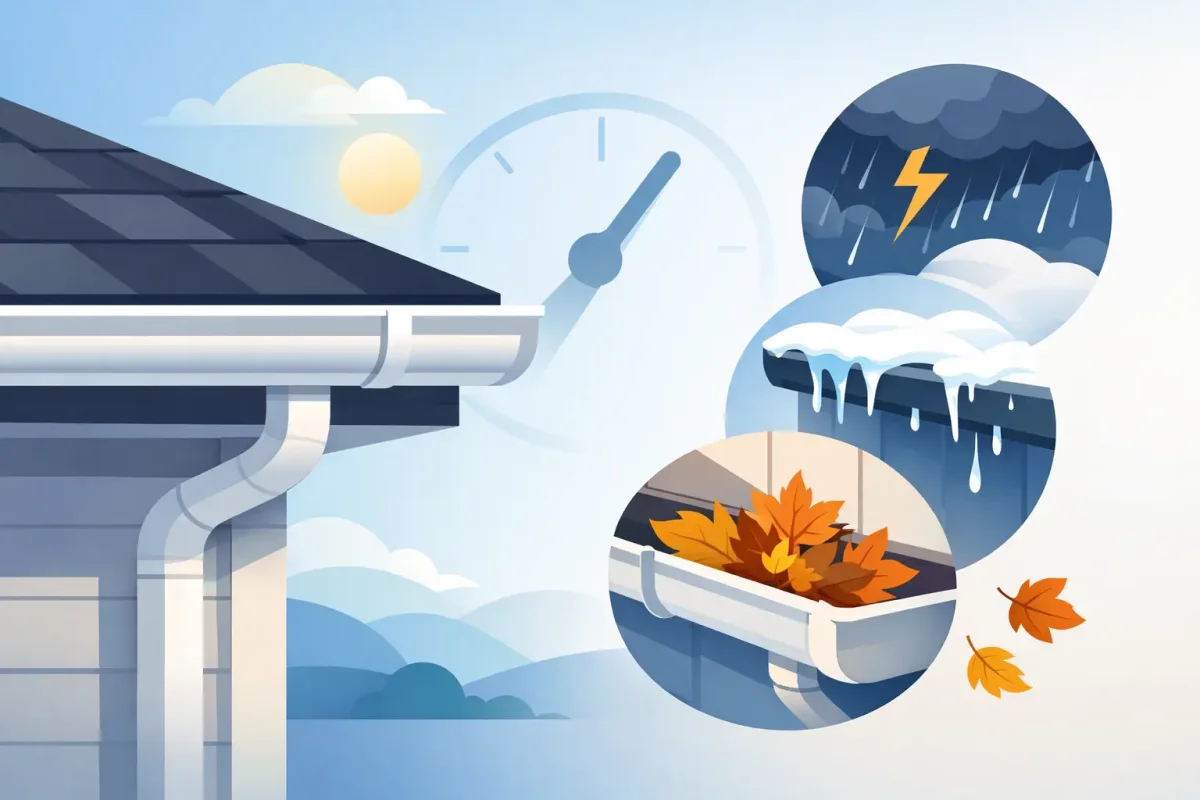
A gutter can look fine from the driveway while quietly sending water behind the fascia, down an exterior wall, or toward your foundation. So, how long do eavestroughs last? Most systems last 20 to 30 years, but material, installation quality, maintenance, and local weather can shorten or extend that range considerably.
For homeowners, the better question is not simply how old the eavestroughs are. It is whether they are still moving water away from the roofline and foundation the way they should. A well-installed system can protect the siding, soffit, fascia, landscaping, and basement. A failing one can create expensive problems long before it completely falls apart.
How Long Do Eavestroughs Last by Material?
Material sets the starting point for an eavestrough’s expected life. It does not guarantee performance. Poor slope, loose fasteners, undersized downspouts, and neglected debris can cause early failure in even a high-quality system.
Aluminum: 20 to 30 Years
Seamless aluminum is the most common choice for residential homes because it is lightweight, rust-resistant, affordable, and available in colors that complement the exterior. With professional installation and regular cleaning, it commonly lasts two to three decades.
Aluminum can dent from ladders, falling branches, or heavy ice. It may also pull away from the fascia when hangers are spaced too far apart or when wet leaves and ice add excessive weight. Those are installation and maintenance issues as much as material issues.
Vinyl: 10 to 20 Years
Vinyl eavestroughs are inexpensive and do not rust, but they are generally less durable in climates with major temperature swings. Cold weather can make vinyl brittle, while prolonged heat can cause sections to warp or sag.
Because vinyl systems are often assembled in shorter pieces, they have more joints that can leak over time. They can work for a budget-conscious project, but they are rarely the strongest long-term option for a home that sees harsh seasonal conditions.
Steel: 15 to 25 Years
Galvanized steel is strong and handles impacts better than aluminum. Its main weakness is corrosion. Once the protective coating is scratched, worn down, or compromised at seams, rust can begin and gradually spread.
Steel may make sense when strength is the primary concern, but it needs attention. Peeling paint, orange staining, and rust around fasteners should be addressed before small spots become holes.
Copper: 50 Years or More
Copper is a premium choice with exceptional durability and a distinctive appearance. It can last 50 years or longer when installed correctly, and it develops a natural patina rather than rusting like steel.
The trade-off is cost. Copper requires a larger upfront investment and experienced installation, especially at joints and transitions. It is often selected for historic homes or homeowners who want a long-lasting architectural finish.
What Shortens the Life of Eavestroughs?
Age matters, but wear usually starts with water, weight, and poor drainage. In many cases, eavestroughs fail early because the system was not designed or installed to manage the roof’s runoff.
Clogs are a common problem. Leaves, pine needles, shingle grit, and nesting material can block water flow. When water stands in the trough, it adds weight, strains the hangers, and can overflow behind the gutter. That overflow often damages fascia boards and can leave stains on siding.
Ice is another factor. Frozen water expands, and ice buildup can bend aluminum, separate seams, or pull sections loose. Ice dams are sometimes blamed entirely on the eavestrough, but they often point to a roof ventilation or insulation issue that should be assessed as part of the complete exterior system.
Improper pitch also causes trouble. Eavestroughs need a subtle slope toward the downspout. If they are too flat, water sits in the channel. If the slope is too aggressive, they can look uneven and may not collect runoff effectively along the entire roofline.
Finally, undersized or poorly placed downspouts can overwhelm an otherwise sound gutter system. During a heavy storm, water may spill over simply because it has nowhere to go fast enough. Larger roof areas, long gutter runs, and valleys often need added drainage capacity.
Signs Your Eavestroughs Need Repair or Replacement
A small leak does not always mean the whole system needs replacement. Loose end caps, minor seam leaks, and isolated hanger issues can often be repaired. The decision changes when the problem is widespread or the surrounding wood has begun to deteriorate.
Watch for water spilling over the front or back edge during ordinary rain. Also look for sagging sections, visible gaps at seams, peeling paint, rust, recurring clogs, and downspouts that disconnect or drain too close to the foundation.
Inside the home, damp basement walls, musty odors, or water near the foundation can be related to poor drainage, though they can have other causes as well. Outside, eroded mulch, washed-out soil, or streaks on siding are clear signs that runoff is not being controlled properly.
If fascia boards are soft, stained, or rotted, replacing only the eavestrough may not solve the underlying issue. The fascia, soffit, roof edge, and gutter system work together. Repairing damaged wood before new gutters are installed gives the fasteners a solid surface and helps the new system perform as intended.
When Repair Makes Sense and When Replacement Is Smarter
Repair is often the right choice when the system is relatively new and damage is limited to one area. A contractor may be able to reseal a joint, replace a damaged section, resecure hangers, correct a downspout extension, or adjust the slope.
Replacement is usually the better value when eavestroughs are nearing the end of their material life, sag in multiple places, leak at several seams, or show repeated damage after repairs. It is also a practical time to replace them when installing a new roof, siding, soffit, or fascia. Coordinating exterior work can reduce disruption and create cleaner transitions between materials.
Seamless aluminum eavestroughs are a popular replacement option because they are formed to fit the home, reducing the number of leak-prone joints. The downspout layout should be reviewed at the same time. New gutters will not solve drainage issues if water is still discharged beside the foundation.
How to Help Eavestroughs Last Longer
Eavestrough maintenance is simple, but it needs to be consistent. Clean the system at least twice a year, typically after spring seed drop and after fall leaf drop. Homes surrounded by mature trees may need more frequent cleaning.
During cleaning, check that water moves freely through each downspout and drains away from the house. Remove debris, look for loose hangers, and inspect seams and end caps for drips. Keep tree limbs trimmed back from the roofline to reduce debris and prevent impact damage during storms.
Gutter guards can reduce the amount of debris entering the system, but they are not maintenance-free. The right product depends on the type of trees around the home, roof pitch, and existing drainage design. A guard should improve water flow, not create an additional place for debris to collect.
Professional inspections are especially useful after a major storm, roof replacement, or signs of water damage. A licensed exterior contractor can check more than the gutter itself, including fascia condition, roof edge details, downspout placement, and areas where water may be getting behind the system.
Protect the Parts of Your Home Water Reaches First
Eavestroughs are a relatively small part of the exterior, but they influence some of the most costly areas of a home: the roof edge, walls, foundation, and basement. Replacing a worn-out system before water damage spreads is usually simpler and less expensive than waiting for fascia rot or foundation drainage issues to become visible.
If your eavestroughs are old, overflowing, sagging, or leaking repeatedly, arrange an on-site inspection. Petra Eavestrough & Siding can assess the full roofline, explain what is causing the issue, and recommend a repair or replacement plan that protects your home without unnecessary work.

30 August 2026
12 Curb Appeal Renovation Ideas That Last
30 August 2026