
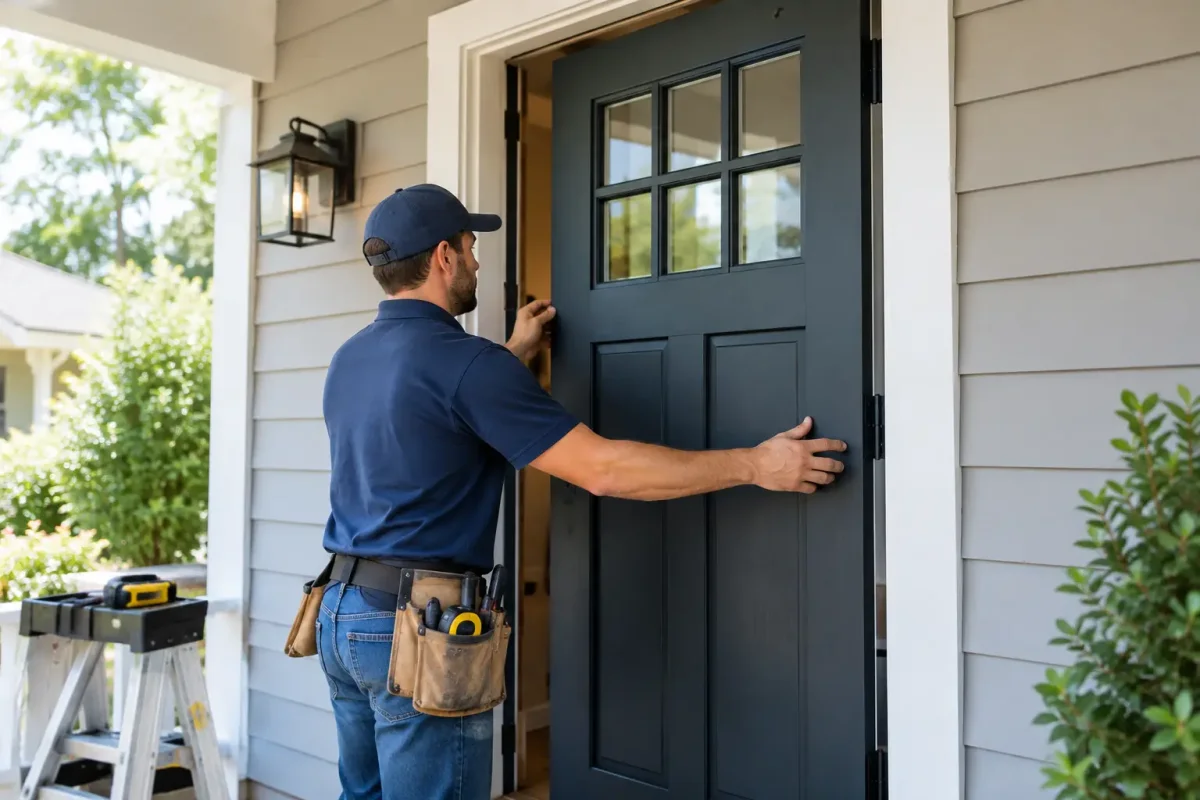
A front door that sticks, leaks cold air, or needs a hard shoulder push to close is more than an everyday annoyance. It can let in drafts and moisture, weaken home security, and make an otherwise well-kept exterior look tired. This door replacement guide helps homeowners recognize when repair is no longer enough, choose a door that fits their home, and plan an installation that delivers lasting results.
When Does a Door Need Replacing?
A door does not have to be visibly broken to be past its useful life. Many replacement projects begin with smaller problems that keep returning: a draft near the threshold, peeling paint, a lock that no longer lines up, or water marks around the interior trim.
Start by looking at how the door operates. If it drags across the sill, swings open on its own, rattles in the frame, or has a noticeable gap around the edges, the issue may be the slab, the frame, or both. Replacing weatherstripping can help with minor air leaks, but it will not correct a warped door, rotted jamb, or poorly installed frame.
Moisture damage deserves prompt attention. Soft wood, bubbling paint, rust around the threshold, and staining on nearby drywall can indicate water is getting behind the exterior trim. Left alone, that water can damage framing and insulation, turning a straightforward door project into a larger repair.
Security is another practical reason to replace. An older door with a cracked frame, loose hinges, thin panels, or outdated hardware may not provide the protection your family expects. A properly fitted replacement door should close firmly, latch smoothly, and provide a solid connection between the lock, strike plate, and framing.
Door Replacement Guide: Start With the Whole Opening
The best replacement decision is not always about choosing a new door slab. A door system includes the door, frame, threshold, weatherstripping, flashing, exterior trim, hardware, and the wall opening behind it. If one of those components has failed, replacing only the visible door can leave the original problem in place.
This is why an on-site inspection matters. A qualified installer can check whether the opening is square, whether the sill is properly supported, and whether water is being directed away from the entry. They can also identify damage hidden by aluminum capping, brick molding, or interior casing.
For many homes, a pre-hung door system is the right choice because the door and frame are designed to work together. It can improve fit, weather resistance, and daily operation. A slab-only replacement may cost less upfront, but it depends on the existing frame being in very good condition and properly sized. That is not always the case with older homes or doors exposed to years of weather.
Choose a Material That Fits Your Priorities
Door material affects appearance, maintenance, insulation, and long-term durability. The right choice depends on where the door is located, how much weather it receives, and the look you want for the exterior.
Fiberglass is a popular option for front entries because it resists dents, moisture, and warping while offering good insulation. Many fiberglass doors can replicate the look of painted or stained wood without the same level of upkeep. For a busy main entrance exposed to sun, rain, and changing temperatures, it is often a practical long-term investment.
Steel doors are strong, secure, and generally cost-effective. They work well for front, side, and garage entry doors, especially where security is a priority. The trade-off is that steel can dent and may rust if scratches are not repaired promptly. A quality finish and correct installation help protect the door from those problems.
Wood doors offer a traditional, high-end appearance that suits certain architectural styles. They require more regular maintenance than fiberglass or steel, particularly in areas with strong sun exposure or frequent moisture. When maintained properly, wood can be beautiful. When neglected, it can swell, crack, or deteriorate around the bottom edge.
Glass inserts can bring more natural light into an entryway, but they should be selected thoughtfully. Decorative, frosted, or divided-light glass can improve privacy while brightening the interior. Energy-efficient glass is especially worthwhile on doors exposed to direct sun or winter wind.
Do Not Overlook Energy Efficiency
A new door should make the home feel more comfortable, not just look better from the street. Energy performance comes from the entire installation, including insulation around the frame, compression weatherstripping, an adjustable threshold, and a tight seal at the sweep.
Ask about the door core, glass package, and weather sealing rather than focusing only on the advertised door material. A well-built door can still perform poorly if gaps are left around the frame or if the threshold is not set correctly.
Homeowners should also consider the direction the entry faces. A south-facing door may deal with intense sun and heat, while a north-facing or exposed side door may face more wind, snow, and moisture. The finish, glass, overhang, and material should match those conditions.
Match the New Door to the Exterior
A replacement door is one of the most visible updates you can make to a home. It should complement the siding, brick, stone veneer, roofing color, trim, and lighting instead of competing with them.
For a clean, timeless look, select a door style with lines that suit the home. A simple panel door works well on many traditional exteriors, while a modern home may suit flush panels, narrow glass lites, or darker finishes. If the entry feels too narrow or dark, sidelights or a transom can create a larger, brighter focal point. These upgrades require more work around the opening, so they should be planned with the full exterior layout in mind.
Color also deserves careful thought. A bold front door can add curb appeal, but it should still coordinate with permanent exterior materials. Deep blue, black, red, and natural wood tones can all work well depending on the home. The most reliable choice is one that looks intentional in every season, not just against a sample board.
What Professional Installation Should Include
Door replacement is precision work. Even a high-quality door can leak, bind, or fail early if it is installed out of square or not properly flashed. A professional project should begin with measuring and confirming the condition of the opening before the new door is ordered.
On installation day, the old door, frame components, and damaged materials should be removed carefully. The installer should inspect the rough opening, make necessary repairs, and ensure the sill is level before fitting the new system. Shims must be placed correctly so the frame remains straight and the door operates smoothly.
Exterior flashing and sealing are critical. Water needs a clear path away from the opening, while the interior and exterior joints need to be sealed without trapping moisture where it does not belong. The final work should include secure hardware, clean trim details, proper caulking, and a full check of the swing, latch, deadbolt, threshold, and weatherstripping.
Before the crew leaves, walk through the finished work. Open and close the door several times, lock it from inside and outside, and look for even gaps around the perimeter. A dependable contractor will also leave the work area clean and explain the warranty coverage for both the product and installation.
Plan the Project Before the Problem Gets Worse
If your door is leaking water, showing rot, or no longer closing securely, delaying the project can increase the repair scope. Early replacement protects the surrounding wall and gives you more time to choose the material, style, and glass options that suit your home.
A coordinated exterior inspection can be especially useful if you have concerns about nearby siding, soffit, fascia, windows, or eavestroughs. These components all work together to manage water, drafts, and curb appeal. Petra Eavestrough & Siding helps homeowners assess the full exterior so the new door is installed as part of a lasting solution, not a temporary fix.
The right replacement door should feel solid every time you come home. Choose a system built for your conditions, have the opening inspected properly, and prioritize installation quality as much as the door itself.

4 October 2026
How to Improve Curb Appeal on Your Home...

4 October 2026