
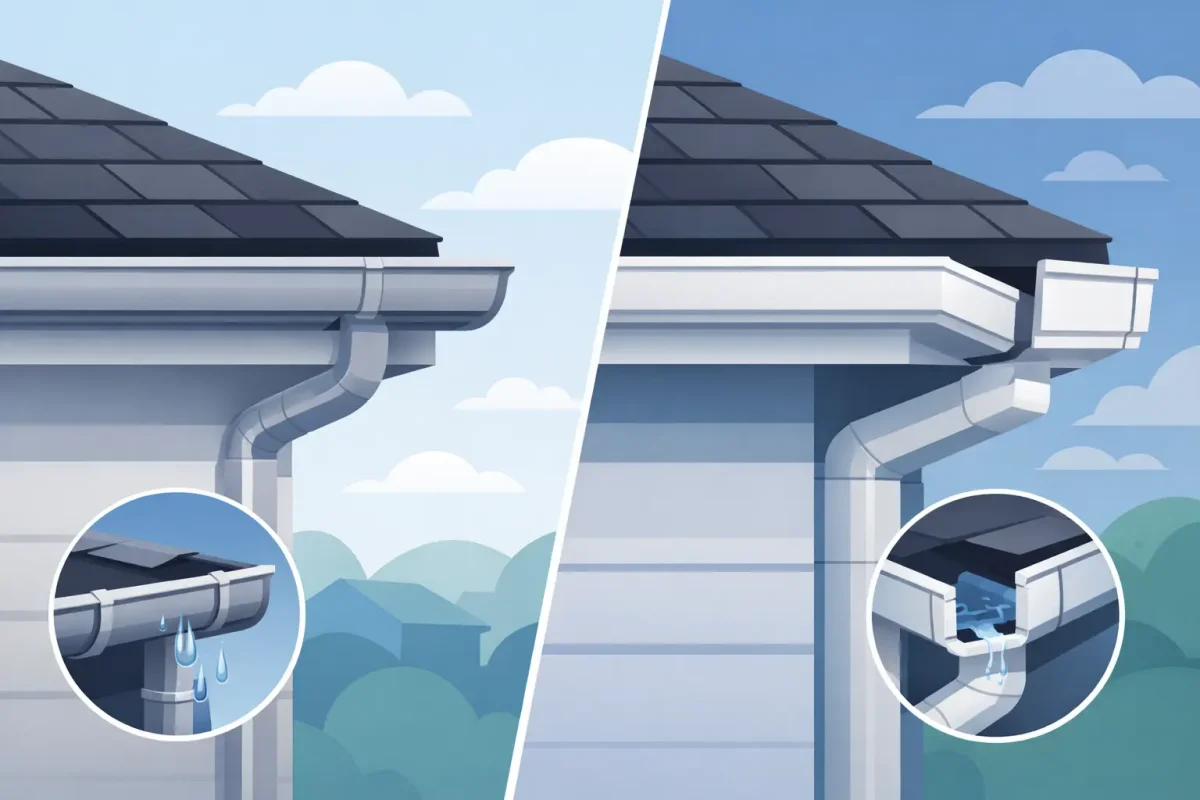
A homeowner may call about a leaking gutter while a neighbor calls it an eavestrough. In most cases, they are talking about the same part of the home: the channel along the roof edge that catches rainwater and sends it safely away through downspouts. The gutters vs eavestroughs difference is usually a matter of regional language, not a completely different system.
That said, the words can create confusion when you are comparing estimates, planning exterior work, or trying to describe a problem. Knowing what each term means helps you ask better questions and make sure your home gets the right protection.
Gutters vs Eavestroughs Difference: The Simple Answer
A gutter and an eavestrough both collect water as it runs off the roof. They are installed at the lower edge of the roofline, near the fascia board. From there, downspouts carry water toward a drainage area away from the foundation.
In the United States, “gutter” is the more common term. In Canada, especially in Ontario, “eavestrough” is widely used. Contractors may use either word, and some use both, but the function remains the same: control roof runoff before it damages your home.
There is no automatic quality difference between a product labeled a gutter and one labeled an eavestrough. What matters is the material, profile, size, installation method, slope, downspout placement, and how well the system fits your roof and drainage conditions.
Why the Name Matters Less Than the Installation
A properly installed water-management system protects much more than the roof edge. It helps prevent water from soaking the fascia, running behind siding, splashing against windows, and pooling near the foundation. It also reduces erosion around landscaping, walkways, and entry areas.
Poor installation can cause trouble even when the materials are new. If the channel is not pitched correctly, water may sit inside instead of moving toward the downspout. If it is fastened poorly, it can pull away under the weight of water, ice, or debris. If there are too few downspouts, heavy rain can overflow at the same spots again and again.
For homeowners, the better question is not simply, “Do I need gutters or eavestroughs?” It is, “Will this system move water away from my home reliably in heavy rain, snowmelt, and seasonal weather?”
The Parts of a Complete Gutter System
Whether you call it a gutter system or an eavestrough system, several components need to work together. The horizontal channel catches the runoff. The downspouts direct it downward. Elbows change direction around the exterior, while extensions or drainage connections move water farther from the foundation.
The system also depends on the roofline behind it. Fascia boards provide the mounting surface, and soffits support attic ventilation beneath the eaves. Damaged fascia, loose soffit panels, or aging roof edges can affect a new installation. This is why an exterior inspection is useful before replacing only one visible section.
A contractor should also look at where water lands after it leaves the downspout. A downspout that ends beside the foundation is not solving the full problem. The goal is controlled drainage that keeps moisture away from the house.
Common Materials and Profiles
Aluminum is a popular choice for residential gutter replacement because it is lightweight, corrosion-resistant, and available in many colors. Seamless aluminum systems are formed to the length of the home, which reduces the number of joints where leaks can develop.
Vinyl is often less expensive, but it can become brittle or warp in areas with significant temperature swings. Steel is strong but may rust if its coating is damaged. Copper offers a distinctive appearance and long service life, though it comes at a higher cost and is not necessary for every home.
The profile also matters. K-style gutters are common on modern homes and hold a good volume of water while blending with many rooflines. Half-round gutters have a more traditional look and are often chosen for certain architectural styles. Larger channels and oversized downspouts may be the right fit for steep roofs, broad roof sections, or areas that receive intense rainfall.
There is no single best material for every property. A modest ranch home with simple rooflines has different needs than a large two-story home with valleys, dormers, and multiple drainage points. The right system should match the home, not just the lowest quoted price.
Signs Your Gutters or Eavestroughs Need Attention
Visible overflow during rain is one of the clearest warning signs. Water may be spilling over because of a clog, but it can also point to inadequate capacity, poor slope, or incorrectly placed downspouts. Cleaning alone will not fix a system that was undersized or installed incorrectly.
Look for sagging sections, gaps at seams, peeling paint near the roofline, rust, or water stains on siding. You may also notice soil washing away below downspouts, dampness in the basement, or recurring ice buildup near the eaves. Each issue can signal that water is not being managed as it should be.
A few drips at a joint may be repairable. Widespread leaks, repeated sagging, bent sections, or deteriorated fascia usually call for a closer inspection. Replacing failing gutters before water reaches the structure can prevent a much larger repair later.
When Repair Makes Sense and When Replacement Is Better
Repair is often practical when the problem is limited. A loose hanger, a blocked downspout, a small leak at one seam, or a damaged extension can usually be addressed without replacing the entire system. Regular cleaning and small adjustments can extend the life of an otherwise sound installation.
Replacement becomes the better value when the system has multiple failing seams, persistent leaks, major sagging, or sections that repeatedly pull away from the fascia. Older sectional gutters can develop problems at every connection over time. A seamless replacement reduces those weak points and provides a cleaner finished appearance.
It may also make sense to replace gutters during siding, soffit, fascia, or roofing work. Coordinating these projects allows the contractor to inspect and repair the roof edge before new components are installed. It also avoids removing and reinstalling newer materials later, which can add cost and risk unnecessary damage.
Gutter Guards: Helpful, but Not a Cure-All
Gutter guards can reduce the amount of leaves, needles, and larger debris entering the channel. They are especially useful around mature trees or on homes where access for cleaning is difficult. However, no guard makes a system completely maintenance-free.
Fine debris can still collect on top of certain guards, and water can overshoot the channel if the guard is poorly matched to the roof pitch or local weather. Guards also will not correct inadequate slope, failing fascia, undersized downspouts, or drainage problems at ground level.
If you are considering guards, treat them as part of the overall system rather than a standalone fix. The existing gutters should be secure, properly pitched, and sized for the home before guards are added.
What to Expect From a Professional Assessment
A useful inspection starts at the roofline but does not end there. The contractor should check the condition of the channels, seams, hangers, fascia, soffits, and downspouts. They should also identify roof valleys that send a heavy volume of water into one area and examine the ground around the foundation for signs of poor drainage.
Ask how the new system will be sized, where downspouts will be placed, and whether any fascia repair is needed before installation. You should receive a clear scope of work, material options, color choices, warranty details, and an explanation of how the work area will be protected and cleaned up.
For homeowners planning broader exterior improvements, Petra Eavestrough & Siding can assess how new eavestroughs work alongside soffit, fascia, siding, roofing, and drainage needs. Coordinated work helps ensure the finished exterior looks right and performs properly.
The gutters vs eavestroughs difference should not distract from the real priority: a properly designed, securely installed system that keeps water where it belongs – away from your roofline, siding, and foundation. If you see overflow, sagging, stains, or pooling water, a professional inspection now can protect your home through the next heavy storm.

18 July 2026
7 Home Exterior Protection Upgrades That Pay Off

18 July 2026