
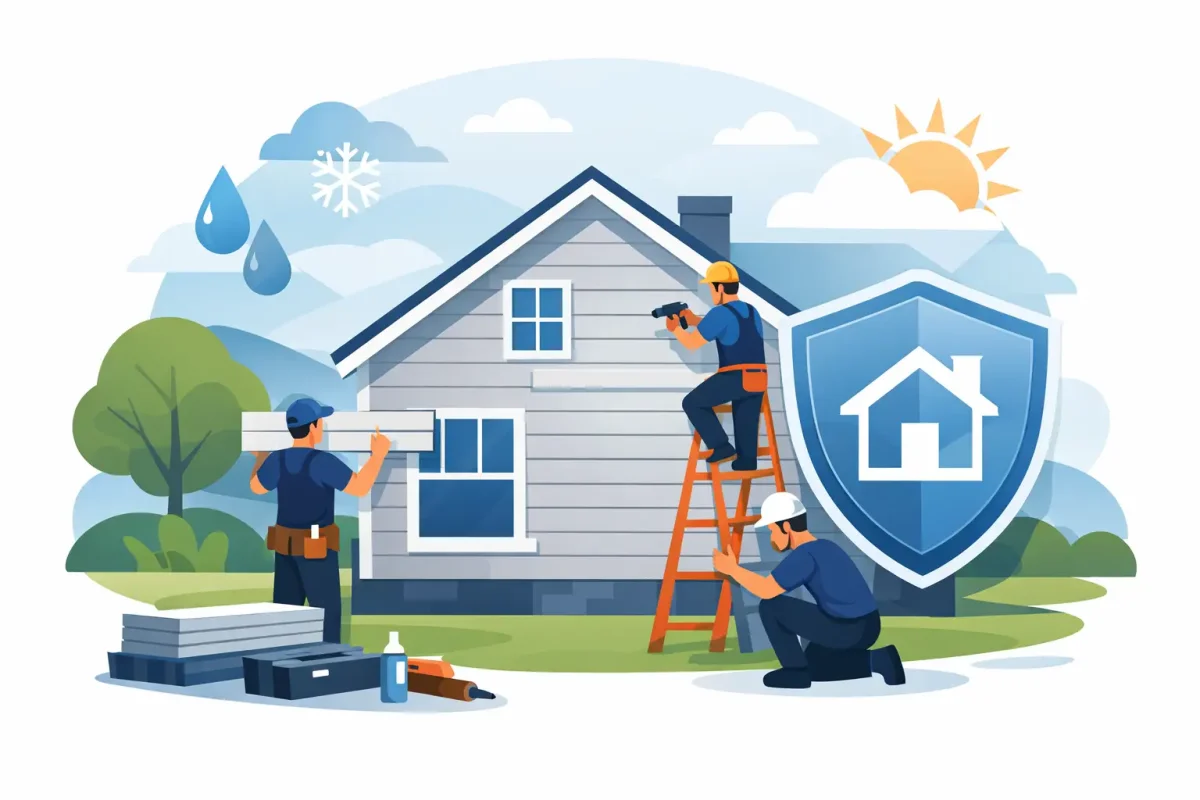
A loose panel, faded color, or crack near a window can look like a small cosmetic problem. Often, it is the first visible sign that moisture, wind, or poor insulation is working behind the exterior. Experienced siding contractors look beyond the surface because your siding is part of the system that keeps your home dry, comfortable, and protected.
For homeowners, the goal is not simply to make the house look newer. The right project should address the cause of the problem, fit the home’s style, and hold up through changing weather without creating a string of future repairs.
What Siding Contractors Should Inspect First
A proper siding consultation starts with the condition of the home, not a quick material recommendation. Before discussing colors or profiles, a contractor should inspect the siding itself, the trim around windows and doors, corners, rooflines, soffit, fascia, and the areas where water is most likely to enter.
Damage is not always obvious from the driveway. Siding may appear intact while the wall behind it has moisture staining, soft sheathing, missing flashing, or gaps around penetrations. A careful inspection also considers whether gutters are overflowing, whether roof runoff is landing where it should not, and whether poor ventilation is contributing to dampness near the eaves.
This matters because replacing only the visible damaged section can be the right choice in some cases, but not all. If wind damage is limited and matching material is available, a targeted repair may protect the home at a lower cost. If panels are brittle, warped across several walls, faded beyond a reasonable match, or installed over a failing moisture barrier, replacement is usually the better long-term decision.
A reliable contractor explains that difference clearly. You should understand what is damaged, why it happened, what must be repaired now, and what can reasonably wait.
Repair or Replacement: Making the Right Call
Homeowners often ask whether a few damaged panels can be repaired. The honest answer is that it depends on the age of the siding, the extent of damage, and what is happening underneath.
Repair is often practical when the issue is isolated: a panel has come loose after high winds, a corner was damaged by impact, or a small section has cracked. It can restore protection quickly and preserve the rest of a siding system that still has useful life left.
Replacement becomes more sensible when problems are repeated or widespread. Common signs include persistent rot, swelling around seams, frequent loose panels, mold or moisture inside exterior walls, heavily faded material, or rising energy bills paired with drafts near exterior walls. Replacement also gives homeowners the opportunity to improve insulation, update trim, and coordinate other overdue exterior work.
The lowest quote is not always the lowest-cost outcome. A repair that does not address damaged wall sheathing or missing flashing may lead to more extensive work later. On the other hand, replacing an entire exterior for one repairable section is not automatically good value. The recommendation should match the condition of your home, not a one-size-fits-all sales target.
Materials Should Match the Home and the Weather
Vinyl siding remains a popular option because it offers a wide range of colors, requires limited maintenance, and can deliver a clean, durable finish at a manageable budget. Quality and installation matter. Thin material or poorly secured panels may rattle in the wind, buckle with temperature changes, or leave vulnerable gaps at trim details.
Fiber cement can provide a more substantial appearance and strong resistance to fire, insects, and rot. It is often chosen for homeowners who want a wood-like look with less maintenance than natural wood. It is heavier and more labor-intensive to install, so labor costs and installation experience should be part of the conversation.
Engineered wood products can offer warmth and texture while improving on the maintenance demands of traditional wood siding. They need careful installation, proper clearances, and dependable paint or finish systems to perform as intended. Metal accents, stone veneer, and vertical panels can also add character when used thoughtfully on entryways, gables, or feature walls.
There is no single best material for every home. The right choice depends on your budget, desired appearance, maintenance expectations, neighborhood style, and exposure to sun, wind, rain, or snow. A good contractor helps you compare those trade-offs in plain language.
The Details That Separate Lasting Work From a Quick Cover-Up
Siding is only as dependable as the work behind and around it. Quality installation includes preparing the wall surface, correcting damaged sheathing where needed, applying the appropriate weather-resistive barrier, and integrating flashing around windows, doors, roof-to-wall intersections, and other openings.
These details are not optional extras. They direct water back to the exterior instead of allowing it to collect behind the siding. Improper flashing can turn a new-looking exterior into a hidden moisture problem.
Fastening also matters. Panels need room to expand and contract as temperatures change. Nails driven too tightly can cause siding to bow or crack. Nails placed incorrectly can weaken panels or prevent them from moving as designed. Clean lines, even courses, secure corners, and properly finished trim are visible signs of careful work, but the weatherproofing behind them is what protects the home.
A coordinated exterior project can prevent missed connections between trades. For example, replacing siding while addressing deteriorated fascia, soffit ventilation, gutters, windows, or stone veneer may reduce disruption and create a cleaner final result. Not every house needs all of that work, but it is worth assessing related components before the crew begins.
Questions to Ask Siding Contractors Before You Hire
A contractor should make it easy to understand the scope of work. Ask whether they are licensed and insured, how they handle hidden damage found after old siding is removed, and what materials are included in the written estimate. You should also ask who will perform the installation, how long the project is expected to take, and how the property will be protected during the work.
Warranty details deserve close attention. Material warranties and workmanship warranties are not the same thing. A manufacturer may cover defects in the product, while the installer’s workmanship warranty addresses errors in installation. Ask for both in writing and make sure you understand what is covered, for how long, and what steps are required if an issue appears later.
It is also reasonable to ask about cleanup. Exterior work creates old materials, nails, packaging, and dust. A professional crew should have a clear plan for debris removal, site protection, and a final walkthrough. Your yard, driveway, landscaping, and entry areas should not be treated as an afterthought.
What the Project Process Should Feel Like
The best projects are organized before materials arrive. After an on-site inspection, you should receive a clear quote describing the recommended work, materials, trim, repairs, timeline, and warranty coverage. This is the time to make decisions about color, profile, accents, and related exterior improvements.
Once the project begins, the crew should remove damaged materials carefully, inspect the wall, complete necessary preparation, and install the new system according to manufacturer requirements. If hidden issues are uncovered, the contractor should show you the condition, explain the options, and confirm any change before moving forward.
Weather can affect scheduling, especially when exterior walls are exposed, but communication should remain straightforward. You should know when the crew is expected, what work is planned, and when the final walkthrough will happen. At completion, the contractor should review the finished work, address reasonable questions, and provide warranty information.
Your home does not need a full exterior transformation every time a panel is damaged. But when siding is aging, leaking, or no longer protecting the structure, acting early can prevent a smaller concern from becoming a costly wall repair. Start with a thorough inspection and choose a contractor who is willing to explain the work before asking you to approve it.
19 July 2026
Gutters vs Eavestroughs Difference Explained

19 July 2026