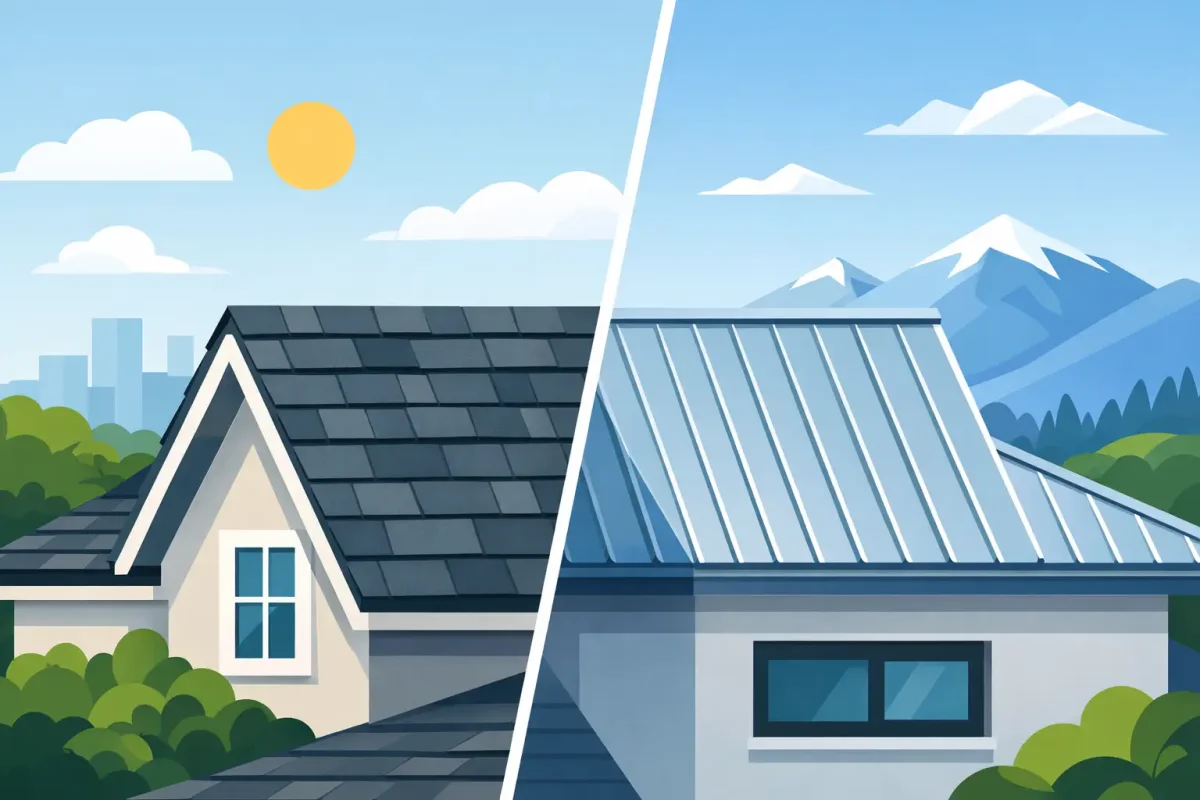
A roof replacement is not a cosmetic decision. It affects how well your home handles rain, wind, snow, heat, and the next unexpected storm. When homeowners compare roof shingles vs metal, the better choice comes down to the home, the budget, the roof design, and how long they plan to stay in the property.
Both materials can protect a home well when they are properly installed. Asphalt shingles remain the most common residential roofing choice because they are familiar, attractive, and cost-effective. Metal roofing costs more upfront, but it can offer exceptional longevity and strong performance in demanding weather. The right answer is not always the most expensive material. It is the system that delivers dependable protection and value for your specific home.
Roof Shingles vs Metal: The Main Differences
Asphalt shingles are layered roofing materials installed in overlapping rows. They come in a wide range of colors, profiles, and price points, from standard three-tab options to thicker architectural shingles that create more dimension and durability. Most homeowners recognize the look immediately, and shingles work well with nearly every traditional home style.
Metal roofing is typically installed as long interlocking panels or formed metal shingles. Steel and aluminum are common residential choices, often finished with protective coatings designed to resist fading, corrosion, and weather exposure. Metal roofs can suit everything from modern homes to farmhouses, cottages, and classic residential properties, depending on the profile and color selected.
The most noticeable difference is lifespan. A quality asphalt shingle roof may last roughly 20 to 30 years, depending on the product, installation quality, ventilation, weather exposure, and maintenance. A properly installed metal roof can often last 40 to 70 years or longer. That longer service life is one reason metal appeals to homeowners planning to remain in their home for decades.
Upfront Cost and Long-Term Value
For many homeowners, budget starts the conversation. Asphalt shingles usually have a lower installation cost than metal roofing. They are widely available, faster to install on many roof designs, and require less specialized material handling. If a roof replacement is urgent and cost control is the priority, shingles are often a practical choice.
Metal roofing has a higher initial price because of material costs, fabrication, trim details, and the specialized installation required. Roof penetrations, valleys, skylights, chimneys, and transitions must be carefully flashed. A low bid is not a reason to cut corners here. Poor metal roof installation can lead to noise, movement, leaks, or premature finish problems that are far more expensive to correct later.
Over time, metal may provide better value for a long-term homeowner. It generally needs fewer replacements, resists many common forms of damage, and may reduce maintenance needs. But the savings are not automatic. If you expect to sell within a few years, a well-installed architectural shingle roof may offer a better balance of curb appeal, buyer confidence, and upfront cost.
Weather Protection: Wind, Rain, Snow, and Heat
A roof has one job above all others: keep water out of the house. Both shingle and metal systems can do that well, but their performance depends heavily on proper underlayment, flashing, ventilation, and installation details around vulnerable areas.
Quality architectural shingles can provide strong wind resistance and perform well in normal rain and snow conditions. They are a proven option for residential roofs with a range of slopes and shapes. However, shingles can be more vulnerable to wind lift, hail impact, granule loss, and cracking as they age. Trees rubbing against the roof, clogged gutters, and poor attic ventilation can shorten their working life.
Metal roofing is highly resistant to wind and sheds rain and snow efficiently. Its panels do not absorb moisture, and the surface is less likely to collect debris than a textured shingle roof. In areas with heavy snowfall, snow guards may be necessary to prevent large sheets of snow from sliding off suddenly over walkways, doors, decks, or driveways.
Metal also reflects more solar heat than many dark asphalt roofs, particularly when a reflective finish is selected. That can help manage attic temperatures during hot weather. Still, energy efficiency is not determined by the roofing material alone. Attic insulation, ventilation, air sealing, and the color of the roof all play a role in how comfortable and efficient the home feels.
Appearance and Curb Appeal
Shingles provide a traditional look that blends easily into established neighborhoods. Architectural shingles can mimic the depth of wood shake or slate while remaining more affordable and straightforward to install. With many color options available, homeowners can coordinate a new roof with siding, soffit, fascia, stone veneer, windows, and doors for a more complete exterior update.
Metal offers a cleaner, more defined appearance. Standing-seam panels create crisp vertical lines that suit contemporary and modern farmhouse designs. Metal shingles and stamped panels provide a more classic look for homeowners who want metal durability without the appearance of long panels.
Neither material is automatically better for resale. The goal is to choose a roof that fits the home rather than one that competes with it. A roofing contractor should consider the property’s architecture, siding color, trim, nearby homes, and the visual impact of the roof from the street.
Maintenance and Repair Considerations
No roof is maintenance-free. Shingle roofs should be inspected for missing tabs, lifted edges, cracked shingles, exposed nail heads, and granules collecting in gutters. Moss or algae staining should be addressed carefully, without harsh pressure washing that can damage the shingle surface.
Metal roofs need periodic checks as well. Fasteners, sealants, flashing, panel edges, and penetrations should be inspected, especially after severe weather. While metal resists rot and insect damage, scratches or damaged coatings should be assessed so corrosion does not develop over time.
Repair work can be easier with shingles when only a small section is affected. A damaged shingle can often be replaced, though matching older shingles can be difficult after years of sun exposure. Metal roof repairs require a contractor who understands the specific panel system and flashing details. Replacing one panel is possible, but it is not always as simple as swapping out a shingle.
Noise, Hail, and Common Metal Roof Concerns
Homeowners sometimes worry that metal roofing will be loud during rain. On a properly built residential roof with solid sheathing, underlayment, insulation, and attic space, indoor rain noise is usually not dramatically different from other roof types. The sound concern is more relevant to metal installed over open framing, such as some barns or covered patios.
Hail can dent certain metal panels, particularly softer aluminum products. High-quality metal systems are available with impact ratings, but no roofing material is completely immune to severe hail. Asphalt shingles can also suffer impact damage, including bruising and granule loss that may not be obvious from the ground.
Another concern is that metal attracts lightning. It does not. Metal is noncombustible, and a roof’s material does not make a home more likely to be struck. If lightning does strike, proper grounding and the home’s electrical protection systems matter more than the roofing profile.
Which Roofing Material Is Right for Your Home?
Choose asphalt shingles when you want reliable protection, a familiar appearance, broad color selection, and a lower upfront investment. They are often the right fit for homeowners replacing an aging roof on a practical timeline or preparing a home for sale.
Choose metal when you value long service life, strong weather performance, low long-term replacement needs, and a more distinctive exterior look. It can be an excellent investment for a forever home, especially when the roof design and budget support a professional installation.
Before selecting either material, have the full roofing system inspected. A contractor should look beyond the visible surface to assess decking condition, attic ventilation, flashing, chimney details, eaves, gutters, soffit, and fascia. Replacing a roof without correcting drainage or ventilation issues can leave the same underlying problems in place.
The best roofing decision starts with a clear inspection and an honest conversation about your home’s needs. Petra Eavestrough & Siding can help homeowners plan a roof that protects the property, suits the exterior, and delivers confidence every time the forecast turns rough.

23 August 2026
Does New Siding Reduce Noise? What Homeowners Can...

23 August 2026