
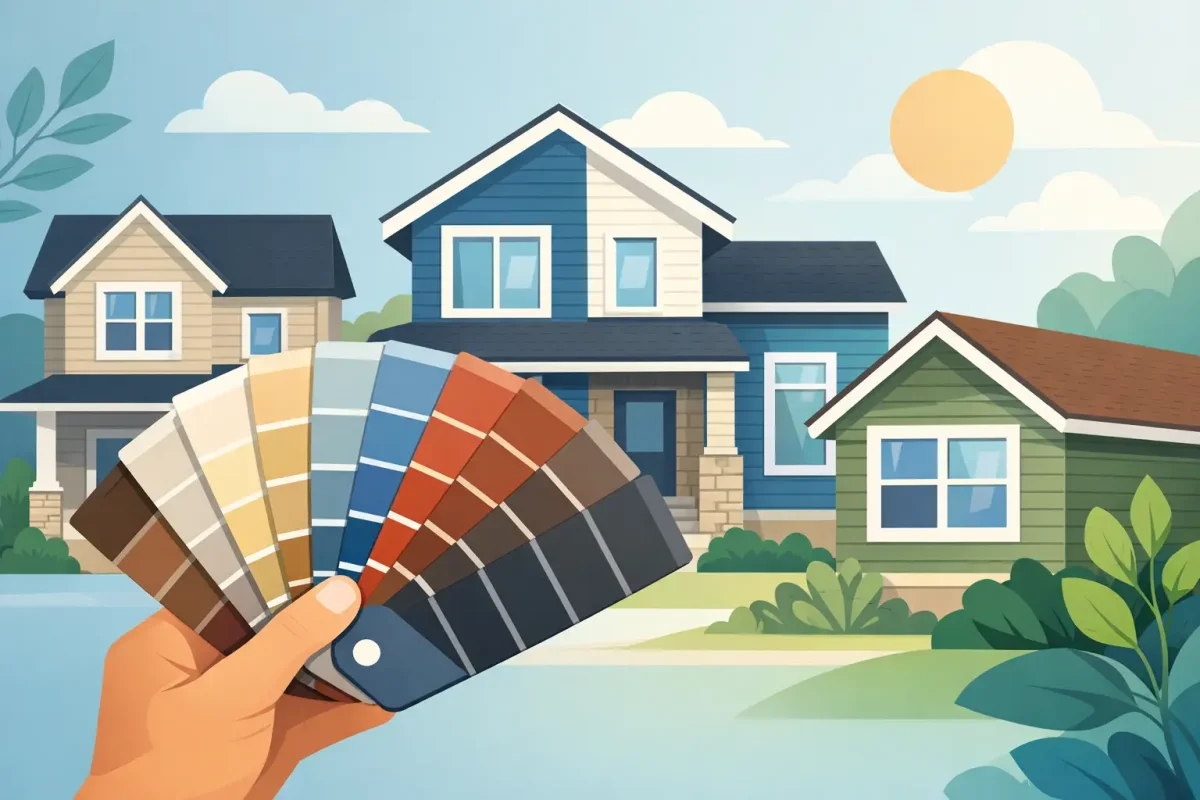
The wrong siding color can make a well-built home look dated, dark, or disconnected from the rest of the exterior. The right one makes the roof, windows, trim, stone, and landscaping feel intentional. Good siding color selection is not about picking the trendiest shade on a small sample. It is about choosing a finish that looks right in real sunlight, suits your home’s architecture, and continues to work years after installation.
For most homeowners, siding is a long-term decision. A color that looks great on a showroom board may read much cooler, brighter, or darker across an entire wall. Before work begins, take the time to consider the fixed features of your home and how the color will perform in your specific setting.
Start With the Colors You Cannot Change Easily
Your siding should coordinate with the exterior elements that are expensive or impractical to replace. Start by looking at the roof, brick, stone veneer, window frames, and front door. These materials already have undertones, even when they appear neutral at first glance.
A gray roof, for example, may have cool blue undertones or warmer brown ones. Red brick can lean orange, burgundy, or muted brown. Natural stone often includes several colors at once. Choosing siding without accounting for those details can create a clash that is hard to ignore once the project is complete.
Rather than trying to match every color exactly, choose a siding color that belongs in the same temperature family. Cool charcoal roofing often works well with crisp whites, blue-grays, slate, and deeper navy siding. A roof with brown or bronze tones may suit warm beige, taupe, cream, sage, or darker earthy colors.
If your home has prominent brick or stone, it is usually best to pull one subtle color from that material instead of competing with it. This creates a coordinated exterior without making every surface the same shade.
Consider Your Home’s Style and Proportions
Architecture should guide siding color selection just as much as personal taste. A modern home can carry stronger contrast, such as dark siding with clean white trim or a black-and-wood-inspired palette. Traditional homes often look best in balanced, classic combinations that will not feel dated after a few seasons.
Color also changes how large or small a home appears. Light siding reflects more light and can make a compact home feel larger and more open. Dark colors add depth and drama, but they can make a large wall feel heavier, especially on homes with limited trim or shade.
That does not mean dark siding is off limits. It simply needs the right balance. A darker main color can look excellent when it is broken up by lighter trim, stone accents, porch posts, or well-placed windows. On a home with a low roofline or a narrow front elevation, a lighter color may better highlight the shape of the house.
Use Contrast With a Purpose
A home does not need three or four competing colors to have curb appeal. In many cases, a main siding color, a trim color, and one accent color for the front door are enough.
White and off-white trim remain popular because they create a clean frame around windows, corners, and rooflines. Black trim can create a more contemporary look, but it needs enough contrast to be visible. On a very dark home, black trim may disappear instead of adding definition.
The front door is the easiest place to introduce personality. Deep red, forest green, black, blue, or a stained-wood appearance can add character without committing the entire exterior to a bold color. Keep in mind that the door should work with the siding, but also with any existing stone, porch railings, and exterior lighting.
Look at Samples Outside, Not Just Indoors
Lighting changes color more than most homeowners expect. A siding panel viewed indoors under store lighting can look very different outdoors in direct sun, shade, or overcast weather. This matters in regions with changing seasons, where a home may be surrounded by bright summer greenery, bare trees, snow, and gray skies throughout the year.
Request larger samples whenever possible and place them against the actual exterior. View them near the roof, brick, stone, and window trim. Check them in the morning, afternoon, and evening. A gray that looks soft and neutral on a cloudy day may appear blue in bright sunlight. A warm beige can become noticeably yellow against white windows.
It also helps to step back across the street. Siding is rarely judged from two feet away. The overall effect from the curb is what you and your neighbors will see every day.
Think About Maintenance and Long-Term Appearance
Every siding color requires basic care, but some shades make dirt, pollen, dust, and water marks easier to see. Very light siding can show mildew or splashback near garden beds. Deep colors may reveal dust and surface scuffs more quickly. The best choice depends on your lot, surrounding trees, exposure to road dust, and how much maintenance you want to take on.
Dark siding also absorbs more heat than light siding. Quality siding products are designed to perform outdoors, but material selection and proper installation matter even more when choosing a deep color for a sunny wall. A contractor should review the product, profile, insulation, ventilation, and installation details rather than treating color as a purely cosmetic choice.
Timeless colors often offer the strongest long-term value. White, soft gray, warm greige, beige, navy, and muted green can work across many home styles. Trend-driven colors can still be a good choice when they fit the house and reflect your preferences, but avoid choosing a color solely because it is popular online this year.
Coordinate Siding With a Full Exterior Plan
Siding projects often reveal other exterior components that need attention. Worn soffit and fascia, aging gutters, faded shutters, damaged window trim, or a roof near the end of its lifespan can take away from new siding quickly. Coordinating these details before installation helps avoid a pieced-together result.
For example, new white siding paired with dented, undersized gutters will not deliver the finished look most homeowners expect. Replacing eavestroughs and matching fascia during the siding project can create cleaner roofline protection and a more consistent color plan. The same applies to stone veneer accents around an entryway or new windows with a frame color that complements the siding.
A complete plan does not always mean replacing everything at once. It means understanding what should match now, what can remain, and what should be planned for later. This prevents expensive surprises and helps the exterior look intentional from every angle.
Avoid These Common Siding Color Mistakes
The most common mistake is choosing from a tiny swatch without checking it beside the home. Another is selecting a color that fights the roof or stone because those materials were not considered early enough. Homeowners also sometimes use too much contrast, creating a busy exterior where every element demands attention.
Be cautious with colors that are extremely bright, very yellow, or heavily saturated unless they clearly suit the home’s style and neighborhood setting. What feels bold and fresh at first can become tiring when it covers a large surface area. If you love a stronger color, consider using it on the door, gable, shutters, or another smaller accent area.
Finally, do not overlook the installer’s input. An experienced exterior contractor has seen how real products weather, how colors appear on different elevations, and which combinations tend to hold their appeal. A professional on-site inspection can help you make a confident choice based on your home rather than a generic inspiration photo.
Make the Final Choice With Confidence
The best siding color is one that supports the home you already have while giving it a cleaner, more updated appearance. It should look good from the curb, work with the roof and masonry, and suit the amount of sunlight your property receives. It should also be a color you can picture living with through more than one season.
Before approving a final color, compare your top choices outdoors, review them beside every fixed exterior material, and consider the full scope of the project. A thoughtful decision at this stage turns new siding from a simple replacement into a lasting improvement that protects your home and makes coming home feel better every day.

19 August 2026
Replacement Window Brands Review for Homeowners

19 August 2026