
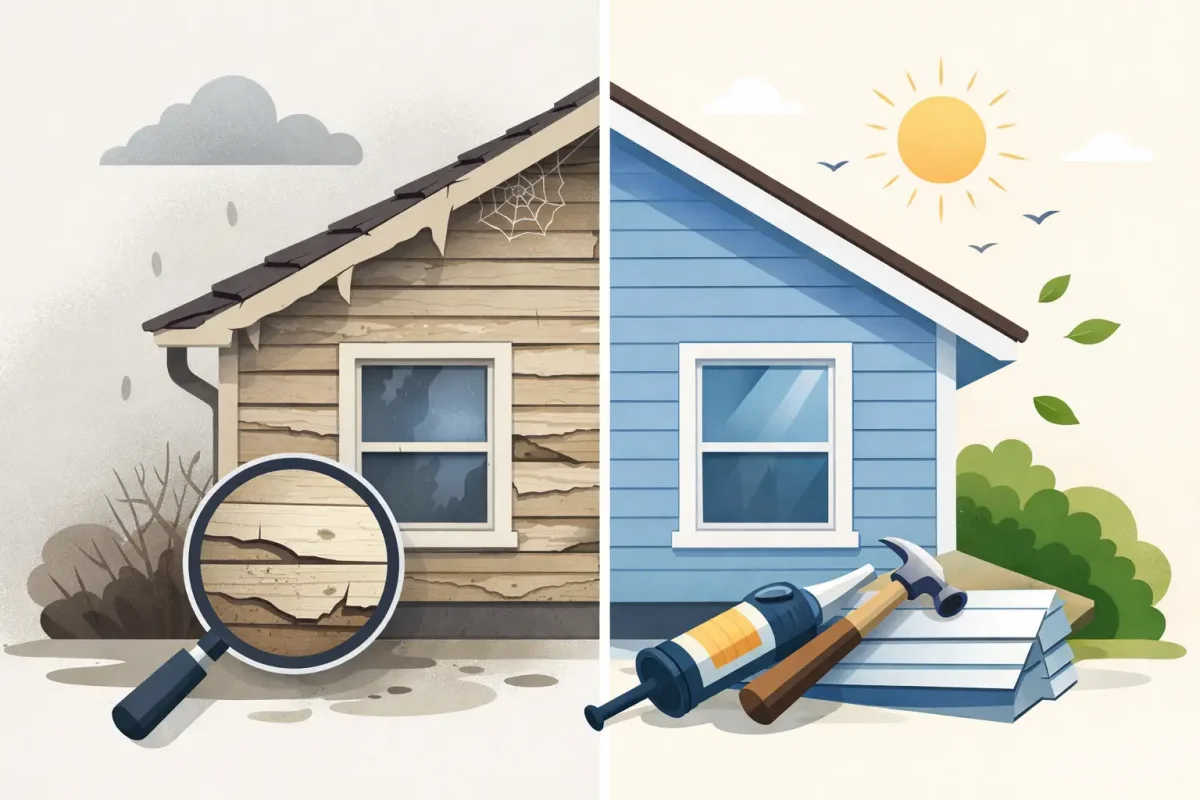
A small crack in siding rarely stays small for long. What starts as a cosmetic issue can turn into trapped moisture, higher energy bills, and damage behind the walls. If you are asking when should siding be replaced, the real question is usually whether your home still has solid protection or if the outer layer is starting to fail.
For most homeowners, the answer is not based on age alone. Siding replacement makes sense when the material is no longer keeping out water, holding up to weather, or giving you a reasonable return on ongoing repairs. In Southern Ontario and similar climates with freeze-thaw cycles, wind, rain, and long winters, those problems tend to show up faster than many people expect.
When should siding be replaced instead of repaired?
Repairs are the right call when damage is limited and the rest of the siding is still in good condition. A few loose panels after a storm, a small section of impact damage, or isolated fading usually does not mean the entire exterior needs to come off.
Replacement becomes the better investment when problems are widespread or when the siding system is no longer performing as a system. That can mean repeated water entry, multiple warped or cracked sections, soft spots under the surface, mold concerns, or panels that no longer stay secure. If one repair leads to another every season, you are often spending money to delay a larger issue rather than solve it.
Another common tipping point is material matching. On older homes, replacement panels may be hard to find, and patchwork repairs can leave the home looking uneven. If curb appeal matters and the siding is visibly tired across the whole exterior, a full replacement often gives better long-term value than piecemeal fixes.
The clearest signs your siding is failing
Some siding problems are obvious from the driveway. Others show up inside the home first. Either way, once the exterior stops protecting the structure, waiting usually makes the repair bill larger.
Warping, buckling, or loose panels
Siding should sit flat and secure against the home. If panels are pulling away, rippling, or buckling, moisture may already be trapped behind them. Heat, poor installation, age, and weather exposure can all cause movement, but the bigger concern is what is happening underneath.
Loose or shifted siding also leaves openings for wind-driven rain and pests. Even if the issue looks minor, it is worth having it inspected before water gets into the wall assembly.
Cracks, holes, and storm damage
One crack does not always mean full replacement. Several cracks across different elevations of the house often point to aging material that has become brittle. Hail, flying debris, lawn equipment, and freeze-thaw stress can all accelerate the breakdown.
When the siding can no longer handle normal weather without splitting or chipping, replacement is usually more cost-effective than continued spot repairs.
Rot, swelling, or soft spots
If siding feels soft when pressed, looks swollen, or shows visible rot, the problem is beyond appearance. Moisture has likely gotten into the material or the substrate behind it. Wood siding is especially vulnerable, but other products can also allow water intrusion if seams, trim, or flashing have failed.
This is one of the strongest signs that replacement should move up the priority list. Once rot starts spreading, the structure behind the siding may also need attention.
Fading, chalking, and worn appearance
Faded siding is not always failing siding. Sometimes it is simply old. But severe fading, chalky residue, and uneven discoloration can signal that the protective finish has broken down. At that point, the material may be more vulnerable to moisture and UV damage.
For homeowners planning to sell or simply wanting the home to look cared for, appearance does matter. Worn siding affects curb appeal fast, especially when paired with older soffit, fascia, gutters, or windows.
Higher heating and cooling costs
If utility bills keep rising and your HVAC system is working harder, aging siding may be part of the problem. Gaps, failed seams, and deteriorated underlayment can all reduce energy efficiency.
Siding alone does not insulate a house, but the full exterior system plays a major role in air control and moisture management. When replacement is paired with upgraded house wrap or exterior insulation, homeowners often notice a more comfortable indoor environment along with lower energy loss.
Mold, mildew, or interior moisture signs
Peeling paint inside, musty smells, moisture around exterior walls, or mold near baseboards and windows can all point to water getting in from outside. Siding is not always the only cause, but it is a common one.
If those signs line up with visible exterior damage, replacement may be necessary to stop the cycle instead of treating the symptoms.
How long does siding usually last?
Material matters. Installation quality matters too. A well-installed product with proper ventilation and flashing will usually last longer than a cheaper system put on quickly.
Vinyl siding often lasts 20 to 30 years, sometimes longer if it has been well maintained and protected from major storm damage. Fiber cement can last several decades, though it still depends on installation details and local exposure. Engineered wood and traditional wood siding can perform well, but they typically require more upkeep and are more sensitive to moisture.
Age alone should not force a replacement decision. A 15-year-old siding system with water damage may need replacement sooner than a 25-year-old system that was installed properly and still looks solid. That is why inspections matter more than generic lifespan charts.
It depends on more than the siding itself
Homeowners often focus on the visible panels, but siding problems are rarely isolated. Trim, flashing, soffit, fascia, gutters, windows, and roofing edges all work together to move water away from the house.
If those components are failing at the same time, replacing siding on its own may not fix the root cause. For example, overflowing gutters can soak the walls below. Bad flashing around windows can let water behind otherwise decent siding. Poor attic ventilation can contribute to moisture issues that show up at the exterior.
This is why a full exterior inspection is usually the smartest first step. It gives you a clearer picture of whether you need a simple repair, a targeted siding replacement, or a more coordinated exterior upgrade.
When replacement is the smarter financial move
Many homeowners wait because they do not want to replace siding too early. That is reasonable. But waiting too long can turn a manageable project into structural repair, insulation replacement, and interior damage.
Replacement usually makes financial sense when repair costs keep adding up, when moisture has reached the sheathing, or when the home is losing energy efficiency because the exterior envelope is compromised. It also makes sense when you are already replacing related components like windows, soffit and fascia, or eavestroughs. Coordinating exterior work often saves time, reduces disruption, and leaves the home better protected overall.
For homeowners thinking about resale, new siding can also improve buyer confidence. A clean, updated exterior signals that the property has been maintained, which can matter just as much as the visual upgrade.
What a homeowner should do next
If you suspect the siding is near the end of its life, do not rely on guesswork from the ground. What looks like surface wear can hide deeper water damage, and what looks serious may only need a limited repair.
A professional inspection should look at panel condition, moisture exposure, trim details, flashing, ventilation, and the condition of nearby exterior elements. The goal is simple: find out whether your current siding is still protecting the house or just covering problems.
At Petra Eavestrough & Siding, that kind of practical assessment is what helps homeowners make the right call without overcommitting or putting off necessary work. If replacement is needed, the best outcome is not just new siding. It is a tighter, cleaner, better-protected exterior that holds up through the next round of seasons.
If your siding is cracking, warping, or showing signs of moisture, treat it like a warning, not a cosmetic annoyance. Acting at the right time protects the parts of your home you cannot see and saves you from paying for bigger damage later.

7 July 2026
How to Plan Exterior Renovation Right

7 July 2026