
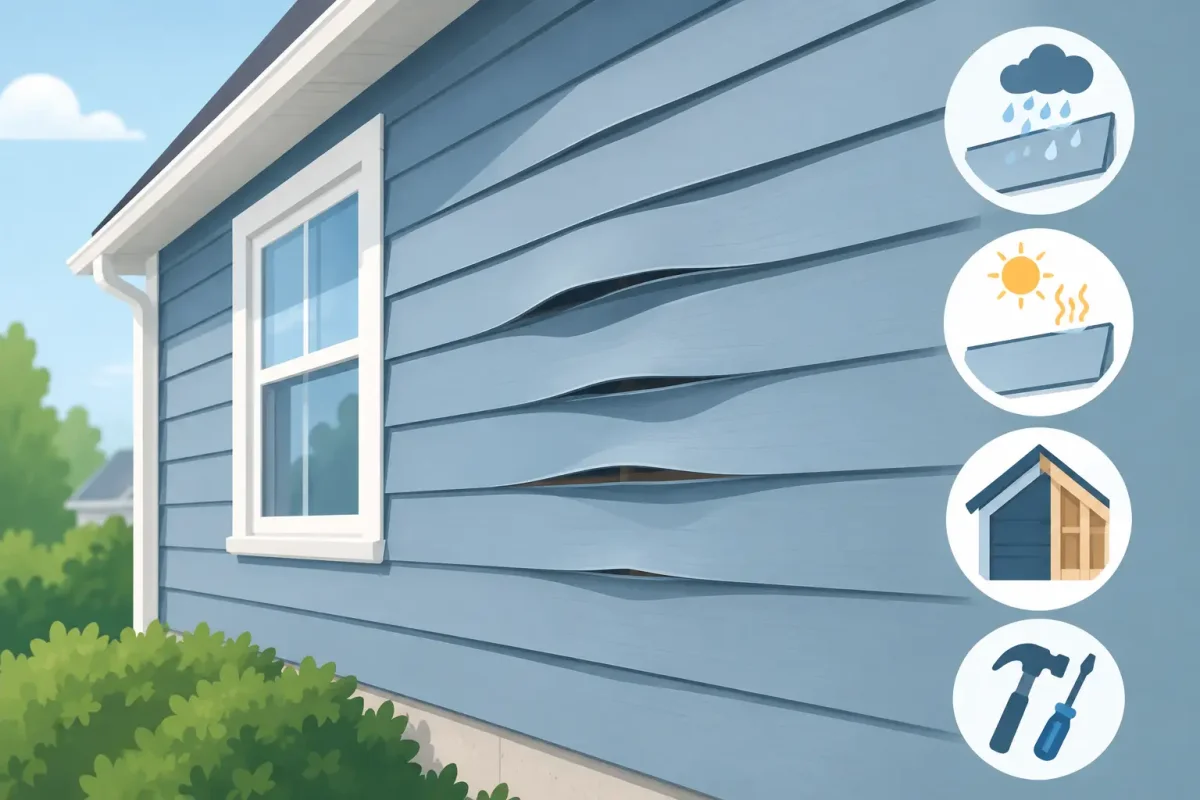
A ripple, wave, or raised section of siding can make an otherwise well-kept home look neglected fast. If you are asking, why is my siding buckling, the answer is often tied to installation, heat, or moisture behind the panels. The visible distortion may be limited to one wall, but it deserves a proper inspection before water gets behind the exterior cladding.
Buckled siding is not always an emergency, and it does not always mean the entire exterior needs replacement. However, simply pushing a panel back into place rarely solves the cause. A professional should determine whether the siding is restricted from moving, exposed to excessive heat, or responding to a problem in the wall beneath it.
Why Is My Siding Buckling? The Most Common Causes
Vinyl siding is designed to expand and contract as temperatures change. That movement is normal. Buckling happens when the panel cannot move as intended, when extreme heat changes its shape, or when the surface it is attached to is no longer flat and stable.
Nails driven too tightly
This is one of the most common installation-related causes. Siding nails should hold the panel in place without pinning it tightly against the wall. They are installed through a nailing hem with a small amount of room for the siding to slide as it expands and contracts.
When nails are driven too tight, at an angle, or through the face of the siding, the panel can become trapped. On a hot day, it expands but has nowhere to go. The result can be a wave or buckle across one or more courses of siding. This problem may not appear immediately after installation. It often becomes noticeable during the first warm season.
Panels installed too tightly at trims and corners
Siding also needs clearance where it meets corner posts, J-channels, windows, doors, and other trim pieces. If a panel is cut too long or forced tightly into a channel, it cannot expand naturally. It may bow outward or form a noticeable ripple as temperatures rise.
This issue is particularly common around replacement windows, additions, and small repair areas where the new siding has to connect with existing materials. A good repair involves more than replacing the visible panel. The installer must correct the spacing and fastening that caused the panel to bind.
Heat reflected from windows or nearby surfaces
Vinyl siding can be affected by concentrated reflected sunlight. Low-E windows, especially on a neighboring home or a wall facing a reflective surface, can direct intense heat onto a small area of siding. Unlike normal sunshine, this reflected heat can be strong enough to soften or warp vinyl.
Heat-related damage often looks different from ordinary expansion buckling. You may see a localized warped patch, a melted appearance, or distortion in a pattern that lines up with a window. Darker siding colors can absorb more heat, but any vinyl product can be affected when reflected heat is intense enough.
Correcting this may require replacing damaged panels and addressing the reflection source. Depending on the property, a window screen, awning, landscaping adjustment, or another approved solution may help reduce direct reflected heat. The right option depends on the angle, location, and severity of the problem.
Moisture behind the siding
Siding is the outer layer of a larger wall system. If water gets behind it because of a roof leak, failed flashing, overflowing gutters, damaged eaves, or improperly sealed openings, the wood sheathing underneath can swell, rot, or shift. Once the wall surface is no longer flat, the siding installed over it may buckle or bulge.
This is the cause homeowners should take most seriously. The siding may be signaling damage that is hidden from view. Soft spots, staining, peeling paint near trim, musty odors indoors, or recurring gutter overflow increase the likelihood that moisture is involved.
The repair may require removing a section of siding, replacing damaged sheathing or framing, restoring the weather-resistant barrier, and then reinstalling matching siding. It is more involved than a surface repair, but addressing the water path protects the home from a much larger exterior and interior repair later.
Wall movement or an uneven surface
Older homes can develop shifting or uneven exterior walls over time. Settling, framing movement, and previous repairs can leave the siding surface out of plane. In other cases, a new layer of siding may have been installed over deteriorated materials without proper preparation.
Siding follows the shape of the wall beneath it. If the substrate moves, bows, or becomes uneven, the panels can look wavy even when the siding itself was installed correctly. An exterior contractor should inspect the wall condition before recommending a cosmetic fix.
How to Tell Whether Buckling Is a Simple Repair or a Bigger Problem
Start by looking at the location and pattern. A long, horizontal wave across a broad wall often points to restricted expansion from tight nailing or tight trim. A small distorted area directly opposite a window may point to heat reflection. A bulge near a roofline, window, gutter, or downspout deserves a closer check for moisture intrusion.
Pay attention to timing as well. Buckling that becomes more visible on hot, sunny days and relaxes somewhat in cooler weather often involves thermal expansion. Siding that remains visibly pushed out, feels soft behind the panel, or is paired with staining and damaged trim may indicate a substrate or water issue.
Do not assume the problem is limited to the panel you can see. A qualified inspection should include the siding, trim channels, flashing, soffit and fascia, roof edges, gutters, and drainage around the affected wall. These components work together. A gutter that spills water behind fascia can eventually create a siding problem several feet below.
What Not to Do With Buckled Siding
Avoid nailing through the face of a bowed panel to force it flat. That may make the surface look better for a short time, but it further restricts movement and can create cracks or more buckling elsewhere. Caulking siding panels together is also not a proper solution because vinyl needs room to move.
It is also risky to remove panels without the right tools and experience. Vinyl siding locks together, and forcing it apart can crack surrounding pieces or damage the weather barrier behind it. If the siding is older or faded, a replacement panel may not match perfectly, so careful planning matters.
If you notice active leaking, soft sheathing, mold-like staining, or siding pulling away near the roof or windows, do not wait for a seasonal repair. Protect the area from further water exposure and arrange an inspection promptly.
The Right Repair Depends on the Cause
For an installation issue, a contractor may be able to remove the affected courses, correct the nail placement and clearance, and reinstall or replace the damaged panels. When matching siding is available and the underlying wall is sound, a targeted repair can be an efficient option.
For heat damage, replacement panels alone may not be enough. The source of reflected heat should be reviewed so the new material is not damaged again. For water-related buckling, the priority is stopping the leak and rebuilding any compromised areas behind the siding before the exterior is closed back up.
Sometimes buckling is one symptom of an aging exterior that needs coordinated work. If siding is deteriorating alongside worn fascia, leaking gutters, roof-edge issues, or drafty windows, addressing those systems together can prevent repeated repairs and give the home a cleaner finished appearance.
When to Schedule a Professional Siding Inspection
A quick inspection is worthwhile when you see new waves, lifted panels, cracks, loose trim, or any change after heavy rain, high winds, or extreme heat. It is especially valuable before listing a home for sale or beginning another exterior project. Replacing gutters or windows without checking nearby siding, flashing, and trim can leave underlying problems unresolved.
A dependable contractor will identify the cause before recommending a scope of work. You should receive a clear explanation of whether the issue is a limited siding repair, a moisture repair behind the wall, or part of a larger exterior upgrade. The goal is not to replace more material than necessary. It is to make sure the repair holds up through changing weather.
Buckled siding is your home asking for attention, not necessarily a full replacement. Have the affected area inspected while the evidence is still visible, and you can make a practical repair decision before a small exterior issue becomes costly hidden damage.

22 September 2026