
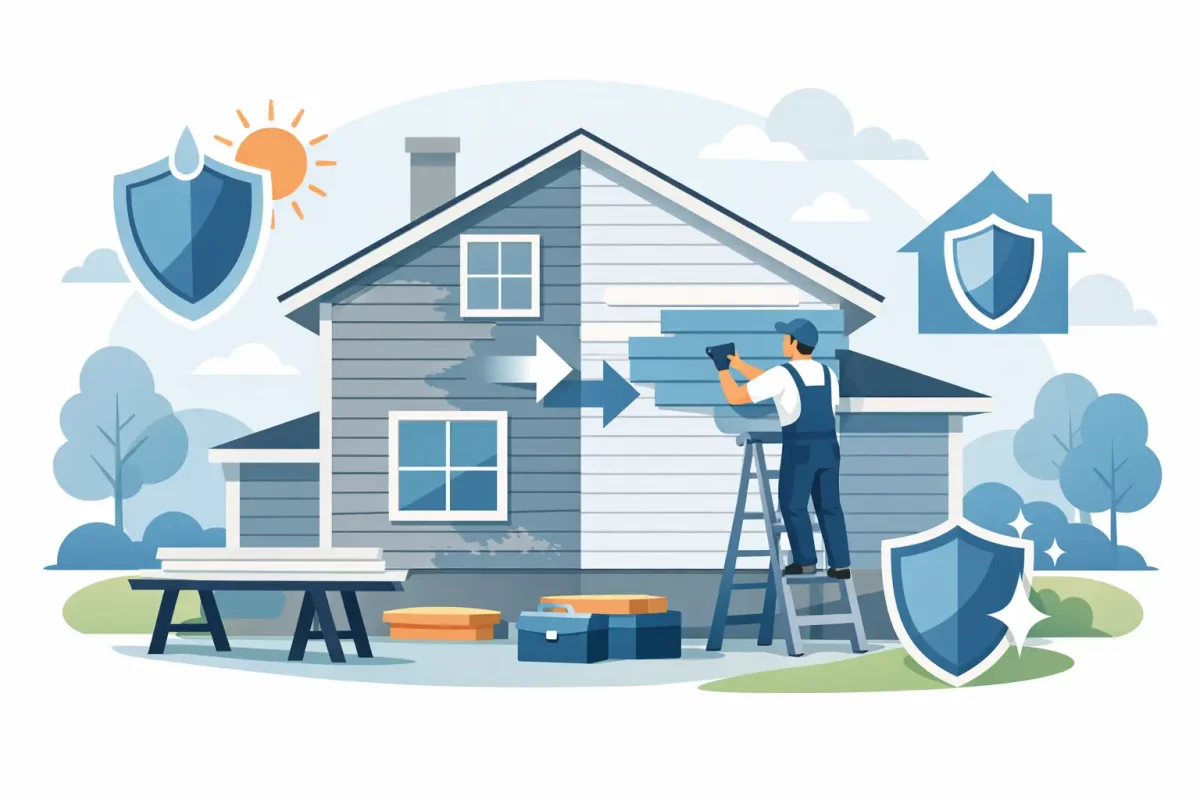
A siding problem rarely stays a siding problem. A loose panel can let wind-driven rain reach the wall behind it. Cracked caulking around trim can invite moisture, drafts, and costly repairs that stay hidden until the damage spreads. This home siding replacement guide helps you recognize when replacement makes sense, choose a material that fits your home, and plan the work with fewer surprises.
For most homeowners, siding replacement is about more than a new color. It is a chance to restore the protective layer around the home, improve curb appeal, and address related exterior issues before they become major repairs.
When Home Siding Replacement Is the Right Call
Not every damaged section means the entire exterior needs to come off. A small area of loose siding after a storm may be repairable, especially when matching material is still available and the wall behind it is dry. Replacement becomes the better long-term choice when the problems are widespread, recurring, or connected to water damage.
Walk around your home and look beyond obvious cracks. Warped or buckled boards, fading that cannot be cleaned away, peeling paint, gaps at joints, soft spots, and repeated loose panels are all warning signs. You may also notice higher heating and cooling costs, interior drafts near exterior walls, or moldy smells in rooms adjacent to damaged siding.
Pay special attention to the lower edges of walls, areas beneath windows, roof-to-wall intersections, and spots near gutters and downspouts. These are common places for water to collect or overflow. If siding has deteriorated in these areas, the contractor should inspect the sheathing, flashing, fascia, and drainage system before recommending a surface-level fix.
Start With an Exterior Inspection, Not a Material Sample
It is easy to focus on style first. Homeowners see a color or profile they like and want to move straight to the estimate. A proper siding project starts with the condition of the structure underneath.
A thorough inspection should identify whether moisture has reached the wall sheathing, whether existing flashing is doing its job, and whether the soffit, fascia, eavestroughs, windows, or roofline need attention at the same time. Replacing siding over damaged wood or poor flashing only covers the source of the problem.
This is where coordinated exterior work can save time and disruption. If water is overflowing from aging gutters or entering around an old window, it makes sense to correct those issues while the siding is removed. The crew already has access to the wall system, and the finished details can be designed to work together.
Ask for a clear explanation of what is being replaced, what can be repaired, and what conditions could change the scope once old siding is removed. Honest contractors do not promise that every hidden wall is perfect before opening it. They explain how they handle unexpected rot, what approvals are needed, and how costs are documented.
Choosing the Right Siding Material
The best siding is not always the most expensive option. It is the material that fits your budget, maintenance expectations, home style, and local weather exposure. A shaded property with moisture concerns may need different priorities than a sunny home exposed to strong wind.
Vinyl siding
Vinyl remains a practical choice for homeowners who want a clean look, solid durability, and low maintenance. It does not need painting, comes in many colors and profiles, and can be a cost-effective option for a full exterior update. Quality matters, though. Better-grade products resist fading and impact damage more effectively, while proper installation allows for normal expansion and contraction.
Vinyl can be a strong fit for busy households, but it is not indestructible. Severe impacts can crack it, and lower-quality installation may lead to visible waviness or loose panels over time.
Fiber cement siding
Fiber cement offers a more substantial appearance and can closely resemble painted wood, shingles, or smooth modern panels. It performs well against fire, insects, and rot, making it attractive for homeowners focused on long-term durability.
The trade-off is cost and installation complexity. Fiber cement is heavier, requires skilled cutting and fastening, and usually needs periodic repainting or finish maintenance. It is a premium choice when the look and performance justify the added investment.
Engineered wood siding
Engineered wood can provide the warmth and character of wood with improved resistance to moisture and pests. It is often lighter and easier to install than fiber cement, with a wide range of profiles for traditional and contemporary homes.
Like any wood-based product, it depends on proper detailing. Correct clearances, flashing, caulking, and paint maintenance are necessary to protect the edges and keep water out.
Aluminum or metal siding
Metal siding can be durable, low-maintenance, and well suited to certain architectural styles. It resists insects and does not rot, but it can dent from impact and may not offer the same design flexibility as other options. It is often chosen for specific accents or homes where a crisp, modern finish is the priority.
Plan the Details That Keep Water Out
The siding panels get the attention, but the details around them determine how well the system performs. House wrap, flashing, starter strips, trim, vents, sealants, and fasteners all have a job to do. A good installation manages water by directing it outward instead of trapping it behind the cladding.
Windows and doors deserve special attention. If they are nearing the end of their service life, replacing them before new siding goes on can prevent avoidable disruption later. The same applies to damaged fascia, poorly ventilated soffits, and eavestroughs that overflow near the foundation.
Color selection also deserves a practical conversation. Darker siding can create a dramatic look, but it may show dust more easily and absorb more heat in direct sun. Lighter colors can make a smaller home feel larger and may be easier to maintain visually. Use samples outside at different times of day before making a final decision.
What to Expect During Installation
A professional siding replacement project should feel organized from the first site visit through the final walkthrough. Before work begins, confirm the project scope, chosen materials, estimated timeline, payment schedule, warranty coverage, and who will be your point of contact.
The installation itself usually follows a clear sequence:
- The crew protects landscaping, walkways, and nearby surfaces before removing old materials.
- Existing siding is removed so the wall condition can be inspected and any damaged sheathing can be addressed.
- Weather-resistive barriers, flashing, and necessary repairs are completed before new siding is installed.
- New siding, trim, vents, and finishing details are installed according to the manufacturer requirements.
- The site is cleaned, debris is removed, and the completed work is reviewed with the homeowner.
Timelines depend on the size of the home, material selection, weather, and the condition discovered behind the existing siding. A straightforward project may move quickly, while extensive repairs or a full exterior renovation can take longer. The key is consistent communication, not unrealistic promises.
Questions to Ask Before You Hire a Siding Contractor
A low quote is not always a lower-cost project. It may leave out wall repairs, quality trim, disposal, permits, or the flashing work needed to protect the home. Compare written scopes, not just the bottom-line number.
Ask whether the contractor is licensed and insured, what products they install, and whether the crew follows manufacturer installation requirements. Confirm what labor warranty is included alongside the material warranty. You should also ask how the team protects your property, manages cleanup, and handles hidden damage if it is found after demolition begins.
For homeowners planning more than one exterior upgrade, ask whether the contractor can coordinate siding with gutters, soffit and fascia, roofing, windows, doors, or stone veneer. Petra Eavestrough & Siding approaches these projects as connected systems, helping homeowners avoid mismatched details and repeated construction around the same walls.
Protect the Investment After Replacement
New siding needs less maintenance than old, failing cladding, but it still benefits from regular attention. Wash off dirt and mildew with a gentle cleaner approved for the material. Keep shrubs and trees trimmed back so they do not trap moisture or rub against the walls. Check caulking, trim, gutters, and downspouts each season, especially after severe weather.
Most importantly, do not ignore a new crack, loose panel, or stain. Small issues are usually faster and less expensive to correct when they are addressed early. The right siding replacement should leave your home looking better on day one and standing stronger through the years ahead.

16 July 2026
How to Spot Roof Leaks Before Damage Spreads
16 July 2026