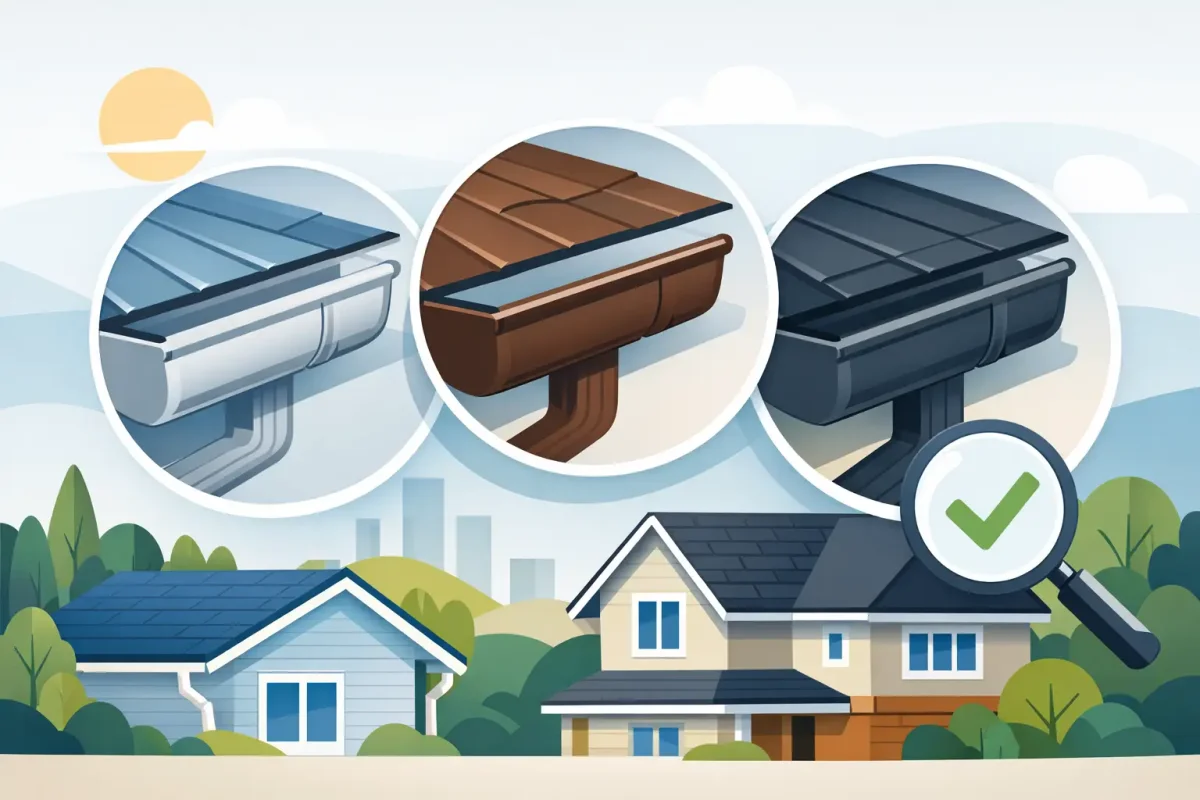
A gutter can look fine from the driveway while failing where it matters most: at the seams, behind the fascia, or at the downspout connection. The best eavestrough materials for homes do more than match the exterior. They need to carry heavy runoff, handle seasonal temperature swings, and protect the foundation, siding, soffit, and landscaping from water damage.
For most homeowners, aluminum is the practical choice. But it is not automatically the right choice for every home. Roof size, tree cover, local weather, budget, and the condition of your fascia all affect the best material and installation approach.
What Makes an Eavestrough Material Worth Choosing?
An eavestrough system has a simple job: collect roof runoff and move it safely away from the house. A quality material must resist corrosion, remain securely fastened, and hold its shape under the weight of water, snow, ice, and debris.
Material matters, but installation matters just as much. A well-installed system has the right slope, properly placed hangers, securely sealed outlets, correctly sized downspouts, and extensions that discharge water away from the foundation. Even premium gutters can leak or overflow if they are undersized or installed over damaged fascia.
When comparing options, homeowners should consider lifespan, maintenance requirements, appearance, and repairability. It also helps to think beyond the gutter itself. Eavestrough replacement is often the right time to inspect soffit, fascia, roofing edges, and siding for hidden moisture damage.
Best Eavestrough Materials for Homes: The Main Options
Aluminum: The Best All-Around Choice
Aluminum is the most common residential eavestrough material for good reason. It is lightweight, rust-resistant, available in many colors, and suited to seamless fabrication. A contractor can form continuous lengths on-site, reducing the number of joints where leaks commonly start.
For most homes, seamless aluminum offers the best balance of durability, appearance, and value. It works well with vinyl siding, fiber cement, brick, stone veneer, and many roofing styles. Factory-finished aluminum also holds color well when quality materials are used.
The trade-off is that aluminum can dent. Ladders, falling branches, and careless maintenance can leave marks, particularly on thinner material. Choosing a heavier-gauge product and using strong hidden hangers helps the system stay straighter and more secure over time. For a typical detached home, this is usually money well spent.
Galvanized Steel: Strong but Higher Maintenance
Galvanized steel is stronger than aluminum and less likely to dent from impact. It can be a sensible choice for homeowners who prioritize rigidity or prefer a more substantial feel along the roofline.
However, steel depends on its protective coating. Once that coating is scratched, worn, or compromised around seams and fasteners, rust can develop. This makes regular inspection and timely touch-ups more necessary than with aluminum. In wet climates or on homes surrounded by trees, neglected steel gutters can deteriorate faster than homeowners expect.
Steel can perform well when professionally installed and maintained, but it is rarely the best low-maintenance option. It also weighs more, which means solid fascia and proper fastening are essential.
Copper: Premium Appearance and Long Service Life
Copper eavestroughs are known for their distinctive appearance and long lifespan. They begin with a warm metallic finish and gradually develop a natural patina. On historic homes, high-end stone exteriors, or custom builds, copper can create a finished look that standard painted gutters cannot match.
Copper does not rust, and a correctly installed system can last for decades. It is also strong and performs well in changing weather conditions. The downside is cost. Copper materials and specialized installation are considerably more expensive than aluminum, and repairs should be handled by professionals familiar with soldered joints and copper detailing.
Copper is a design-driven investment rather than a default recommendation. It makes sense when the home’s architecture, long-term plans, and renovation budget support it.
Zinc: Durable, Distinctive, and Specialized
Zinc is another premium metal option with excellent corrosion resistance and a natural weathered finish. Like copper, it can last a long time and develops character as it ages. It is often chosen for architect-designed homes or projects where the eavestroughs are intended to be a visible exterior feature.
Zinc is not as widely installed as aluminum, so qualified installation can be harder to find and more expensive. The system must also be designed carefully around other building materials to avoid unwanted reactions between metals. For most homeowners, zinc is a specialty choice rather than the most practical one.
Vinyl: Low Upfront Cost, Limited Long-Term Value
Vinyl gutters are lightweight, inexpensive, and sold in pre-cut sections. Their low upfront price can be appealing, especially for a small outbuilding or a short-term solution.
For a primary residence, vinyl often creates more problems than savings. It can become brittle in cold weather, sag in heat, fade over time, and separate at the joints. Seasonal movement is especially hard on sectional vinyl systems. If the goal is dependable, long-term water management, seamless aluminum is generally the stronger value.
Seamless vs. Sectional Eavestroughs
The material is only part of the decision. Homeowners should also ask whether the eavestroughs will be seamless or sectional.
Sectional systems use multiple pre-cut lengths joined together with connectors. Every connector is a potential leak point, particularly as sealant ages and the system moves through heat and cold. They may be acceptable for small, straightforward applications, but they require closer maintenance.
Seamless eavestroughs are formed to the length of each roof edge during installation. They still have joints at corners, downspout outlets, and end caps, but they eliminate the repeated seams found along long runs of sectional gutter. For most homes, seamless aluminum provides cleaner lines, fewer leak risks, and a more durable result.
Choose the Right Size, Not Just the Right Material
A durable material will not solve an undersized eavestrough problem. Heavy rain can overwhelm narrow gutters, especially on large or steep roof sections. Water then spills over the front edge, saturates the ground below, and can stain siding or damage exterior finishes.
Many homes use 5-inch eavestroughs successfully, but 6-inch systems may be a better fit for larger roof areas, complex rooflines, or locations that receive intense rainfall. Downspouts must be sized and placed to match. Too few downspouts can cause water to back up, even when the gutter itself is properly pitched.
A professional inspection should also check how runoff leaves the property. Discharging water beside the foundation defeats the purpose of a new system. Downspout extensions, drainage routes, and grading should direct water away from the home without creating icy walkways or flooding a neighbor’s property.
Details That Protect Your Investment
The best material can still fail early if the supporting details are ignored. Before installation, the fascia board should be checked for rot, peeling paint, and soft spots. Replacing compromised fascia first gives the new eavestroughs a stable mounting surface and prevents a fresh installation from hiding an existing problem.
Hanger spacing is another detail that should not be overlooked. Strong, properly spaced hangers help prevent sagging under snow and ice loads. Gutters also need a consistent slope toward the downspouts. Too much slope can look uneven; too little leaves standing water, debris buildup, and added stress on seams.
Leaf protection can help on homes with heavy tree cover, but it should be chosen carefully. No cover eliminates all maintenance, and the wrong product can restrict water flow during heavy rain. The right approach depends on the roof, the type of trees nearby, and how accessible the eavestroughs are for service.
A Practical Recommendation for Most Homeowners
For most residential properties, heavy-gauge seamless aluminum eavestroughs offer the strongest combination of cost, performance, color options, and low maintenance. Pair them with properly sized downspouts, durable hangers, sound fascia, and professional installation, and the system can provide reliable protection for years.
Copper and zinc are excellent premium choices when appearance and long-term architectural value are priorities. Steel may suit specific needs but asks more of the homeowner in maintenance. Vinyl is best reserved for limited-budget or temporary applications, not a long-term exterior upgrade.
If your current gutters overflow, pull away from the roofline, leak at seams, or leave water near the foundation, do not wait for the next major storm to reveal the full cost of the problem. A straightforward on-site inspection can identify whether a targeted replacement or a coordinated fascia, soffit, and eavestrough upgrade will give your home the protection it needs.

7 August 2026
Seamless Eavestrough Installation That Protects Homes

7 August 2026