
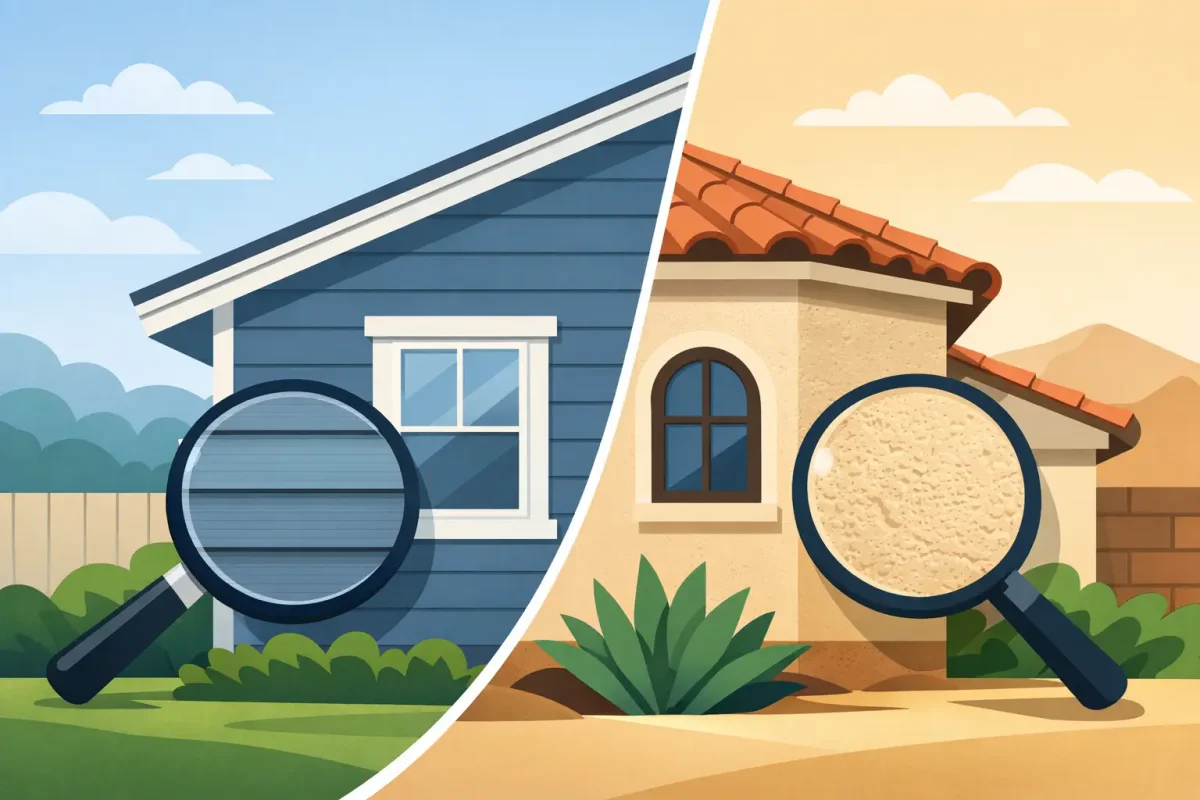
A cracked stucco wall or faded, warped siding does more than hurt curb appeal. It can let moisture reach the wall system behind it, raise maintenance costs, and make a home look older than it is. This siding or stucco comparison helps homeowners choose an exterior that fits their budget, local weather, maintenance expectations, and long-term plans for the property.
Both materials can look excellent when installed correctly. The better choice is rarely about which one is universally best. It is about the condition of your home, the style you want, and whether the installation details will keep water moving away from the structure.
Siding or Stucco Comparison: The Big Differences
Vinyl, fiber cement, engineered wood, and metal siding are installed in individual panels or boards over a properly prepared wall assembly. Stucco is a cement-based finish applied in layers over a lath or other approved backing system. Those basic differences affect everything from repairs to water management.
Siding gives homeowners more visible design options. Horizontal lap siding remains a popular choice, but vertical panels, board-and-batten profiles, shakes, and mixed materials can create a more customized exterior. It also pairs well with stone veneer, soffit, fascia, windows, doors, and new eavestroughs when the goal is a complete exterior update.
Stucco creates a continuous, textured appearance that works especially well on Mediterranean, contemporary, and certain traditional home styles. It can be colored and finished in many ways, from a smooth modern surface to a heavier texture. A quality stucco finish has a solid, substantial look that many homeowners prefer.
The trade-off is that stucco depends heavily on correct flashing, drainage, expansion joints, and curing. Siding also requires proper flashing and a weather-resistive barrier, but individual damaged sections are generally easier to access and replace.
Cost Is More Than the Installation Price
Upfront pricing varies by material, home shape, wall height, trim details, removal of the existing exterior, and repairs found beneath the surface. In many cases, basic vinyl siding costs less to install than a full traditional stucco system. Fiber cement and premium engineered siding can narrow that gap, particularly on larger or highly detailed homes.
Stucco can become more expensive when a project requires removal of failed material, replacement of water-damaged sheathing, new lath, extensive flashing corrections, or structural repairs around windows and doors. A home with multiple levels, tight access, or lots of architectural details can also require more labor.
It is tempting to compare only the estimate totals. A better comparison asks what each proposal includes: removal and disposal, wall repairs, housewrap or moisture barrier, flashing, trim, soffit and fascia transitions, caulking, cleanup, and warranty coverage. An inexpensive exterior job that skips critical water-management details can become the costly option later.
Weather Resistance Depends on Installation
No exterior material can compensate for poor installation. Water needs a clear path to shed away from the wall, roof edges, window openings, and foundation. That makes the connection between siding or stucco, roofing, eavestroughs, soffit, and fascia especially important.
Siding performs well in areas with frequent rain, freeze-thaw cycles, and temperature swings when it is correctly fastened and detailed. It is not designed to be airtight or completely waterproof on its own. The drainage plane and flashing behind it do much of the protective work.
Stucco can also perform for decades, but it is less forgiving when cracks, missing sealant, or improper flashing allow water behind the finish. Small surface cracks are not always an emergency, since stucco can develop minor hairline cracking over time. Wider cracks, stains, soft areas, bulging, or recurring leaks near windows deserve a professional inspection.
In cold climates, repeated freezing and thawing can worsen cracks and moisture issues. Homeowners who prefer stucco should make sure the contractor understands the full wall system, not just the finish coat. Homeowners choosing siding should ask how the project will tie into existing rooflines, gutters, trim, and openings.
Maintenance and Repair Expectations
Vinyl siding is usually the lowest-maintenance option. It can be washed periodically to remove dirt, pollen, and mildew, and it does not need routine painting. However, it can crack after a hard impact, fade over many years, or loosen if it was installed too tightly or without proper fastening.
Fiber cement and engineered wood siding offer a more substantial appearance, with profiles that can closely resemble painted wood. They need more maintenance than vinyl, especially when painted finishes eventually require attention. Their repair process is still typically straightforward because affected boards or panels can be replaced without disturbing an entire wall.
Stucco needs regular visual checks. Watch for cracks, staining, efflorescence, damaged sealant around windows, and impact damage near walkways or driveways. Repairs can be durable, but color and texture matching may be difficult on older walls. A patch that is technically sound may remain visible until the wall is repainted or refinished.
For homeowners who want the simplest long-term upkeep, siding usually has the advantage. For homeowners committed to stucco’s appearance, proactive inspections and quick repairs are part of protecting the investment.
Curb Appeal and Home Style
Exterior material should make sense for the architecture of the home and the surrounding neighborhood. A clean siding installation can refresh a dated colonial, ranch, craftsman, or contemporary home without making it look out of place. Contrasting trim, darker gables, stone veneer accents, and a coordinated front door can make a major visual difference without covering every wall in a premium material.
Stucco can create a refined, continuous facade with fewer visual lines. It works particularly well when paired with simple trim, strong roof colors, and clean window details. On the wrong house, though, it can look forced or make later additions more challenging to blend.
Think beyond the wall color. New siding or stucco may expose faded gutters, worn fascia, aging soffit, or outdated exterior trim. Coordinating these elements during one project often produces a cleaner result and avoids reopening finished work later.
Energy Efficiency: Focus on the Wall Assembly
Neither siding nor stucco automatically makes a home energy efficient. Insulation, air sealing, window performance, and the condition of the wall behind the cladding matter more. Still, exterior renovation is an excellent time to identify gaps around windows, doors, vents, and penetrations that may be contributing to drafts.
If the existing siding is being removed, the exposed wall can be inspected for damaged sheathing, missing insulation, and air leaks. This is also the right time to consider window replacement if windows are near the end of their service life. Completing related work together can improve the finished appearance and reduce duplicated labor.
When Siding Is Usually the Better Choice
Siding is often the practical choice for homeowners who want lower maintenance, easier repairs, flexible design options, and a predictable installation process. It is especially appealing when an existing exterior has isolated damage, when the home needs upgraded trim and drainage components, or when you want to combine several materials for more curb appeal.
Choose a contractor with experience in the specific product you select. Proper fasteners, expansion allowances, flashing, and ventilation are not optional details. They determine how the exterior performs after the crew has left.
When Stucco May Be Worth It
Stucco can be the right investment when its look suits the home, the wall system is in good condition, and the project is handled by installers who understand moisture control. It may also be a strong fit for a full redesign where rooflines, windows, trim, and exterior colors are being updated at the same time.
Before approving stucco repairs or replacement, ask for a close inspection around windows, doors, roof-to-wall intersections, and any stained or cracked areas. The visible finish is only part of the story. Finding the source of moisture is what protects the home.
A clear on-site inspection takes the guesswork out of the decision. Whether siding or stucco makes more sense, the right project starts with a detailed look at the walls, drainage, trim, and existing damage so your new exterior looks good and keeps doing its job for years.

7 September 2026
How to Prepare for Your Siding Installation

7 September 2026