
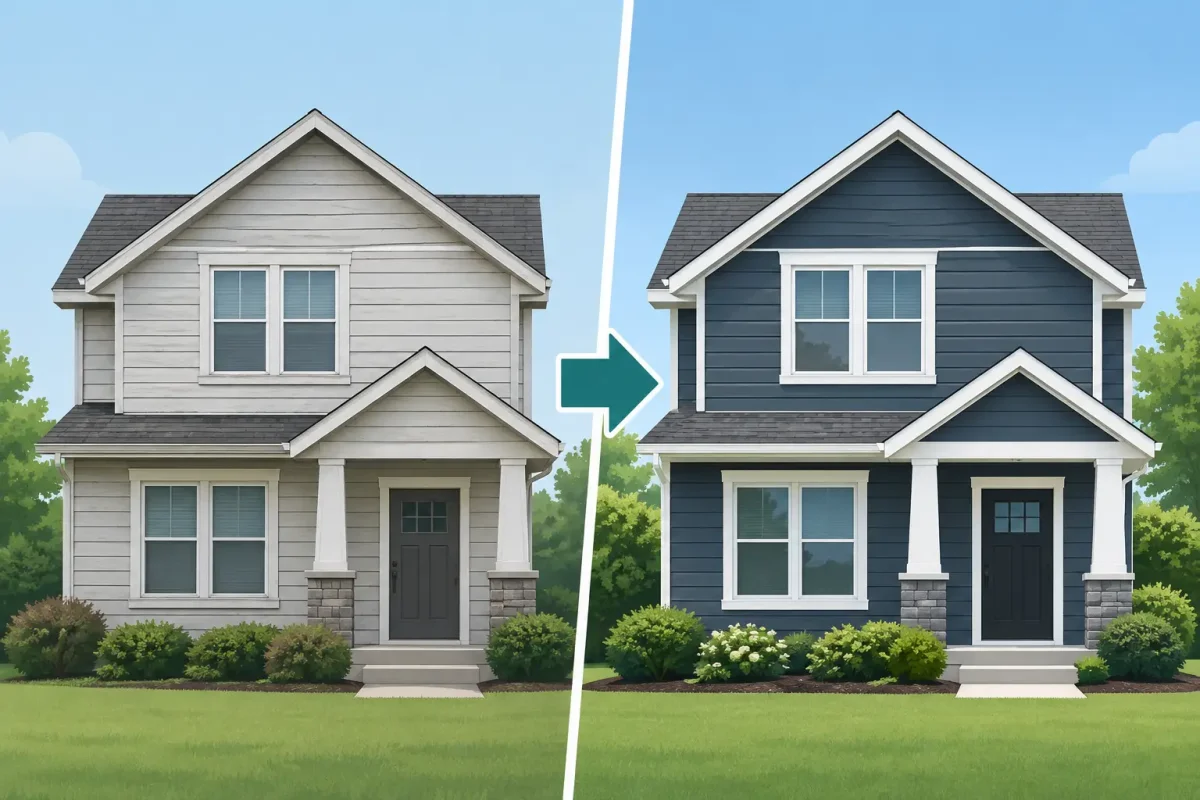
A faded, warped exterior rarely starts as a cosmetic problem. Loose panels can let wind-driven rain reach the wall system, failed trim can create openings around windows, and aging caulk can leave your home looking neglected long before the damage is visible indoors. A before after siding transformation changes the appearance of a house, but the best projects also correct the issues hiding behind the old exterior.
For homeowners, the goal is not simply a fresh color. It is a home that looks cared for, holds up through changing weather, and no longer needs a new repair every season. That takes a proper inspection, the right material for the home, and installation that addresses the full exterior system.
What a Before and After Siding Transformation Should Fix
The dramatic reveal is what homeowners notice first. New siding can make an older home look cleaner, straighter, and more current in a matter of days. Dark accents can add contrast, wider profiles can make a small home feel more substantial, and updated trim can give windows and doors a finished look.
But the “before” side of the project usually tells a more practical story. Peeling paint, cracked boards, buckled vinyl, open seams, and staining beneath eaves are all signs that deserve attention. Sometimes the siding itself has reached the end of its service life. Other times, the source is a leaking eavestrough, damaged fascia, poor flashing, or a roof edge that is not directing water correctly.
That is why siding should not be viewed as an isolated layer. It connects to soffit, fascia, gutters, windows, doors, rooflines, and wall openings. Replacing panels without correcting the surrounding details can make a house look better temporarily while leaving the original problem in place.
Curb Appeal That Fits the Home
A successful exterior update respects the shape and style of the property. A traditional two-story home may benefit from classic horizontal siding with crisp white trim. A newer home can carry bolder contrast, vertical accent siding, stone veneer, or a darker front elevation. The right choice depends on roof color, brick or stone that is staying, window frame color, and the amount of shade around the home.
Color samples should be viewed outside, not just under indoor lighting. A gray that appears warm in a showroom can look blue in direct sun. Deep colors can create a strong modern look, but they may show dust and pollen more readily than mid-tone options. Lighter colors tend to feel timeless and can make a shaded facade appear brighter.
Better Protection Where It Counts
Quality siding installation is about managing water, not pretending water will never reach the exterior. Rain can get behind cladding at seams and penetrations. The wall needs properly installed weather-resistant layers, flashing around openings, and drainage details that move that moisture safely away.
During a siding replacement, a contractor can inspect the exposed wall for rot, damaged sheathing, insect activity, or previous repairs that were never sealed correctly. Finding these problems before new siding goes on is a major advantage. It is far easier and less expensive to repair a localized section of wall while the exterior is open than after a new installation is complete.
The Work Behind the Before-and-After Photos
A polished final photo cannot show the preparation work that makes a siding project last. Homeowners should expect a clear process, beginning with an on-site inspection and a written estimate that explains the scope of work.
Old siding is removed carefully so the condition of the substrate can be evaluated. Any necessary repairs are completed before the new wall layers are installed. Windows, doors, roof-to-wall transitions, and other vulnerable areas receive proper flashing and sealing. New siding, trim, soffit, fascia, and eavestrough components are then installed as planned.
The final steps matter just as much. Panels should be straight and properly fastened, trim lines should be clean, and joints should allow for normal material movement. A walkthrough gives the homeowner a chance to review the finished work, ask questions about maintenance, and receive warranty information.
Fast timelines are valuable, especially when the exterior is exposed, but speed should never mean skipped preparation. A well-organized crew can complete many residential projects quickly while still protecting landscaping, managing debris, and leaving the property clean at the end of each workday.
Choosing Siding for Your Priorities
There is no single best siding material for every home. The practical choice comes down to budget, desired appearance, maintenance expectations, and the condition of the existing exterior.
Vinyl siding remains a popular option because it is cost-effective, low-maintenance, and available in a broad range of colors and profiles. It works well for homeowners who want a durable update without the upkeep of regular painting. The trade-off is that lower-grade products or poor installation can look wavy, particularly on uneven walls, so material quality and wall preparation matter.
Engineered wood siding offers a more substantial, wood-like appearance and can be a strong fit for homeowners looking for detailed trim and architectural character. It must be installed and finished correctly, particularly around cut edges and areas exposed to frequent moisture.
Fiber cement can provide a crisp, high-end appearance and strong durability, but it is heavier, more labor-intensive, and typically carries a higher installed cost. It may be worthwhile on a home where the design calls for it, but it is not automatically the best value for every project.
The material decision should also account for the rest of the exterior. If eavestroughs are undersized or fascia is deteriorated, replacing them at the same time can protect the siding investment. If windows are drafty, poorly sealed, or nearing replacement, coordinating that work avoids disturbing brand-new siding later.
Energy Comfort Starts at the Wall
New siding alone does not turn a poorly insulated house into a high-efficiency home. Still, siding replacement creates an opportunity to improve the wall assembly. Contractors can identify gaps around openings, damaged sheathing, and areas where air sealing may help reduce drafts.
Insulated siding or added exterior insulation can improve comfort in some homes, especially where walls feel cold in winter or rooms over the garage are difficult to heat and cool. The results depend on the home’s existing insulation, windows, attic ventilation, and HVAC performance. An honest inspection should explain what siding work can improve and what requires a separate solution.
Homeowners often notice another benefit right away: less noise from wind and outdoor activity, particularly when old loose panels and damaged trim have been replaced. That is not guaranteed on every project, but a tighter, better-finished exterior can make the home feel more solid.
How to Plan a Transformation Without Surprises
Start with the problems you want solved, not just a photo of a color you like. Point out staining, water overflow, drafts, damaged areas, or recurring repairs during the inspection. Those details help determine whether the project needs siding alone or a coordinated update involving gutters, soffit and fascia, windows, roofing repairs, or stone accents.
Ask for a scope that clearly identifies what is being removed, what will be inspected, how damaged wood is handled, and which trim and flashing details are included. You should also understand the material and labor warranty, anticipated timeline, cleanup process, and how change orders are handled if hidden damage is discovered.
Petra Eavestrough & Siding approaches exterior work as a connected system because homeowners should not have to coordinate several trades just to solve one water or curb appeal problem. A single plan makes it easier to align colors, protect vulnerable transitions, and finish the job with a consistent look.
A strong before-and-after result should feel better than a visual upgrade. When you pull into the driveway, you should see a home with clean lines and a finish that suits it. When rain starts, you should have confidence that water is being directed where it belongs. That combination of appearance and protection is what makes an exterior transformation worth doing.

13 September 2026
7 Home Resale Upgrades Buyers Notice First
13 September 2026