
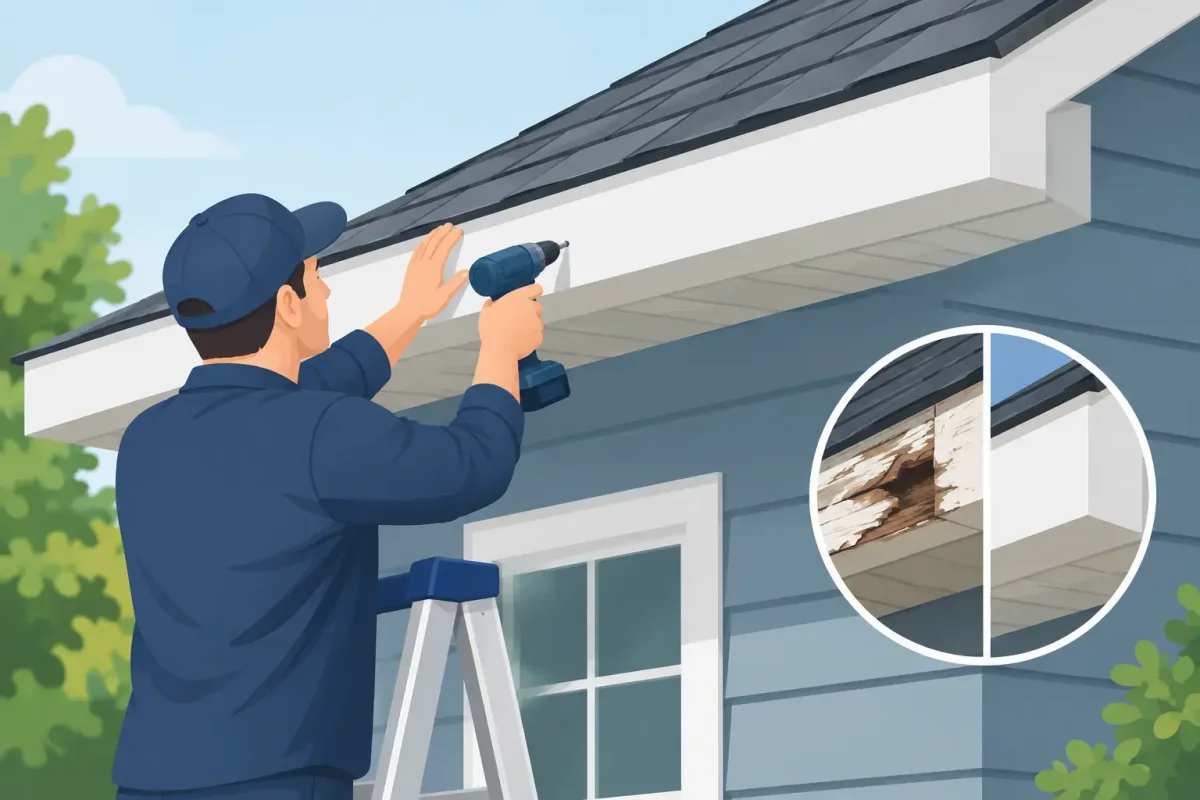
A soft spot along the roof edge can look minor from the driveway, but it often points to a water-control problem that will not stay minor. This guide to fascia board repair helps homeowners recognize the warning signs, understand what a proper repair involves, and know when the issue calls for more than replacing one board.
Fascia is the long board installed along the lower edge of your roof. It supports the gutter system, closes off the roofline, and gives the home a clean finished appearance. When it deteriorates, rainwater can reach the roof decking, soffit, siding, and wall structure behind it. Addressing the cause early protects far more than curb appeal.
What Causes Fascia Boards to Fail?
Water is the usual cause. Gutters that overflow, pull away from the roofline, or hold standing water can direct moisture against the fascia day after day. Clogged downspouts, poor gutter slope, ice buildup, and roof leaks can create the same problem.
Wood fascia is especially vulnerable when its paint or protective wrap has failed. Once water gets into exposed grain, the board can swell, crack, soften, and rot. Insects may follow, and wind can loosen gutters that no longer have solid material to anchor into.
Sometimes the fascia is not the original problem. A damaged drip edge, failing roof shingles, blocked soffit ventilation, or leaking upper roof section may be sending water where it does not belong. Replacing a visibly damaged board without correcting the source can lead to the same repair within a few seasons.
Signs You May Need Fascia Board Repair
You do not need to climb a ladder to notice every issue. A walk around the property after a heavy rain can reveal a lot. Watch for these common signals:
- Peeling paint, dark staining, swelling, or visible cracks along the roof edge
- Gutters that sag, tilt, leak at the back, or appear to pull away from the home
- Soft, crumbling, or split wood around gutter brackets and corners
- Water marks on soffit panels, siding, brick, or the ground directly below the gutters
- Pest activity near the roofline or birds entering gaps around the eaves
Inside the home, staining on exterior walls or ceilings near the roofline deserves prompt attention as well. The moisture may be entering through the roof, but failed fascia and soffit components can allow it to spread.
A Guide to Fascia Board Repair: Repair or Replace?
The right scope depends on how far the damage extends. A small area of surface wear may be repaired if the wood underneath remains dry, firm, and structurally sound. In that case, a contractor may remove loose material, treat the affected area, restore the surface, and repaint or cap it for protection.
Replacement is usually the better value when the board is soft, rotted through, split around fasteners, or unable to hold the gutter securely. Replacing a short section can work when the damage is isolated. If several areas show deterioration, or if the existing material is aging across the roofline, a full fascia replacement often produces a cleaner and longer-lasting result.
There is a trade-off. A limited repair has a lower immediate cost, but it may not match older finishes perfectly or solve hidden water damage. A coordinated fascia, soffit, and gutter project costs more upfront, yet it can address the entire drainage and ventilation system at once. For homeowners planning to stay in their home, that approach can reduce repeat work and improve the exterior’s appearance.
What a Professional Fascia Repair Should Include
A proper repair starts with inspection, not removal. The contractor should check the gutter condition, roof edge, drip edge, soffit panels, ventilation, and nearby siding. The goal is to identify where water is entering and whether the roof decking or framing behind the fascia has been affected.
Next, damaged gutter sections are carefully removed or supported so the fascia can be accessed. Rotted material is taken out until solid backing is reached. If there is damage to the roof deck, rafter tails, or soffit framing, those components need repair before new fascia goes on. Covering compromised wood simply hides the problem.
The replacement fascia must be installed straight, securely fastened, and properly integrated with the roof edge. Depending on the home and chosen material, it may be finished with durable aluminum or vinyl capping. The gutter is then reinstalled with the correct slope toward the downspouts so water moves away from the roofline instead of collecting behind it.
A careful final check matters. Water should flow through the gutters without overflowing, the gutter brackets should be firmly anchored, and all seams and edge details should be secure. The work area should also be cleaned thoroughly, including old fasteners, rotted material, and debris around landscaping.
Choosing Materials That Fit Your Home
Wood fascia remains common on older homes and can be a practical option when properly primed, painted, and maintained. It offers a traditional appearance, but it requires ongoing attention where moisture is a concern.
Aluminum-capped fascia is a popular choice for homeowners who want a lower-maintenance finish. The metal cap protects the board from direct weather exposure and can be color-matched to gutters, siding, or trim. Quality installation is critical because poorly fitted capping can trap moisture or leave vulnerable edges exposed.
Composite and PVC trim boards may also be appropriate in high-moisture areas. These products resist rot, but material cost, expansion, appearance, and compatibility with the rest of the roofline should be considered. The best choice is not always the most expensive one. It is the material that fits the home, drainage conditions, budget, and long-term maintenance expectations.
Why Gutters and Soffits Matter to the Repair
Fascia rarely works alone. Gutters manage rainwater, while soffits protect the underside of the eaves and help ventilate the attic. When one part fails, the others can be affected.
For example, an undersized gutter may overflow during heavy storms even if it is clean. A gutter with too few downspouts may back up and soak the fascia. Damaged soffit panels can allow pests and moisture into the eaves, while blocked vented soffits can contribute to excess attic heat and moisture. Looking at these components together prevents a patchwork repair that leaves the core issue untouched.
This is particularly relevant for homes with aging exterior finishes. If siding repair, roof work, or gutter replacement is already planned, combining the work can create a more consistent finish and avoid removing newly installed materials later.
When to Call a Contractor Right Away
Do not wait if gutters are detaching from the home, water is entering the attic or interior, roof decking is visible, or large sections of fascia are soft and collapsing. These conditions can worsen quickly during a storm and may create safety risks around entrances, walkways, and electrical fixtures.
Professional service is also the sensible choice when repairs require working near a steep roof, upper-story gutters, or potential structural damage. Fascia work involves ladders, roof edges, heavy gutter sections, and details that affect your home’s water protection. A licensed and insured exterior contractor can assess the full roofline and provide a clear recommendation instead of guessing from the ground.
For homeowners who want one point of contact for fascia, soffit, gutters, siding, and related exterior repairs, Petra Eavestrough & Siding can inspect the problem and outline options based on the condition of the home. A detailed on-site assessment helps separate a small repair from a larger issue before water damage spreads.
A sound fascia board should be easy to overlook – that is usually a sign it is doing its job. If your roofline shows stains, sagging gutters, or peeling trim, arranging an inspection now can help keep a manageable exterior repair from becoming an interior one.
15 September 2026
When Aluminum Fascia Installation Is Worth It
15 September 2026