
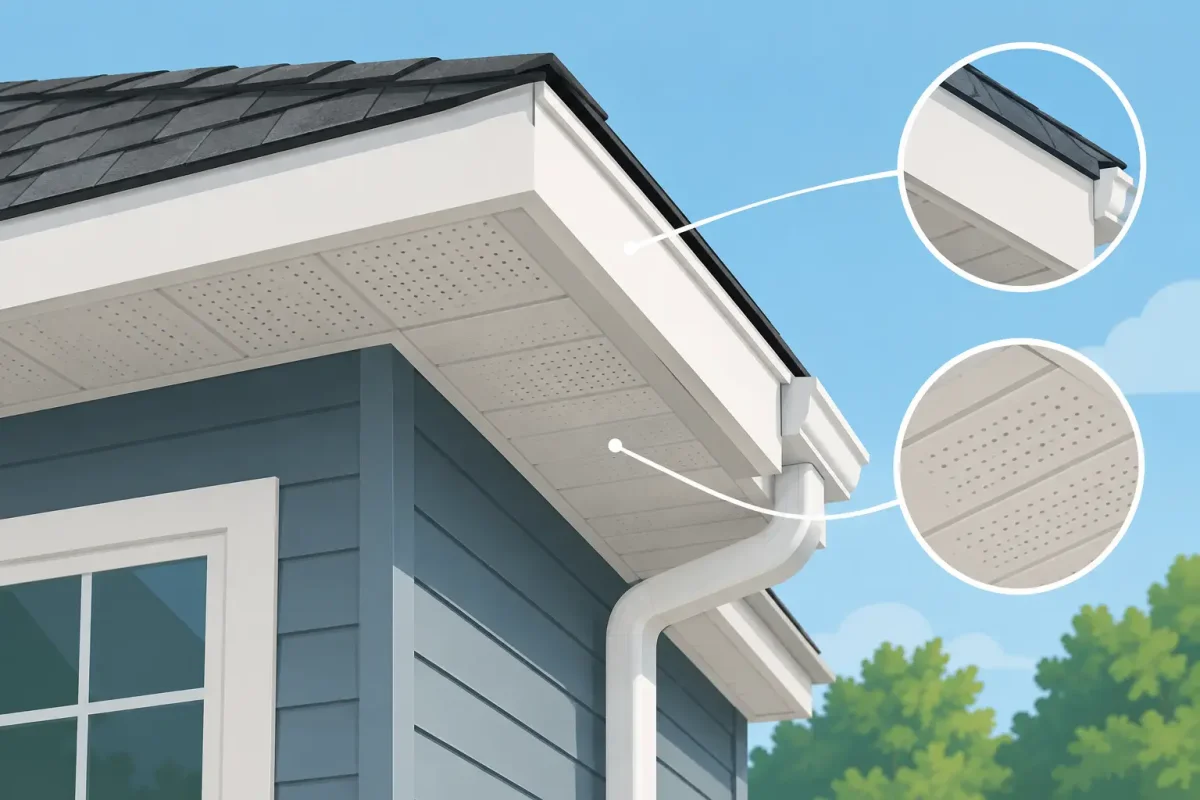
Water does not need a major roof leak to damage a home. A small opening along the roof edge can allow moisture into the attic, behind the siding, or into the wood supporting your gutters. This soffit and fascia guide explains what these components do, how to spot trouble early, and why professional installation matters.
Soffit and fascia may not be the first exterior features homeowners notice. They sit under and along the roofline, doing quiet but essential work every day. When they are in good condition, they help manage airflow, support the gutter system, protect vulnerable wood, and give the home a finished appearance. When they fail, the damage can spread well beyond the roof edge.
What Are Soffit and Fascia?
Fascia is the long horizontal board installed at the lower edge of the roof. It creates a clean line along the eaves and provides the mounting surface for eavestroughs or gutters. Behind the finished metal or vinyl fascia is often a wood board that can deteriorate if water gets in.
Soffit is the material installed beneath the roof overhang. Stand near the outside wall and look up at the underside of the eaves – that finished surface is the soffit. Many soffit panels include vents that allow fresh air to enter the attic.
These parts work together. Fascia helps direct and support water management at the roofline, while soffit helps keep the attic properly ventilated. Both also close off exposed areas where birds, squirrels, insects, and wind-driven rain could otherwise enter.
Why Soffit and Fascia Matter to Your Home
A roof is not just shingles. Its performance depends on the edge details that carry water away and manage heat and moisture below the roof deck. Soffit and fascia are a key part of that system.
They protect the roof edge from moisture
Rainwater flows from the roof into gutters. If the fascia is loose, rotted, or improperly covered, water can run behind the gutter and soak the board underneath. Over time, this can cause peeling paint, soft wood, sagging gutters, damaged trim, and moisture stains on siding.
In areas with frequent rain, snow, ice, and freeze-thaw cycles, minor drainage problems can become expensive repairs. Gutters that overflow because of clogs, poor slope, or undersized capacity can also send water directly onto the fascia. Replacing the gutter without checking the supporting fascia can leave the real problem behind.
They help the attic breathe
Vented soffit brings intake air into the attic. That air works with exhaust ventilation near the roof peak to move out excess heat and moisture. Proper airflow helps reduce condensation, limits moisture-related damage, and can ease the strain on your cooling system during hot weather.
Ventilation is not one-size-fits-all. A home with blocked attic vents, inadequate insulation, or bathroom fans venting into the attic may need more than new soffit panels. A qualified exterior contractor should look at the full system before recommending a solution.
They improve curb appeal
Bent aluminum, faded vinyl, exposed wood, and stained roof edges can make an otherwise well-kept home look neglected. Clean, straight soffit and fascia create a finished border that complements the siding, roof, trim, and gutters.
This is one reason many homeowners replace these elements during a siding or eavestrough project. Coordinating the colors and materials creates a more complete exterior transformation and avoids disturbing newly installed work later.
Signs You May Need Soffit or Fascia Repair
Do not wait for a board to fall or a gutter to pull away from the house. Many roof-edge issues start with smaller warning signs that are easy to miss from the ground.
Look for peeling paint or bubbling finishes near the eaves, dark streaks below gutters, rust marks around fasteners, visible sagging, cracked or missing soffit panels, and gutters that appear tilted or detached. You may also notice water dripping behind the gutter during rainfall rather than flowing into it.
Inside the home, musty attic odors, damp insulation, condensation on roof framing, and unexplained staining near exterior walls can point to a ventilation or water-entry issue. Animal activity near the eaves is another concern. Gaps in soffit can become easy access points for pests that damage insulation and wiring.
Some damage is hidden. Aluminum fascia may look intact while the wood behind it has softened from years of water exposure. That is why an on-site inspection is more reliable than choosing a repair based only on a photo or a quick glance from the driveway.
Materials: What Is Right for Your Roofline?
The best material depends on the home, existing exterior finishes, ventilation needs, and budget. The goal is not simply to cover the old roof edge. It is to create a durable system that fits the property.
Aluminum fascia is a common choice because it provides a crisp finish and protects the wood board beneath it. It is available in many colors and pairs well with aluminum gutters. Proper installation is critical because loose sections can rattle in wind or allow water behind the covering.
Vinyl soffit is popular for its low maintenance, moisture resistance, and range of vented panel options. It does not need painting and can coordinate with vinyl siding. However, it needs correct fastening and room for normal expansion and contraction as temperatures change.
Wood soffit and fascia can suit certain architectural styles, but they require ongoing maintenance. Without consistent painting, sealing, and drainage control, wood is more vulnerable to rot. For homeowners seeking lower maintenance, aluminum-wrapped fascia and vinyl or aluminum soffit are often practical choices.
Color selection deserves more thought than many homeowners expect. Matching the soffit, fascia, gutters, and trim can make the roofline disappear into a clean, unified design. A contrasting fascia can also frame the home effectively, but it should work with the siding and roofing color rather than compete with them.
What a Professional Soffit and Fascia Project Should Include
A proper installation starts with identifying the cause of damage. If overflowing gutters caused the fascia to rot, new fascia alone will not solve the issue. The gutter slope, downspout placement, roof drainage, and condition of the underlying wood all need attention.
First, the crew removes damaged materials carefully and inspects the roof edge. Any rotted or soft wood should be repaired or replaced before new coverings are installed. Covering compromised wood may improve appearances temporarily, but it does not restore the structure needed to hold gutters securely.
Next, the installer prepares the soffit area and confirms ventilation requirements. Vented panels need open pathways to the attic. Insulation or debris blocking those pathways can prevent the new soffit from doing its job.
The new fascia and soffit are then installed with clean lines, secure fasteners, and properly finished corners and transitions. If gutters are being replaced, they should be mounted only after the fascia is sound and the roof edge is ready. The final walkthrough should include checking for straight alignment, secure gutter attachment, proper water flow, and a clean jobsite.
When to Combine Soffit and Fascia With Other Exterior Work
Replacing soffit and fascia on their own is often the right move for localized damage. But if the siding is aging, gutters are leaking, or the roof is nearing replacement, combining projects can save disruption and help ensure all exterior components work together.
For example, new siding may require trim details that meet the soffit correctly. A gutter replacement is the right time to inspect fascia boards. If a roofing project reveals damaged roof decking or inadequate ventilation, soffit improvements may be part of the larger repair plan.
The trade-off is budget and scope. A complete exterior project costs more upfront than a small repair, but it can prevent repeated labor costs and mismatched materials. The right choice depends on the condition of each component, not on pressure to replace everything at once.
Protect the Roofline Before Damage Spreads
Homeowners can help extend the life of soffit and fascia by keeping gutters clear, watching how water flows during heavy rain, and trimming branches that scrape the roofline. Avoid pushing ladders against gutters or fascia, as even a small bend can affect drainage and attachment points.
If you see sagging gutters, staining, loose panels, or signs of rot, schedule an inspection before the next season of severe weather. Petra Eavestrough & Siding can assess the roof edge, explain what is causing the problem, and provide a clear recommendation for repair or replacement.
A straight, well-ventilated roofline is more than a finishing detail. It is one of the practical defenses that helps keep water, pests, and costly hidden damage outside where they belong.
16 September 2026
Guide to Fascia Board Repair for Homeowners
16 September 2026