
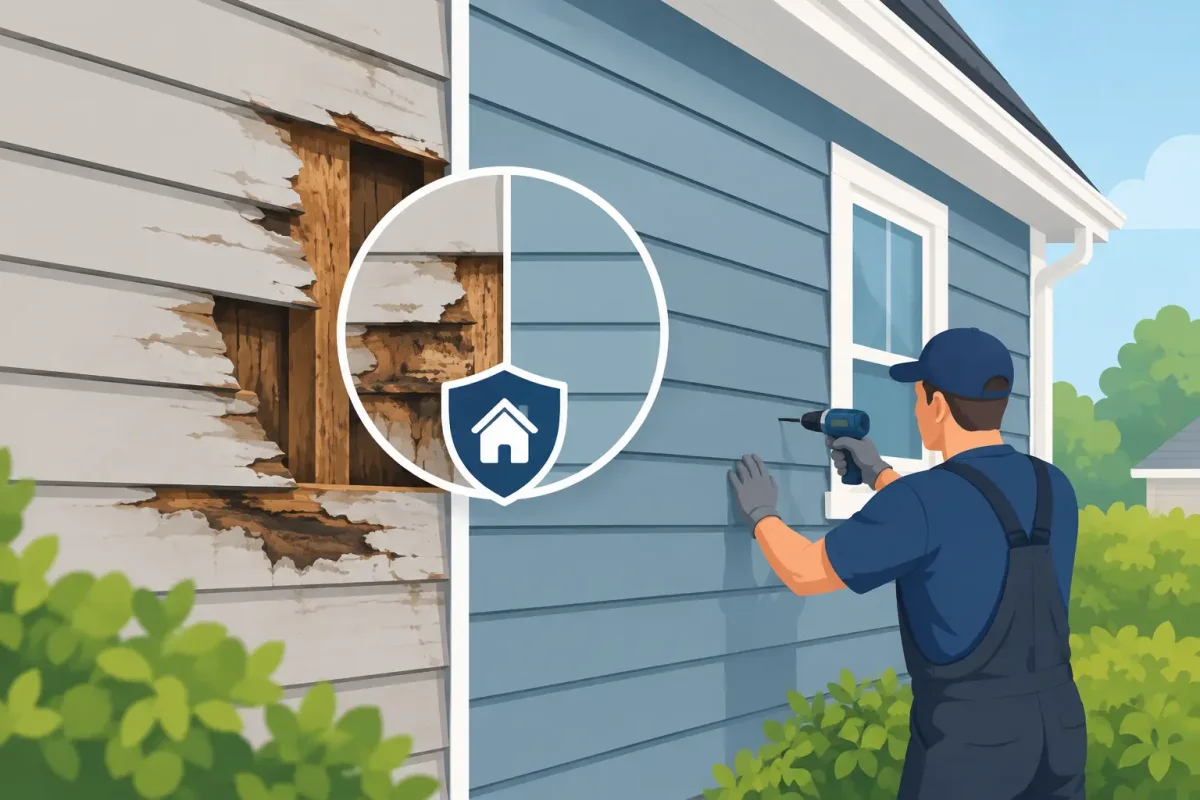
A loose panel, cracked caulk line, or missing piece of siding can look like a small exterior issue. But every opening gives rain, melting snow, and wind-driven moisture a route behind your home’s protective shell. That is how siding repairs prevent rot: they close off water entry points before moisture reaches the wood framing, sheathing, and insulation inside the walls.
For homeowners, the goal is not simply making the exterior look better. Timely repairs protect the structure you cannot see, avoid larger renovation costs, and keep your home looking cared for from the curb.
How siding repairs prevent rot behind your walls
Siding is part of a layered water-management system. It is designed to shed most rainwater away from the house, while the materials behind it handle any moisture that gets past the surface. When siding is damaged or improperly installed, that system can no longer do its job.
Water can enter through cracked boards, loose seams, warped panels, failed caulking around windows, damaged trim, and gaps where siding meets the roofline or foundation. Once water gets behind the siding, it may soak into wood sheathing or framing. If the area stays wet long enough, wood-decaying fungi can grow and rot can begin.
The concern is rarely one heavy storm. Rot usually develops after repeated wetting with limited drying. A small leak around a window or a piece of siding that lifts in the wind can keep feeding moisture into the same section of wall for months. By the time staining, softness, or interior damage becomes obvious, the affected area may be much larger than the original opening.
A professional siding repair addresses the visible defect and checks what happened behind it. That may mean removing the damaged section, inspecting the wall materials, replacing compromised sheathing, restoring the moisture barrier, and installing new siding with properly sealed transitions. Repairing only the surface without correcting the water path can leave the real problem in place.
The early warning signs homeowners should not ignore
Siding damage is not always dramatic. In many cases, the warning signs are subtle and most noticeable after a wet season or a hard freeze-thaw cycle.
Watch for panels that are loose, cracked, bowed, or separating at the seams. Peeling paint, swollen wood trim, bubbling finishes, or dark streaks below windows can also point to trapped moisture. On vinyl siding, visible waves may indicate damage from heat, but they can also reveal an installation issue that leaves areas exposed to wind-driven rain.
Inside the home, musty odors, damp drywall, peeling paint near exterior walls, or unexplained cold spots deserve attention as well. These symptoms do not always mean siding is the source, but they are worth investigating. Roof leaks, windows, doors, soffit and fascia, and overflowing gutters can create similar damage patterns.
That is why an exterior inspection should look at the whole water-shedding system rather than one material in isolation. The siding may be where damage shows up, while the cause may be water spilling from a clogged gutter or flashing that has failed around a roof-wall connection.
Repairs that stop water before it reaches wood
The right repair depends on the siding material, the location of the damage, and the condition of the wall behind it. A small isolated crack may require a targeted panel replacement. Widespread fading, brittleness, or repeated leaks may make partial or full siding replacement the better long-term choice.
Replacing cracked or missing siding
A broken or missing piece of siding is an open invitation for water and pests. Replacing it restores the exterior surface, but the work should also include checking the layer beneath for moisture damage. If the underlying sheathing is soft, stained, or deteriorated, it needs to be repaired before new siding goes on.
Matching the profile and color of existing siding can be a consideration with smaller repairs. Older siding may have faded over time, so a new panel can stand out. In some cases, homeowners choose to repair a less visible area and use matching material strategically. When damage is widespread, replacing a full elevation often gives a cleaner result.
Repairing trim, caulk, and flashing around openings
Windows, doors, vents, and utility penetrations are common leak points because they interrupt the siding. Caulk can shrink, split, or pull away as the house moves through seasonal temperature changes. Trim can rot at the bottom edge where water sits or splashback occurs.
A proper repair does more than add a fresh bead of caulk. The contractor should confirm that flashing is directing water outward, the trim is sound, and the siding edges have room to drain and dry. Caulk has a role, but it is not a replacement for correct flashing and installation details.
Correcting loose panels and failed fasteners
Siding needs to be secured correctly while still allowing for normal expansion and contraction. Fasteners driven too tightly can cause vinyl panels to buckle or crack. Fasteners that are missing, corroded, or improperly placed can allow sections to pull loose during high winds.
Repairing these issues helps keep rain out and prevents further damage to neighboring panels. It also reduces the chance that a small problem turns into a larger section of siding coming off during a storm.
Restoring the moisture barrier
Behind the siding, a weather-resistant barrier helps manage moisture that gets past the outer layer. If that barrier is torn, improperly lapped, or missing around a repair area, water can reach the sheathing more easily.
This is one reason siding work should not be treated as a cosmetic patch. Removing damaged siding provides an opportunity to restore the layers that protect the wall assembly. The visible finish matters, but the hidden details are what help prevent rot.
Gutters, roofing, and siding work together
Even high-quality siding can be overwhelmed by water that is not being directed away from the house. Overflowing gutters can soak the fascia and upper siding. Downspouts that discharge too close to the foundation can cause splashback and persistent moisture along the lower wall. Ice dams and damaged roof flashing can send water behind siding near rooflines.
For that reason, a siding inspection should include a look at eavestroughs, downspouts, soffit, fascia, and roof transitions. If several exterior components are aging at once, coordinating the work can save time and avoid removing newly installed materials later.
For example, replacing compromised fascia before installing new gutters creates a better foundation for the gutter system. Repairing window trim and flashing before replacing siding helps ensure the finished wall has a continuous water-management path. Petra Eavestrough & Siding approaches these areas as connected parts of the exterior, not unrelated repair calls.
Why waiting costs more than a prompt repair
Homeowners sometimes delay siding repair because the damage appears limited. That decision can be reasonable if a qualified inspection confirms the issue is cosmetic and the wall remains protected. But when water intrusion is involved, waiting usually increases the scope of the work.
Rot can spread through sheathing and framing, weaken trim, damage insulation, and contribute to mold growth. It may eventually show up as interior drywall repairs, window replacement needs, or structural carpentry work. The cost difference between replacing a few damaged panels and rebuilding a wet wall section can be significant.
There is also a curb appeal and resale factor. Loose, warped, or stained siding makes a home look neglected, even when the interior is well maintained. Addressing damage promptly protects the home’s appearance while giving you a clearer picture of its condition.
What to expect from a professional siding inspection
A reliable inspection starts with the visible exterior: siding seams, corners, trim, window and door openings, lower wall areas, roof-to-wall connections, and drainage components. The contractor should identify likely water paths, not simply point out damaged panels.
If there are signs of hidden deterioration, the repair plan may include carefully removing a limited section of siding to inspect the sheathing and framing. From there, you should receive a clear recommendation that explains what needs immediate repair, what can be monitored, and whether related work on gutters, roofing, or trim is advisable.
The best solution is not always full replacement. A well-executed localized repair can be the right value when the surrounding siding is in good condition and the damage has not spread. Full replacement becomes more practical when materials are near the end of their service life, repairs are recurring, or multiple elevations have water-related problems.
If your siding has started to crack, separate, stain, or pull away from the wall, schedule an inspection before the next stretch of wet weather. A straightforward repair today can keep a hidden moisture issue from becoming the renovation you never planned for.
22 September 2026
Siding Replacement Signs Homeowners Should Not Ignore

22 September 2026