
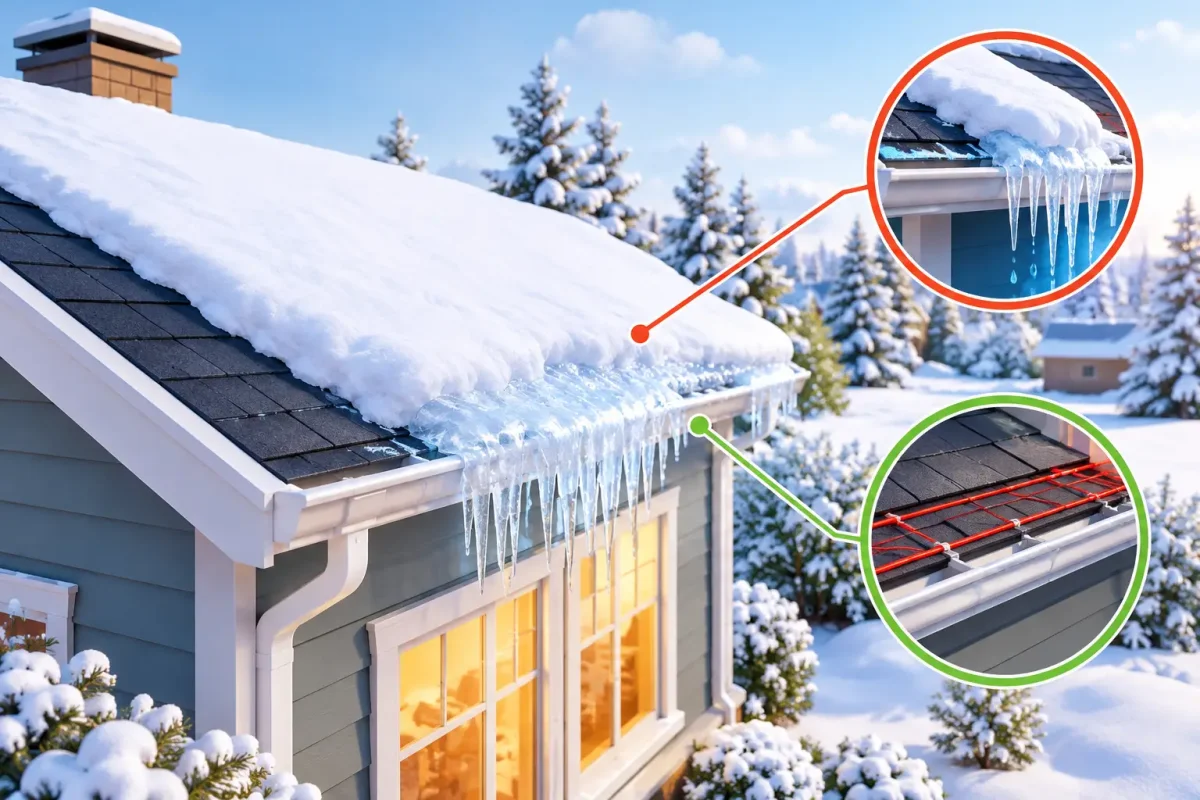
A thick ridge of ice along your roof edge may look harmless after a snowfall. It can actually force melting water back under shingles, soak roof decking, stain ceilings, and damage insulation. The most reliable way to avoid ice dams is not simply removing the ice outside. It is keeping the roof surface at a more even temperature while making sure water can drain where it should.
For homeowners, ice dam prevention is a whole-exterior issue. Your attic insulation, ventilation, roof condition, soffit airflow, and eavestroughs all affect what happens when snow melts and refreezes. Addressing the right cause early can prevent a mid-winter leak and protect your home for years to come.
Why ice dams form along the roof edge
An ice dam begins with uneven roof temperatures. Heat from the living space escapes into the attic and warms the upper portion of the roof. Snow melts there and runs downward toward the colder eaves. Once that water reaches the overhang, it freezes again and creates a ridge of ice.
As the ridge grows, new meltwater has nowhere to go. It pools behind the ice and can work its way beneath shingles and into the home. This is why a roof can leak during a freeze-thaw cycle even when the shingles appear intact from the ground.
Heavy snow alone does not always cause ice dams. A properly insulated, well-ventilated attic can keep the roof colder and reduce melting. On the other hand, even a newer roof can develop ice dams if warm air is leaking through attic gaps or ventilation is restricted.
Start with an attic inspection to avoid ice dams
The attic is usually the best place to find the underlying problem. Insulation should create a consistent thermal barrier between your heated rooms and the roof above. When insulation is thin, compressed, missing, or uneven, heat escapes through those weak spots.
Air leaks can be just as significant. Warm air commonly escapes around recessed lighting, plumbing stacks, attic hatches, bathroom fans, wiring openings, and unsealed framing gaps. That heat rises, warms the roof deck, and starts the melt-and-freeze pattern that leads to an ice dam.
A professional inspection can identify whether the issue is insulation depth, air sealing, moisture, ventilation, or a combination of concerns. This matters because adding insulation without addressing air leaks may not fully solve the problem. It can also hide moisture conditions that deserve attention before they lead to mold or wood damage.
Keep ventilation moving from soffit to ridge
Attic ventilation helps remove excess heat and moisture. In a properly designed system, cool outside air enters through soffit vents near the roof edge and exits through higher vents, often at the ridge. That continuous airflow helps keep roof temperatures more consistent in winter.
Soffit vents only work when they remain open and connected to the attic. Insulation sometimes shifts into the eaves and blocks intake vents, especially in older homes. Baffles or ventilation chutes help maintain an open channel above the insulation so air can move upward beneath the roof deck.
Ventilation is not a substitute for proper insulation and air sealing. If too much indoor heat is reaching the attic, more vents alone will not correct the source. The strongest approach is balanced: stop heat loss first, install adequate insulation, and confirm that soffit and upper-roof ventilation can do their job.
Keep gutters and eavestroughs clear before winter
Clean eavestroughs support proper drainage when snow begins to melt. Leaves, twigs, shingle grit, and other debris can block water at the roof edge. When that water freezes, it adds weight and can make an existing ice dam worse.
Before the first sustained freeze, have eavestroughs cleaned and checked for sagging sections, loose fasteners, disconnected downspouts, and poor slope. Water should move steadily toward the downspout rather than standing in the trough. Downspouts should discharge away from the foundation so meltwater does not create another problem around the home.
Eavestrough maintenance will not fix attic heat loss by itself. It is still an essential part of protecting the roofline. A damaged or overflowing gutter can allow ice to build up around fascia boards, causing rot that may remain hidden until a replacement is needed.
Address roof weaknesses before snow arrives
Ice dams take advantage of small roofing weaknesses. Worn flashing, lifted shingles, exposed fasteners, cracked pipe boots, and deteriorated sealant may not leak during a light rain. Once water is held against the roof by ice, those same weak points become more vulnerable.
A roof inspection before winter can catch these concerns while repairs are simpler and safer. Pay close attention to valleys, chimneys, skylights, roof-to-wall transitions, and the lower edge of the roof. These areas see concentrated water flow and are more likely to show damage first.
If your roof is aging or has already had recurring winter leaks, a repair may not be enough. Replacing worn shingles, damaged decking, flashing, fascia, and underlayment as one coordinated project can provide a more dependable result than patching the same area every season.
What to do when snow and ice are already on the roof
If you see an ice dam forming, do not climb onto an icy roof or attack it with an axe, hammer, or sharp shovel. These methods can damage shingles and gutters, and they create a serious fall risk. Chipping at ice near the roof edge can also harm fascia and roofing materials.
From the ground, a roof rake can be used carefully to pull loose snow off the lower few feet of the roof. Removing some of the snow reduces the amount of water available to feed the dam. Use a rake designed for roofs and avoid scraping directly against the shingles.
For a large dam, interior water stains, or active dripping, call a qualified contractor promptly. Professional steam removal can clear ice without the damage caused by chopping or chemical products. Salt products may create temporary channels in ice, but they can stain or harm nearby materials and should not be treated as a long-term solution.
Inside the home, move furniture and valuables away from the affected area, place containers under drips, and document visible staining or damage. If a ceiling is bulging with water, treat it as an urgent issue. Water weight can cause drywall to fail without much warning.
When exterior upgrades make the biggest difference
Some homes experience ice dams once because of an unusual storm. Others develop them year after year in the same areas. Repeated problems often point to a larger issue with attic performance, roof ventilation, deteriorated roof components, or a roofline that needs coordinated attention.
This is where a complete exterior inspection is valuable. A contractor can assess shingles, flashing, soffit, fascia, eavestroughs, and ventilation together instead of treating each symptom as a separate repair. The right scope depends on what the inspection finds. A blocked soffit vent may need a focused correction, while a worn roof edge and damaged gutters may justify a broader upgrade.
For homeowners in Hamilton, Burlington, and Oakville, winter weather can shift quickly from snow to rain to hard freeze. That cycle puts extra stress on every weak point at the roofline. Petra Eavestrough & Siding can inspect the exterior, explain what is causing the risk, and provide a clear recommendation based on the condition of your home.
A dry ceiling is the goal, but the real payoff is bigger: a roof, attic, and drainage system working together before the next storm puts them to the test.
5 November 2026
Roof Flashing Repair: Stop Leaks at the Source

5 November 2026