
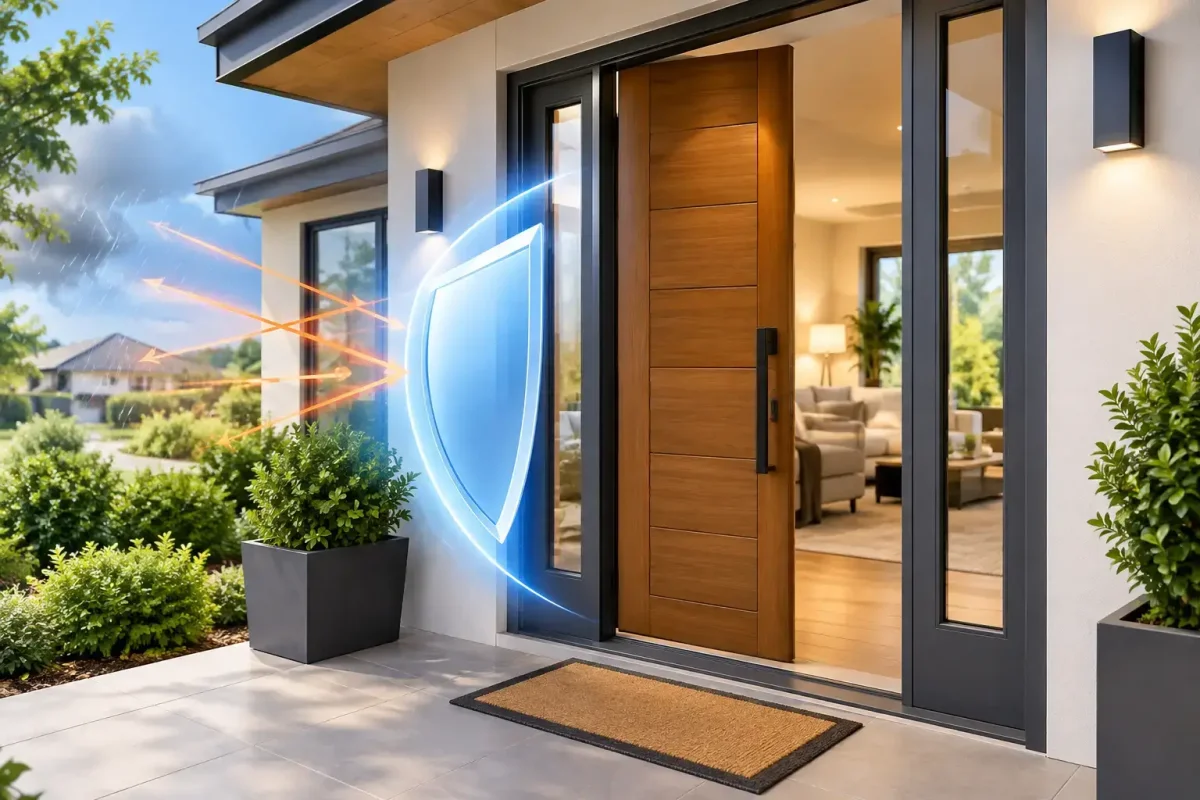
A front door can look fine from the curb while letting cold air, moisture, and outside noise into the house. If the lock sticks, daylight shows around the frame, or the entry feels drafty on cold days, your door is no longer doing its full job. The right entry doors improve security, comfort, and curb appeal at the same time, but the best choice depends on the home, the exposure, and the quality of installation.
What a New Entry Door Should Solve
A new door is not just a cosmetic upgrade. It is part of the exterior wall system, where the door slab, frame, threshold, weatherstripping, flashing, and surrounding trim all need to work together. A weak point in any one of these areas can lead to drafts, water intrusion, pest entry, or premature damage around the opening.
For many homeowners, the first sign is a door that has become difficult to close. Seasonal movement, a settling house, loose hinges, or a worn frame can all cause alignment problems. Replacing only the slab may seem like a quicker fix, but it will not correct a damaged jamb, a poor threshold, or gaps hidden behind exterior trim.
A full door-and-frame replacement is often the smarter long-term option when the existing unit is old, poorly insulated, leaking, or no longer secure. It gives the installer a chance to inspect the rough opening, address any moisture damage, and build a properly sealed transition between the wall and the new unit.
Choosing Entry Doors by Material
Door material affects appearance, maintenance, security, insulation, and cost. There is no single best material for every home. The right choice comes down to your budget, the level of sun and weather exposure, and the style you want to achieve.
Steel doors for strength and value
Steel doors are a practical choice for homeowners who want dependable security and a clean, painted finish at a reasonable price point. Many insulated steel doors offer strong energy performance, especially when paired with an insulated core and quality weatherstripping.
The trade-off is that steel can dent and may rust if the painted surface is damaged and left exposed. A covered entry and regular touch-ups can help extend its service life. Steel is often a good fit for side entries, garage-to-home doors, and front doors where security and value are the main priorities.
Fiberglass doors for durability and flexibility
Fiberglass is one of the most popular choices for front entries because it handles changing weather well and requires little maintenance. It will not rust, and it is less likely than wood to swell, crack, or warp from moisture. Many fiberglass doors can also be finished to resemble stained wood without the upkeep of a natural wood door.
A fiberglass door may cost more than a basic steel option, but it can be a worthwhile investment for an exposed entrance or a home where curb appeal matters. It is especially useful when you want the warmth of a wood-look finish with stronger resistance to rain, snow, and direct sun.
Wood doors for character
A real wood entry door brings detail and character that is hard to duplicate. It can suit historic homes, custom builds, and traditional exterior designs beautifully. However, wood requires a clear commitment to maintenance. Finishes need attention, and the door must be protected from repeated moisture and harsh sunlight.
Wood can be a good choice under a deep covered porch. For an exposed front entrance, fiberglass often delivers a similar visual effect with less upkeep.
Security Starts With the Whole Opening
A heavy door alone does not make an entrance secure. The frame, strike plate, hinges, lockset, and installation all matter. A quality deadbolt needs to anchor into solid framing, not just thin trim or a weak jamb. Reinforced strike plates and long screws improve resistance against forced entry, while a properly hung door prevents the latch from slipping out of alignment.
Glass panels do not automatically make a door less secure. Decorative and sidelights can bring natural light into a dark foyer, and many styles use strong insulated glass. The key is choosing a configuration that fits your privacy needs. Frosted, textured, or divided-light glass can brighten the entrance without putting the interior on display.
If your household uses smart locks, video doorbells, or keyless entry, plan for them before installation. The door preparation, backset, lock height, and surrounding trim should accommodate the hardware without compromising the warranty or the weather seal.
Energy Efficiency Is More Than a Low U-Factor
Energy-efficient entry doors can help reduce drafts and make rooms near the entrance more comfortable. Still, product ratings tell only part of the story. Even a high-performing door can disappoint if it is installed out of square, the sill is not supported correctly, or gaps around the frame are not sealed.
Look for an insulated door slab, compression weatherstripping, an adjustable threshold, and a tight-fitting sweep. Glass inserts should be insulated as well, particularly on a north-facing or exposed entry. Larger glass panels can add style and daylight, but they may allow more heat transfer than a solid door. This does not mean you need to avoid glass. It means the design should match the location and your comfort goals.
Pay attention to the transition beneath the threshold. Water must be directed away from the house, not trapped under the door. Proper flashing and exterior caulking protect the framing behind the trim, where water damage can develop long before it becomes visible indoors.
Match the Door to Your Home’s Exterior
The front entry is one of the first details people notice from the street. It should work with the siding, brick, stone veneer, windows, roof color, and exterior lighting rather than compete with them.
For a traditional home, a fiberglass door with raised panels, a stained wood look, or modest divided glass can create a welcoming appearance. Modern homes often suit flush panels, narrow vertical glass, black hardware, and a simple frame. Farmhouse-inspired exteriors tend to work well with wide plank details, muted colors, and clear or seeded glass.
Color has a large impact, especially on a simple facade. A deep navy, black, forest green, or red door can create a focal point, while a neutral tone can make a more detailed exterior feel balanced. Before choosing a color, consider how much direct sunlight the entry receives. Dark colors can absorb heat, and some manufacturers have specific finish requirements for doors exposed to intense sun.
Why Professional Installation Makes the Difference
Door replacement looks straightforward until the old trim comes off. Openings are often not square, past repairs may be hidden behind casing, and water damage can affect the subfloor or framing around the sill. A professional inspection helps identify those issues before a new door is installed over them.
A proper installation begins with measuring the opening and confirming the door swing, threshold height, hardware placement, and exterior clearances. The old unit is removed carefully, the opening is inspected and repaired as needed, and the new door is set level, plumb, and square. The installer then fastens the frame, insulates the perimeter, applies flashing and sealant where required, and finishes the interior and exterior trim.
The final test is simple: the door should close smoothly, latch without force, seal evenly, and open without rubbing the frame. Cleanup and a walkthrough matter, too. You should know how to operate the threshold adjustment, maintain the finish, and understand what is covered by the material and labor warranties.
When It Makes Sense to Coordinate Exterior Work
Replacing a door can be an ideal time to address nearby exterior issues. If siding around the entrance is damaged, trim is rotting, or eavestrough overflow has been sending water toward the doorway, treating the door as an isolated project may leave the underlying problem in place.
Coordinating work can also create a more finished result. New siding, trim, stone veneer, windows, and entry doors can be selected together so the colors and proportions make sense across the front of the home. It may also reduce disruption by avoiding repeated tear-outs around the same wall.
That said, a complete exterior renovation is not always necessary. If the problem is limited to a failing door unit and the surrounding wall is sound, a focused replacement is often the most efficient path. The value of an on-site inspection is getting a recommendation based on the actual condition of your home, not a one-size-fits-all package.
Plan for a Door That Will Keep Working
The best entry door is one that looks right on day one and still closes, seals, and protects the home years later. Choose the material for the exposure, select glass and hardware for your household, and make installation quality a non-negotiable part of the project.
Before moving forward, have a qualified exterior contractor inspect the opening, explain the available options clearly, and provide a detailed quote that covers the door, frame, trim, sealing, cleanup, and warranty. That careful start is what turns a new front door into lasting protection for your home.

20 November 2026
Hamilton Siding Contractors for Lasting Results
20 November 2026