
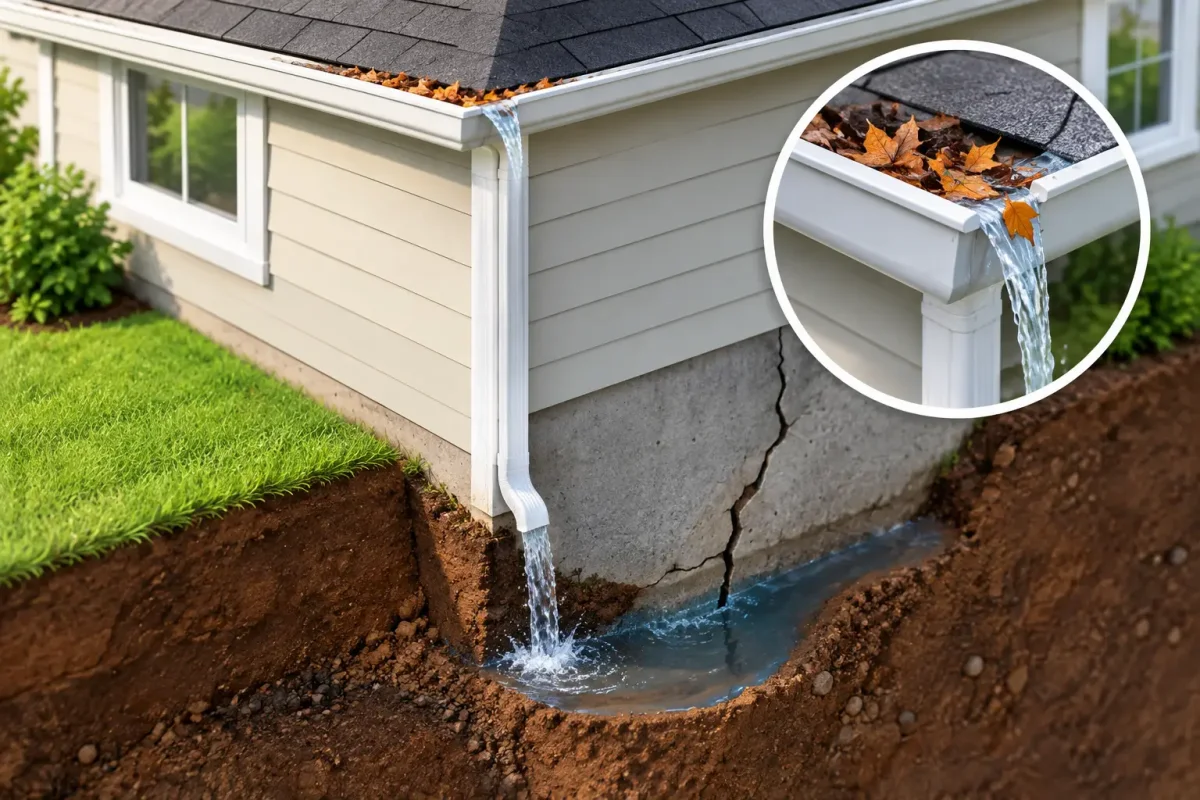
A few inches of rainwater may not look like much as it spills over a clogged gutter. But when that water lands beside your home, it can soak the same area of soil for hours. Can gutters damage foundation? Yes – not because the gutter itself harms concrete, but because a failed gutter system allows water to collect where your foundation needs to stay stable and properly drained.
For homeowners, gutter problems are easy to overlook until there is a stain on the basement wall, a crack in the foundation, or water pooling near the front steps. Catching the issue early is far less disruptive than repairing water damage after the fact.
How gutters can damage a foundation
A working gutter system collects roof runoff and carries it safely away from the house. When gutters are blocked, pitched incorrectly, leaking at seams, or missing effective downspout extensions, roof water drops directly beside the foundation.
That repeated saturation changes the soil around the home. Some soils expand when wet and shrink as they dry. This movement can place uneven pressure on foundation walls and footings over time. In colder climates, trapped water can also freeze, expand, and create additional stress around vulnerable areas.
Water can create problems even without a major storm. A slow leak at a gutter corner or downspout connection may deliver water to one spot every time it rains. After months or years, that concentrated runoff can erode soil, wash out landscaping, contribute to settling, and find its way through small gaps in the foundation.
The risk depends on your home’s grading, soil conditions, roof size, foundation type, and the volume of water being mishandled. A minor drip on a well-graded property may not cause immediate damage. An overflowing upper-story gutter beside a basement wall is a more urgent concern.
Warning signs of gutter-related foundation trouble
Foundation damage does not always start with a dramatic crack. Often, the first clues appear outside after rainfall. Look for water pooling beside the house, mulch or soil washing away, deep channels under a downspout, or grass that stays soggy long after the rest of the yard has dried.
Inside, watch for musty basement odors, damp spots on walls, peeling paint, or water near the floor perimeter. New cracks in drywall, sticking doors or windows, and visible foundation cracks can also signal movement, although these issues can have other causes and should be assessed properly.
Gutters themselves usually provide the clearest evidence. Overflowing water, sagging sections, separated seams, rust, loose fasteners, and downspouts that end too close to the house all deserve attention. If you can see water cascading over the gutter edge during a normal rain, the drainage system is not protecting the home as intended.
The gutter issues that cause the most damage
Clogs and overflowing gutters
Leaves, twigs, roofing grit, and nesting debris can block the gutter channel or downspout. Once water cannot move freely, it spills over the nearest edge. This may happen at only one section of the roof, which is why localized foundation moisture can be so easy to miss.
Overflow also adds weight to the gutter. Over time, that can pull fasteners loose, worsen the slope, and turn a simple cleaning issue into a gutter replacement project.
Incorrect gutter pitch
Gutters need a slight, consistent slope toward the downspout. If they are too flat, water sits in the channel and may spill at low points. If the pitch is wrong after a repair or installation, water may run away from the downspout instead of toward it.
Standing water also accelerates corrosion in some gutter systems and can expose weak seams. A professional inspection can confirm whether the issue is a clog, a pitch problem, or both.
Leaking seams, corners, and downspouts
A leak at a seam may seem small, but it releases water in the same place during every storm. Corners, end caps, and downspout connections are common trouble spots because they handle changing water pressure and seasonal movement.
Sealing may be appropriate when the surrounding gutter is still in good condition. If multiple seams leak, sections are bent, or the system is old and pulling away from the fascia, replacement often delivers better long-term value.
Downspouts that discharge too close to the house
Even perfectly clean gutters can cause drainage issues if the downspouts empty beside the foundation. Water should be directed away from the home onto properly graded ground or into an appropriate drainage solution. The correct approach varies by property, so the goal is not a one-size-fits-all extension. It is controlled runoff that does not return to the foundation.
Can gutters damage foundation walls even if the basement is dry?
Yes. A dry basement is a good sign, but it does not guarantee that runoff is harmless. Soil erosion and repeated wet-dry cycles can affect support around the foundation before moisture becomes visible indoors. Water may also drain into areas that do not immediately show up on finished basement walls.
That said, not every crack or drainage issue means the foundation is failing. Hairline cracks can occur as concrete cures or as a home settles naturally. The concern rises when cracks widen, recur after repair, allow water inside, or appear alongside exterior pooling and gutter failures. A qualified exterior contractor can identify whether the gutter system and grading are contributing to the problem, while significant structural concerns may require a foundation specialist or engineer.
When repair makes sense and when replacement is smarter
A targeted repair can be the right answer when gutters are generally sound but have a small number of isolated problems. Clearing a blockage, re-securing a loose section, repairing a seam, or correcting a downspout connection can restore performance quickly.
Replacement becomes more practical when damage is widespread. Sagging runs, recurring leaks, frequent clogs, corroded material, loose fascia, or gutters that are undersized for the roof can all point to a system that has reached the end of its useful life. Seamless gutters reduce the number of joints where leaks can develop, and properly sized downspouts improve flow during heavy rain.
The gutter system should also be considered alongside the rest of the exterior. Damaged soffit, fascia, roof edges, or siding near a leak may need attention at the same time. Coordinating these repairs helps prevent water from moving from one weak point to another and avoids reopening finished work later.
What a professional inspection should include
A useful inspection goes beyond looking up at the gutters from the driveway. The contractor should check the condition and slope of the gutter runs, fasteners, seams, corners, downspouts, and discharge areas. They should also look for fascia damage, roof runoff patterns, soil erosion, and signs of water exposure on siding or foundation walls.
For homes in Hamilton, Burlington, and Oakville, winter freeze-thaw cycles and heavy seasonal rain make proper drainage especially worthwhile. A contractor should recommend repairs based on what the home needs, not automatically push a full replacement when a limited repair will solve the problem.
The right scope may include gutter replacement, downspout improvements, fascia repair, or adjustments to direct water away from the house. Clear recommendations, a written estimate, and a workmanship warranty give homeowners a straightforward path from inspection to completed protection.
Protect the foundation before the next heavy rain
Do not wait for a basement leak to take overflowing gutters seriously. If water is spilling over the edge, collecting beside the house, or carving channels through your landscaping, arrange an inspection before the next stretch of wet weather. A properly installed, well-draining gutter system is one of the simplest ways to keep roof water where it belongs – away from the foundation and away from expensive repairs.

16 November 2026
Best Gutters for Heavy Rain for Your Home
16 November 2026